Posts by Cheryll Barron

Brink-of-summer break

'Umbrella: 7 March 2015' -- postgutenberg@gmail.com

‘Umbrella: 7 March 2015’
— postgutenberg@gmail.com


Afflicted with an acute case of screaming eyeballs syndrome at post-Gutenberg — concentrated, migraine-like pain in eyes recovering from screen-gazing and months of disrupted sleep cycles — we must take a brink-of-summer break.

We can certainly revel in summer, on the right day. With the stretching out of light-filled hours, a silent enchantment begins, and continues until the Solstice. But summer has never been our favourite season. We have always preferred winter and the transitions from and to it, spring and autumn, for reasons never explained as well as by Francine du Plessix Gray, a biographer with an elegant mind:

I have a theory about poets’ distrust of summer. It is in this most rapacious of seasons that the ambivalence facing all writers becomes most poignant: our desire to drench in the world for inspiration, our simultaneous fear that this contact will drown our powers; our contradictory need for participation and withdrawal, for summer’s frenzied elation and winter’s quietude; a choice in which most writers would choose winter, what Thoreau called ‘life near the bone where it is sweetest.’

The dilemma transcends poetry, reaches every one of us: vernal, orgiastic need to be engulfed in the Cosmic Whole (or the Lover); simultaneous desire to preserve, undiminished, the wintry fortress of Self.

— Francine du Plessix Gray in Summer (a collection edited by Alice Gordon and Vincent Virga), 1990

Happy Bank Holiday Monday Memorial Day Weekend


Must journalists and writers wait for salvation in heaven, or Godot? Facebook cares more about helping publishing businesses than creators


This gorgeously illustrated 1997 essay in The New York Times is proof that the destruction of the livelihood of print journalists began long before the digital revolution in publishing. - Graphic by Phillipe Weisbecker

This gorgeously illustrated 1997 essay in The New York Times is a marker in the destruction of print journalists’ traditional means of economic survival — which began before the digital revolution in publishing.
– Graphic by Phillipe Weisbecker


‘Genius has patience,’ Michelangelo reportedly said, but how much patience can reasonably be expected of ordinary mortals? This week’s announcement by Facebook of a clever ploy for co-opting some of the most famous print newspapers into serving its own ambitions led post-Gutenberg to re-read a passage about waiting for salvation in heaven in Wuthering Heights. What saves the chapter from soppiness is that Cathy, like any actual, lively little girl, frequently has to be scolded for cheekiness by her father, the beneficent Mr. Earnshaw, and this happens just before he dies, when she and her darling Heathcliff — who has yet to turn into the über-monster of romantic fiction — are close by. A few hours later the housekeeper, Nelly Dean, checks on them.

I ran to the children’s room: their door was ajar, I saw they had never lain down, though it was past midnight; but they were calmer, and did not need me to console them. The little souls were comforting each other … no person in the world ever pictured heaven so beautifully as they did, in their innocent talk; and while I sobbed and listened, I could not help wishing we were all there safe together.

Why will drawing such a parallel make strange, bordering on bizarre, reading for anyone not closely acquainted with journalism and the writing life? Because no one has been broadcasting the harrowing stories of bottomless insecurity, agony, havoc, misery and ghastly compromises in the private lives of journeymen scribblers who have been mown down by the juggernaut of online publishing.

Why not? Pride. Denial. Never-say-die bravado that makes affecting Beckettian irony and superficial detachment, when discussing the topic at all, preferable to bleeding onto the carpet. If there has been a richly documented multi-part series on this subject in a well-known newspaper — some counterpart of award-warning coverage of, say, the suffering of iron and steel factory workers in the West put out of work by foreign competition, or about shamefully exploited and underpaid electronics and garment industry workers in the East – post-Gutenberg has somehow missed it.

Numbers — related not to journalists but their comrades in the making of books — are the chief evidence of the despair on which no one is reporting noticeably.  A headline in the Guardian last month inspired by a University of London study of writers’ earnings read, ‘Median earnings of professional authors fall below the minimum wage’. [p-G’s emphasis] Most shocking was that ‘17% of all writers did not earn anything at all during 2013,’ even though ‘98% of those authors had published a work every year from 2010 to 2013.’

A report earlier this month on a panel discussion of the same subject organised by the American Authors Guild stated that preliminary results of a similar survey of U.S. authors revealed that …

… 49% of U.S. authors assessed their writing income has decreased over the last five years. Respondents’ median writing-related income decreased 24% in that time frame, to $8,000, while they spent nearly 50% more time marketing themselves and their work.

Now, here comes Facebook, bearing gifts – none of them directly designed to help reporters, writers and editors, working in-house or as freelances, or any other actual creators of the stuff of news, as opposed to media owners and their financial managers and overseers:

This week, Facebook launched Instant Articles, a feature that allows publishers to host their news stories and content directly on Facebook. For consumers, this is a much faster, richer, and easier experience for reading articles directly on their News Feeds and primarily on mobile. For Facebook, this is a big improvement to the user experience and to its app “stickiness.”

That is an extract from a report in Forbes the old ‘capitalist’s tool’, and the business-and-technology section of the NY Times said:

The news publishers can either sell and embed advertisements in the articles, keeping all of the revenue, or allow Facebook to sell ads, with the social network getting 30 percent of the proceeds. Facebook is also permitting the news companies to collect data about the people reading the articles with the same tools they use to track visitors to their own sites.

For publishers, the Facebook initiative represents the latest in a series of existential balancing acts. The social network, which has more than 1.4 billion active users worldwide, captures more attention of mobile users — and prompts more visits to news sites — than virtually any other service.

While we seem to be watching Mark Zuckerberg lead newspaper bean-counters to the Promised Land, a piece of news about him at the week’s end was hardly what those of us worrying about media concentration and mogul megalomania wished to see. Maybe his intentions were all-virtuous; maybe not:

 …Facebook founder Mark Zuckerberg has responded to Ukrainians’ complaints about “unfair” deleting and blocking of their Facebook posts and accounts. The tech boss says they were too hateful.

In a Thursday Q&A session, Zuckerberg dismissed claims of Russian influence being behind the blockings. He was responding to a complaint that had garnered almost 50,000 likes. …

Post-Gutenberg would be infinitely more comfortable with decisions about censorship made by a moderation panel made up of democratically elected Facebook users than unilaterally, by the big chief himself. Once Zuckerberg has enough newspapers beholden to him, will he prove capable of resisting corruption by excessive power?

We prefer Google’s openness to new conceptions of media organisations and digital publishing: 

Google is spearheading the creation of a new fund that will give grants to European news organisations that are creating “high-quality journalism.”

The new Digital News Initiative (“DNI”) is being launched as a partnership with eight European newspapers: Les Echos, FAZ, The Financial Times, The Guardian, NRC Media, El Pais, La Stampa and Die Zeit.

The money will not be spent at those titles. Rather, they will advise on the spending of a €150 million fund to help news organisations “demonstrate new thinking” in digital journalism.

Google is also going to invest in training and research for journalists, including staff in London, Paris, and Hamburg who will train newsrooms in digital skills. It will invest in training partnerships, as well as funding research into digital journalism. …

About time, too. A 1997 article that turned up in forgotten clippings files about a year ago reminded us that digital disruption has merely accelerated the destruction of traditional publishing that began decades ago. In ‘The Writer Is Dead. But His Ghost Is Thriving,’ Jack Hitt anatomised the train of events through which scribblers ghosting books for celebrities earned the living wages they no longer could, writing under their own names.

With any luck, the spheres of exploration in Google’s Digital News Initiative will include co-owned media — the subject about which this blog drones on tirelessly. Leaving out the cooperative idea, which has the support of the wildly popular Pope Francis, some Charlie Hebdo staffers and the rapper Jay Z  — a group diverse enough to have been imagined by a lunatic — would make not the smallest particle of sense.

Also for paying attention to the needs of creators of all stripes, we would like to see Facebook and Google do more in copyright protection, so that tragedies of throttled creativity, such as the one described in this outstanding contribution to the bulletin of the venerable Authors Guild, can be averted:

… In the nineteenth century, American magazines printed pirated British prose rather than pay American writers; the practice stunted the emergence of a national literary culture. We could read Dickens without paying him; was that worth sending Melville to work in the Customs House? Who knows what he might have produced with greater financial security? In my case, I planned a really expansive digital edition of my next book, with dynamic interactive maps, embedded with videos, and ways for readers to explore the intertextuality of this book with my previous two. But why send readers to an edition that will earn me less than the hardcover, that will be pirated immediately, and that Google might appropriate? I’m not running a charity. That is a digital work that will not come to be, because of piracy and the attacks on the value of digital creations.

T. J. Stiles, ‘Among the Digital Luddites,’ Authors Guild Winter 2015 Bulletin 

Sorry, Schumpeter, part 2 … John Gardner could have explained why writers cannot be turned into ‘authorpreneurs’


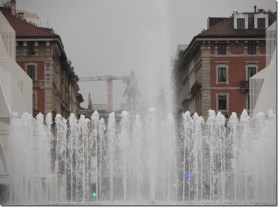
Imagine a writer straining to stay immersed in a narrative unfolding in her mind, set in the Milanese mid-winter -- because she has to keep showing up on social media to tweet about spring -- photograph by MIL22

Imagine a writer straining hard to stay immersed in a narrative unfolding in her mind — a scene set in the Milanese autumn — because she has to keep showing up on social media to tweet about spring
— Statue of the Italian Unification leader Garibaldi on horseback: photograph by MIL22

[ part 1 is here ]

Not at home, yet not exactly travelling, post-Gutenberg offers in this week’s entry a few more reasons for deep bafflement by the sanguine acceptance, in some surprising places, of the idea that writers who are retiring, introverted moles — a large proportion, if not most members of the breed — must transform themselves into booming glad-handers and performers on social networks and lecture podiums, or face failure and inevitable extinction. Quoting The Economist’s Schumpeter column again:

… Last month Simon & Schuster, a publisher, announced it would sell online video courses led by some of its authors. Things are more difficult for fiction writers: the organisers of conferences and other events pay good speaking fees to non-fiction writers with a bit of name recognition, but not to the average novelist.

The 20th-century American novelist John Gardner thought more comprehendingly and revealingly about the essence of what makes a writer, and how writers work, than almost anyone else who has pronounced on this subject. Read these two sets of extracts from his wise, beautiful paragraphs on ‘The Writer’s Nature’ and do, please, post a comment here if you can work out how any of the qualities he describes fit the conformist — anything-for-a-‘like’ — thinking and harmony on social platforms:

I

… As for the quality of strangeness, it is hard to know what can be said. There can be no great art, according to the poet Coleridge, without a certain strangeness. Most readers will recognize at once that he’s right. There come moments in every great novel when we are startled by some development that is at once perfectly fitting and completely unexpected … One has to be a little crazy to write a great novel. One must be capable of allowing the darkest, most ancient and shrewd parts of one’s being to take over the work from time to time.

… If I could explain what I mean here, I could probably do what I think no one has ever done successfully: reveal the roots of the creative process. The mystery is that even when one has experienced these moments, one finds, as mystics so often do, one cannot say, or even clearly remember, what happened. In some apparently inexplicable way the mind opens up; one steps out of the world. One knows one was away because of the words one finds on the page when one comes back, a scene or a few lines more vivid and curious than anything one is capable of writing – though there they stand. … All writing requires at least some measure of trancelike state: the writer must summon out of nonexistence some character, some scene, and he must focus that trancelike state in his mind …

II

… After verbal sensitivity, accuracy of eye, and a measure of the special intelligence of the storyteller, what the writer probably needs most is an almost demonic compulsiveness. No novelist is hurt (at least as an artist) by a natural inclination to go to extremes, driving himself too hard, dissatisfied with himself and the world around him and driven to improve on both if he can.

… By the nature of the work it is important that one way or another the novelist learn to depend primarily on himself, not others, that he love without too much need or dependency, and look inward (or toward some private standard) for approval and support. Often one finds novelists are people who learned in childhood to turn, in times of distress, to their own fantasies or to fiction, the voice of some comforting writer, not to human beings near at hand. This is not to deny that it also helps a novelist finds himself with one or more loved ones who believe in his gift and work.

John Gardner, On Becoming a Novelist, 1983

Switzerland at No:1 in the World Happiness Report = extreme (or direct) democracy = tools for hands-on political egalitarianism

The Swiss excel at colourful and imaginative political demonstrations -- as in this objection to anti-immigrant  sentiment in Bern - postgutenberg@gmail.com

The Swiss excel at colourful, irreverent political demonstrations. This one in Bern was related to the debate about immigrants in 2011
– photograph by postgutenberg@gmail.com

oranges 6

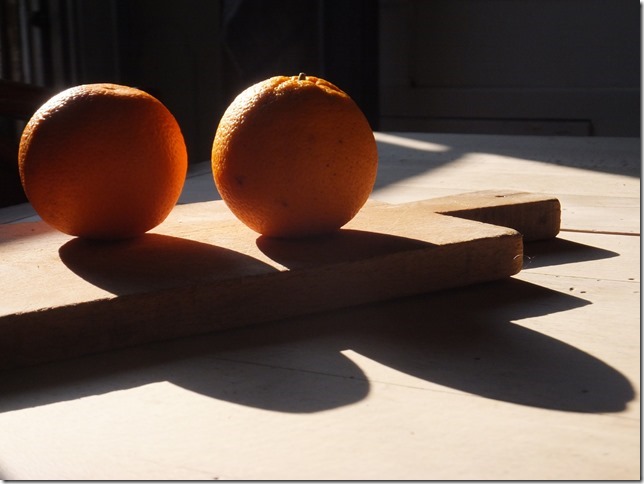
Comparing oranges with oranges (see below) – photograph by MIL22

CH Bern protest 12 march 2011 Chryll Barron

Switzerland is reckoned as top country in this year’s World Happiness Report, the third in a series begun in 2012, and the work of United Nations economists. Most striking about the news of Swiss supremacy in contentment — making headlines worldwide, over the last few days — has been the paucity of explanations, or certainly any exegesis offering or even pretending to depth. This is further proof of the bizarre, almost wilful, ignorance about the little Alpine champion, to which this blog has been drawing attention for a while. (See ‘Seven reasons why indie publishing is the right choice for a travel book on Switzerland and its curious culture of extreme equality‘)

At post-Gutenberg.com — unusually harried and pressed for time, lately — we are waiting for a chance to study the methods behind the WHR calculations, to understand exactly what is being measured and how. In the meanwhile, we will record just these reactions to other observers’ reactions: no one appears, so far, to have noticed — or pointed out anywhere discoverable by search engine crawlers — that with Iceland ranking second on the 2015 WHR list, the top two positions are occupied by rivals for the distinction of being the world’s oldest democracy.

These also happen to be countries that come to mind in connection with extreme or direct democracy, which leans heavily on referendums to make government policy. That has long been a defining feature of modern Switzerland and in the case of Iceland, is the aspiration guiding the reshaping of its government since its humiliation in the financial crash of 2008.

People apparently are happiest in countries with political systems that do not simply enshrine social equality as the highest ideal — in, for example, their constitution — but have buttons and levers its citizens can use to make the idea of government by the people everyday reality.

Screen Shot 2015-02-13 at 02.56.12

Screen shot from The Great European Disaster Movie, Annalisa Piras and Bill Emmott, Springshot Productions, 2015

After Switzerland and Iceland, the famously egalitarian Scandinavian countries — and New Zealand and Australia, ranking 9th and 10th , with anti-elitist ‘tall poppy syndrome’ embedded deep in their cultures — occupy most of the other slots in the top ten.

Oranges-with-oranges comparisons within this group would be more instructive than any apples-and-oranges exercise across the globe.

Unlike the Scandinavian nations, Switzerland was until recently a so-called ‘lean welfare state’ — comparatively stingy with social benefits.

So, can we surmise tentatively that feeling that you can make a real difference in the way your country is governed outranks a social super-safety net — cradle-to-grave cossetting by the state — as a fount of joy? It is an interesting possibility. Ten years of World Happiness Reports for inspection and reflection would be helpful, but we have had only three, so far.

- photograph by MIL22