Posts by Cheryll Barron

How competition for advertising in print media let Steve Jobs warp history and steal the credit for the computer revolution

[  part I of an assessment: part II is here  ]

I stayed up all night vetting for accuracy Walter Isaacson’s super-sized, authorised biography of Steve Jobs, the i-entrepreneur’s posthumous message to the planet. In Apple’s first decade, I worked as The Economist’s computer correspondent – probably as punishment for unspeakable behaviour in earlier incarnations – and made a case for putting him into the magazine for the first time. It was in a piece about the birth of an industry — a business so incomprehensible that mentioning it at dinner parties was asking to be treated as a conversational leper.

Bob (Robert W.) Taylor, visionary leader of the computer scientists who developed the revolutionary technology Apple copied for the Macintosh. Photograph by Annie Leibovitz for Rolling Stone magazine, 1972

I plan to extend this post in fits and starts over the next few days, as I find time to read all the way through the tome’s 630 pages. My verdict, so far: the narrative is generous with intimate details, especially about his childhood. These either supply (a) all the evidence the Vatican needs to canonise Steve’s adoptive parents, Paul and Clara Jobs, whether or not they were Catholic; or, (b) ample justification for their posthumous arrest – if this were possible – for creating, through staggering over-indulgence, a mini-god that Walter Isaacson reveals to have been infinitely more insufferable and tyrannical than any journalist who resisted his manipulations knew or could have imagined. Small wonder that the one living family member who seems to have evaded the biographer’s tape-recorder is Patty Jobs, adopted by the same parents two years after Steve.

But this biography is profoundly misleading about the history of the computer age, not through errors of statement but of omission.

The key word search I did as soon as I downloaded the e-book confirmed my guess. Not once does it mention Steve thanking or explicitly acknowledging the visionaries and inventors whose revolutionary technology he refined and popularised, striking gold when he packaged it as the Macintosh and its successors.

We are reliably informed that in the months when he knew he was dying, Steve arranged valedictory meetings with friends and old rivals, including Bill Gates. He certainly had enough energy to follow a true genius, Isaac Newton, in his famously modest allusion to ‘dwarfs standing on the shoulders of giants’ — referring to a 12th-century scholar’s reflection on intellectual indebtedness for foresight.

But, no. When I typed in Robert W. Taylor’ or ‘Bob Taylor,’ my e-reader said: Search Result: Showing All 0.  I was looking for any record in the book of the man hardly anyone knows, to whom Bill Clinton gave a National Medal of Technology and Innovation for visionary leadership in the development of modern computing technology, including computer networks, the personal computer and the graphical user interface.

That was the work Steve appropriated for his own innovation mill. While it is true that the commercial specialists at Xerox — the company for which Bob Taylor and his computer scientists developed personal computer technology – did not grasp its significance, or market all but a fraction of it successfully, that hardly exempts the Apple entrepreneur from finding the grace to insist on including the researchers in his story and saying, simply, thank-you. (I am putting proof of the technology’s origins into a footnote** quoting The New Yorker, whose fact-checking is legendary; also appropriate because Bob is a friend of mine.)

What about Doug Engelbart, the gentle, dreamy inventor of the computer mouse, crucial to the transformation of the personal computer from a Heath-Robinsonian (or Rube Goldbergian) contraption into a cousin – for ease of use and simplicity – of a kitchen appliance? The same answer: Search Result: Showing All 0.

What and who are responsible for this monstrous distortion of the historical record, plain to see in the many obituaries and encomiums, including some from heads of state, referring to Steve as an inventor – rather than a businessman and aesthetic editor — of genius?

Media lust for advertising revenue. Or, you might say, the ‘business model’ used to run mass media today — whose lifeblood is advertising.

By the mid-1980s, if you — as a writer charged with informing readers about the computer industry — did not have your wits about you, you failed to use the most reliable ruse for being awarded more precious column inches in your print magazine or newspaper. That was to announce that you had winkled out a story on Steve Jobs or Apple. Personal computers themselves could not dispatch the glaze of boredom from the eyes of your editors. Even though some of them had reluctantly begun to give up their typewriters for computerised word-processing, the word ‘computer’ would have been perfectly interchangeable with ‘tractor’ or ‘fork-lift truck’ for most of them.

But if you had an offering about the gorgeous, absurdly young — and yes, charismatic — multi-millionaire who looked so good on a cover or under a masthead that streams of articles about him sent advertising revenue screeching upwards – well, your editors loved you. As the Isaacson biography notes, Steve and his chief advisor on press relations understood all this perfectly, and manipulated the media accordingly.

By contrast, if you wanted to write about a Taylor or an Englebart, your first obstacles were these men themselves. They were – are – living to see their visions realised, and thought of journalists as irritating distractions. Steve treated us as pieces in the chess game he was playing with Apple’s competitors.

If your media mouthpiece gave any of Steve’s competitors credit or attention that made him jealous, your publication could be shunned by Apple, which would suddenly overlook you in feeding your rivals choice tidbits of news and hints about marvellous gadgets to come. No matter how seriously your publication took the media’s version of the separation of church and state, knowing about the magical streams of advertising revenue he attracted was operating more or less unconsciously in editorial minds. If you, the reporter, displeased Steve, he unhesitatingly picked up the phone and rang your editor to complain – and the Isaacson book supplies a fine example of an incident exactly like that at Time.

On Monday, George Monbiot wrote a too-rare jeremiad against advertising for The Guardian. He called it ‘poisonous’ —  ‘a drug destroying society’ — for tricking people into craving and buying things they do not need and too often, cannot afford.

But surely its most insidious effect is distorting truth, warping history – and anointing too many of the wrong people, who serve its purposes, as models for future generations?

Monbiot concludes pessimistically that we are stuck with media financed by advertising. But are we, really? And why will no senior editor or media chief publicly discuss alternatives to it, like this suggestion:  The Keiretsu-Cooperative: A Model for Post-Gutenberg Publishing?

Cheryll Barron

______________________________________________________________

** from a discussion on the Guardian site:

postgutenberg

21 October 2011 11:32PM

lotushunter,

Sorry, but you are wrong.

Jobs provided platforms to do great things. I don’t blame him for how people use the device. Gutenberg changed the world when he developed movable type. I don’t at the same time think less of him because he created a device that led to the printing of Mein Kompf.

Though you don’t actually use the word ‘invent’ or ‘create’ here, your paragraph puts Steve Jobs in Gutenberg’s bracket. That isn’t true because Jobs had nothing to do with the creation of the platform — only with its refinement and popularisation. He was a shrewd and canny entrepreneur with a good eye for design.

The real inventors of the platform did not on the whole look like film stars, as Jobs did — some of the computer scientists worked for the Pentagon and others as researchers for Xerox PARC. Here is The New Yorker on the subject, andthe meticulousness of its fact-checkers is legendary:

Apple was already one of the hottest tech firms in the country. Everyone in the Valley wanted a piece of it. So Jobs proposed a deal: he would allow Xerox to buy a hundred thousand shares of his company for a million dollars—its highly anticipated I.P.O. was just a year away—if parc would “open its kimono.” A lot of haggling ensued. Jobs was the fox, after all, and parc was the henhouse. What would he be allowed to see? What wouldn’t he be allowed to see? Some at parc thought that the whole idea was lunacy, but, in the end, Xerox went ahead with it. One parc scientist recalls Jobs as “rambunctious”—a fresh-cheeked, caffeinated version of today’s austere digital emperor. He was given a couple of tours, and he ended up standing in front of a Xerox Alto, parc’s prized personal computer.

An engineer named Larry Tesler conducted the demonstration. He moved the cursor across the screen with the aid of a “mouse.” Directing a conventional computer, in those days, meant typing in a command on the keyboard. Tesler just clicked on one of the icons on the screen. He opened and closed “windows,” deftly moving from one task to another. He wrote on an elegant word-processing program, and exchanged e-mails with other people at parc, on the world’s first Ethernet network. Jobs had come with one of his software engineers, Bill Atkinson, and Atkinson moved in as close as he could, his nose almost touching the screen. “Jobs was pacing around the room, acting up the whole time,” Tesler recalled. “He was very excited. Then, when he began seeing the things I could do onscreen, he watched for about a minute and started jumping around the room, shouting, ‘Why aren’t you doing anything with this? This is the greatest thing. This is revolutionary!’ ”

Read more http://www.newyorker.com/reporting/2011/05/16/110516fa_fact_gladwell#ixzz1bSRKXGWG
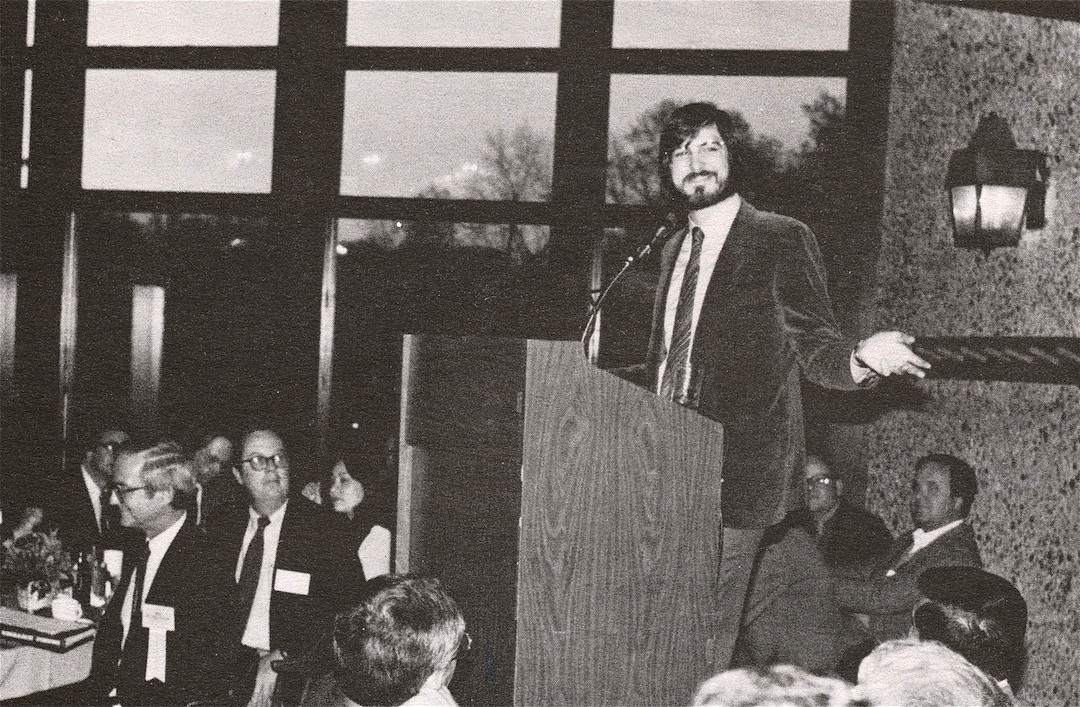
Steve Jobs making his pitch to venture capitalists, investment analysts and the odd journalist

Can e-books return us to the essence of what a book is?

Of course this masterpiece of fetishism crafted with loving irony could never be an e-book:

Peter Koch’s Ur-text, Volume I

Its specifications read : ‘Peter Koch, Printer, 1994 …. Composed in Goudy Text type and printed on handmade paper watermarked with the press logo. Hand-bound by Daniel Flanagan. Sewn onto alum-tawed goatskin thongs, covered in calfskin vellum, with twisted calfskin and Tibetan bone bead clasps. Limited to 25 copies. 248 pp. 10.5 x 16.5 cm.’

The photograph appears beside a quotation from the hallowed past of books, in an essay by the printer-philosopher titled, ‘What I Think When I Think About What I Make’:

In 1540, Alejo Venegas, a Spanish Jesuit, defined the Book as ‘an ark of deposit’ in which, ‘by means of essential information or things or figures, those things which belong to the information and clarity of understanding (entendimiento) are deposited.’ After defining the book, Venegas introduced the distinction between the ‘Archetype Book’ and the ‘Metagraph Book.’ He called the first ‘exemplar’ or ‘dechado’ and the second, ‘transunto’ or ‘traslado’. The first is the uncreated book read only by the angels; the second is the book read by worldly human beings.

Do try and keep up, Nooks, Kindles, and the rest of you e-readers: the angels are waiting. … But seriously, could e-texts take us back to the essence of what a book is – the communication of thoughts and feelings – free of mercantilist calculation and manipulation, and capitalism’s reduction of publishing, too, to the

progressive commodification of life functions, market mediation in successive needs’ satisfaction …

……………………………………………….?

That final quotation is from an article in yesterday’s Guardian, ‘Capitalism has learned to create host organisms,’ by the Polish sociologist Zygmunt Bauman.

David Talbot drops serious clangers in his appeal for the resurrection of Salon.com, an e-publishing pioneer

'The Great Grievance', an etching associated with the French Revolution, by an unknown artist

Salon.com is not actually extinct. It is just that its readership has declined precipitously, and no one talks about it any more – even though it is still capable of running first-rate pieces, like a report on Sunday about the indispensable Google Translate’s implications for multilingualism.

David Talbot is clever, likeable and tremendously enterprising. He deserved the towering pile of laurels that all but suffocated him and his fellow-Salonniers when they co-pioneered online journalism in the mid-1990s. I myself wrote a piece or two for him, at his invitation, in those early years. I enjoyed the typhoons they whipped up in reader reactions enough to sign on as a subscriber when the magazine slipped behind a pay wall a few years ago. It virtually disappeared behind it.

Not long after that, the e-zine lost David and its groove.  I let my subscription lapse and forgot all about it. But into my email box, a few days ago, dropped a surprise announcement – at least, for me – that he was trying to revive the magazine. The message said that he was back as its über-manager, after stepping down as editor-in-chief around 2005.

Unfortunately, what I could glean of his strategy ignores – or gives only the faintest nod to — the rise of the 5th Estate, the new media voices on the verge of eclipsing the once supremely authoritative 4th Estate with which Salon.com evidently still identifies. A more realistic plan would at least experiment with giving readers a chance to share ownership of the publishing sites that they sustain with their eyeballs and clicks – as in, for instance, this proposal recognising that the philosophical DNA encoded in the term ‘4th Estate’ belongs to the run-up to the French Revolution.

Instead, here is the gist of David’s email circular:

Dear Salon reader and Premium supporter:

I founded Salon 16 years ago […] For the first time in my life as a journalist, we — editors, reporters and critics — were in sole control of our work, not managers and corporate sponsors. […]

Now, six years after leaving Salon, I’ve decided to return as CEO, because I think the country needs a fighting, independent media more than ever. […]

I wanted you to know first because your previous support for Salon has meant a great deal to us — not just the money, but the sense of solidarity from your choice to become a Salon Premium member. […W]e are revamping and renaming Salon Premium. [ …]

We are adding many new benefits, amongst which are: opportunities to engage with writers and editors, magazine subscriptions, and if you choose, benefits from select marketers. […]

With the American people struggling to stay afloat in the Great Recession, and their hopes and well-being largely ignored by our political system, a free press is more vital than ever. We need an independent media to […] fight for the people. […]

I could be mistaken, but honestly do not see that getting many takers. What’s wrong with his appeal?

  • It’s the same old model. Reporters and editors perform on a stage. Readers pay to watch and listen. It ignores the new reality, which is that readers expect to have a chance to do star turns themselves. When I first visited the site a day or so ago, I found that a section of it, Open Salon, has since 2008 been dedicated to featuring readers’ blogs. I have been back twice. That might not be enough, but I have so far found no arresting or startlingly good – or simply startling – contribution, even though I remember that there were hundreds of readers with the requisite talent among the 100,000 paid subscribers the magazine once had.
  • Without a serious financial incentive – or at least, stake – in Salon’s revival and, ideally, voting rights in at least part of its running, why should anyone outside David’s small circle bother to post their best efforts on Open Salon? Its part of the site looks so strictly functional and dull that it could almost have a sign saying, ‘Makeshift Kiddie Corner’. Joan Walsh, the last editor-in-chief, said that OS would make the magazine’s ‘smart, creative audience full partners in Salon’s publishing future’. Her replacement, Kerry Lauerman, has promised, ‘We’ll also be unveiling ways for you to earn money for your great work on Open.I hope to find my pessimism unjustified, when that veil drops, but from his tone, it does not sound as if the Salonniers plan anything more enticing than some equivalent of the old 4th Estate offers of small cash prizes for ‘tastiest reader recipe’ or ‘best holiday snapshot’.
  • David’s appeal is addressed to ‘the American people’. Big mistake. Online readers are best addressed, for the most part, as citizens of the world. This part of his pitch sounds like the blinkered parochialism of George W. Bush. What do we expect now? The phrase ‘accelerated global conversation’ says it all. I found it here, in a piece reporting that,

    […[Pete] Cashmore, the soft-spoken chief executive of Mashable, the one-man blog he turned into a popular news site … appeared totally at ease [in his video interview.] … [W]ithin half an hour, an important measure of success was achieved. [Elie] Wiesel, who wondered aloud during the talk what might have happened if Moses — and also Hitler — had used social media tools to get their messages across, was trending worldwide on Twitter.
    “It just shows the acceleration of the global conversation and that Mashable is a force online,” said Mr. Cashmore, whose company worked with the United Nations Foundation ….”

Worldwide. Global. United. Online. Surely those are the essential thoughts, not just for me but all of us – and the hour.

Why, I wonder, is David ignoring them?

Howard Rheingold, the ‘smart mob’ and ‘virtual community’ man, hardly needs a gatekeeper

Conventional publishers do not know enough to act as omniscient filters for manuscripts. The 70 per cent royalty Amazon.com is paying to indie writers publishing their own e-books brings hope of fair compensation — at last — for the struggles of brilliant authors like Howard Rheingold.

Prescience and vision are not easily transmitted between minds – any more than an ear for music is, or a gifted wine-taster’s palate. This makes the tradition of gatekeepers deciding which texts are published absurd, and increasingly so. Once, big publishers and book agents were often literature-loving animals with weaker or stronger business instincts. Now, they are almost exclusively – proudly – spread sheet-driven beasts. The most successful of them, in their terms, are pragmatists too narrowly educated to know or care about ideas. It is hardly surprising that they are incapable of vetting them for either soundness or significance.

Consider Howard Rheingold and his thoughts about the technological future. He foresaw the lightning coordination – owed to what a time traveller from the ‘70s would perceive as plastic matchboxes – of the protests in the Arab spring, and the British riots. His term for the phenomenon has its own entry in the Wikipedia. It was the title for the book he published about it in 2002: Smart Mobs: The Next Social Revolution.

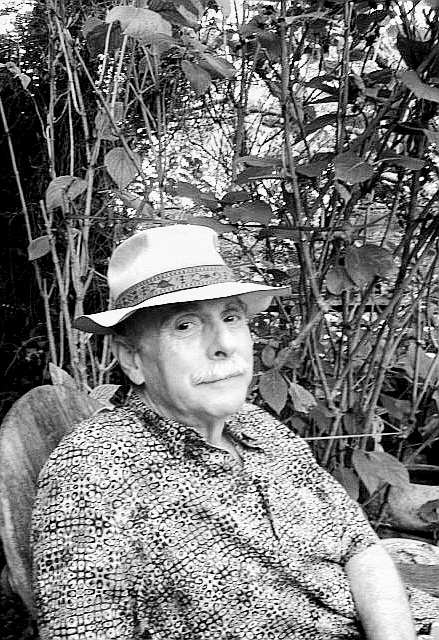
Howard Rheingold in his garden

Howard's garden Ganesh, the 'remover of obstacles' -- for instance, gatekeepers

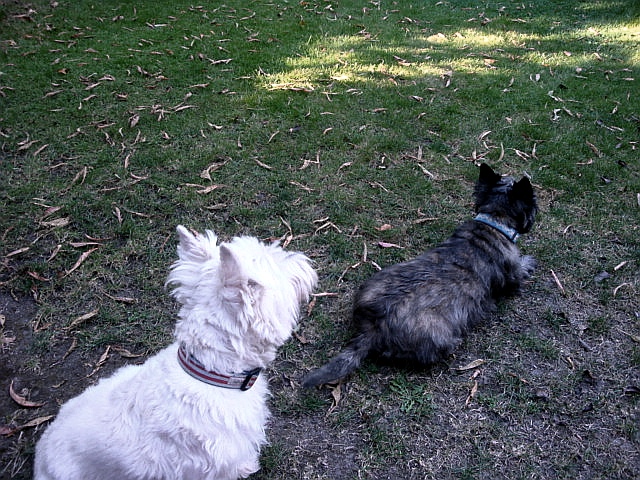
Pearl and Lulu, ready for their walk

In recent weeks, Howard has been putting the finishing touches to Net Smart – his book about ‘everything you need to know to thrive on the internet’ – downloadable to e-book readers next spring. I expect him to have a lot to tell us that we do not already know, as he has a startling record for accurate guessing about how technology is about to transform our lives, yet again. He predicted, for instance, the online fellowship we are nearly all part of, now, in his 1993 book, The Virtual Community: Homesteading on the Electronic Frontier (downloadable here, on one of his sites, for payment by the honour system.)

The famous names in trade publishing dithered about how much support they were willing to commit to the writing of Net Smart, in spite of the monumental proof of Howard’s wizardly foresight.

‘I’m five, ten, years ahead of what they can see or understand,’ he mumbled in an embarrassed aside, when I joined him on his hour-long daily constitutional last week. He flapped an exasperated hand in the air as he said that, marching at a cracking pace around a tree stump, and through California coastal scrub and brush near his house in the peaceful, ex-hippie town of Mill Valley, where Jack Kerouac once perched for a while.

Instead of a mainstream publisher, for a book about technological survival for us ordinary people, Howard is working with the MIT Press – associated with the great Massachusetts Institute of Technology. I have been considering, for a parallel, an author with a string of successful books anticipating how aeroplanes would globalise food, clothes and the sexual revolution, who must now rely, for a green light, on a gatekeeper specialised in vetting texts on aeronautical engineering. This seems ridiculous, even if the gatekeeper — in this case — enjoys prestigious straying outside strict academic bounds.

Who do I think Net Smart’s publisher ought to be? Howard himself.

Yesterday, there was yet another sign that indie publishing in taking off at top speed. In New York, the Perseus Books Group launched a distribution and marketing arm for authors publishing their own books – following Amazon.com (in which I am a sub-microscopic shareholder) in giving authors of e-books who use the service a royalty rate of 70 per cent, as opposed to the traditional 10-15 per cent that has long been standard in print publishing. This percentage is a more honest reflection of what publishers have been doing for most authors for decades, except that it is hard to believe that Perseus will actually do much marketing for any author not writing reliable best-sellers. Publishers have long expected writers to do nearly all the marketing themselves.

Certainly for writers angry about the unfairness of the usual split between author and publisher, this alteration is at least as important as the French Revolution. Better, in fact, since it has no disagreeable spectacles involving people-butchers lopping off aristocratic heads as crowds cheer madly.

Howard said that he was strongly tempted to go indie with this book, but decided that he wanted a traditional book advance one last time. I met him in the mid-1980s, when a mutual friend sent me to him for advice about whether I could survive as a writer outside captivity – leaving the large magazine that employed me. He could not have been more encouraging, but warned me that to pay the bills for the most simple life, I would have to work around the clock as he did, with almost no play time, not even at weekends. His wife Judy nodded in confirmation (gosh, were they right.) She, too, was working punishing long days, cutting and styling hair, proving her faith in his vocation.

Why must Howard, who has always understood the importance of both his own best perceptions and those of many a scientist and academic working in obscurity – and made an ever-wider market for them – continue to give away most of the revenue from his books to mere text-packagers?

He is and has always been too busy to rail against injustice. While he waits for Net Smart’s debut, he is supplementing his income from writing with exhausting expeditions to lecture at Berkeley and Stanford, as he had done for years. One of his projects involves pioneering the ‘co-teaching’ – through collaboration with his students — of online journalism, and the effective use of social media. On Twitter last month, he was advertising his new, all-online university, Rheingold U, specialising in ‘the literacy of cooperation’:

The term “collective action” may be dry, but the mysterious magic that enabled homo sapiens to use symbols to organize group activities like hunting or agriculture is what distinguished our ancestors from the other scrawny primates on the savannah […] Although this might seem far removed from the questions posed by digital networks, our species might be in for another leap into an entirely different level of complexity and way of life, depending on how we use digital networks to collaborate in new ways and on new levels.

When I have read Net Smart in a few months, I shall have a bit more to say about Howard – and hope that he will, by then, have made the leap into the next, entirely different phase in the evolution of publishing.