Christo preceded Banksy in wresting material security or ‘business models’ from ephemeral, unshackled art — offered to all with no admission fee

Christo married nature to the built world with a modernist eye for straightforward surrealism — going beyond the real — in art that often abstracted bits of pattern or contour from a landscape, then displayed his ideas there temporarily by covering up great hunks of it in fabric, or by fastening objects onto it ( See: samples )

Banksy’s stencilled goat (L) compared to an American Indian cave painter’s freehand rendering of a nanny goat kidding with human aid, a pictograph that could be six thousand years old

Christo could have no equal in his extravagantly inventive reinvention of payment for art. Applying artistic license to finance, he exercised it to the limit. Heaven only knows how he worked out his methods of getting paid not for his barely-there/short-stay/vanishing/ephemeral works of ‘land art’, seemingly dreamt up at their gargantuan scale by giants — in fact, by a bespectacled figure as slight as an idea still being translated into flesh — but mainly for his creations’ equivalents of amniotic sacs, their eggshell-fragments, their tadpole tails. 

Getting paid, that is, without government arts-and-culture grants or fat cat patrons or by lending his face or images of his creations to purveyors of luxury goods, to flatter their status-seeking buyers by association. If there were artists before him who showed him how to thrive by unconventional means, they go unmentioned in encyclopaedia entries, journalists’ potted biographies, and on Christo fan sites. 

Christo as the signature not noticeable on projects such as Wrapped Coast in 1969 — in which an entire small bay and its cliffs in Australia were draped in grey erosion-control fabric for ten weeks — eventually referred to both the primary mover and his collaborator and wife, two artists born in different countries on the same June day in 1935. 

They were married in the late 1950s in Paris, where he had arrived by way of Vienna and Geneva, having fled Bulgaria, where he was born, as a penniless 21 year-old stowaway on a railway car — to escape military conscription and being forced by the Communist government to paint propagandist imagery. She was a Moroccan-born socialite living there, the stepdaughter of a distinguished French general, when he was commissioned to paint a portrait of her strikingly beautiful mother.

Her family’s wealth was probably the psychological safety net for the Christo partnership’s confident, early rejection of the usual ways of earning money for art to seek alternatives. His contribution was psychological drive — motivation that children of the well-off typically do not find on their own. It originated in dire family travails and his own struggle for free expression in Bulgaria, where his father had been imprisoned ‘for being part of the intelligentsia,’ leaving a household that had been prosperous impoverished and subjected to oppressive state surveillance.

Combining actual names for credits would have hinted at these complex antecedents but made an indigestible nomenclature soup: Christo Vladimirov Javacheff and Jeanne-Claude Denat de Guillebon. 

Part of their earnings came from the sale of original lithographs related to their creations; the rest from purchasers of the sketches and collages, preparatory drafts, plans, and scale models of their spectacular finished works — for whose execution they hired other hands, or accepted help from volunteers. They insisted that their contributions to art should be seen as encompassing their exhausting extended battles to overcome public and governmental opposition to realising their imaginings — most famously, a fight for nearly a quarter-century ’across six Bundestag presidents,’ for permission to wrap old imperial Germany’s Reichstag, its supreme government building, still serving in that role today.

Some of us spent the end of summer waiting for any plausible cultural commentator to invoke Christo as the crucial predecessor — part-inspiration, surely? — of Banksy, the pseudonymous and elusive street artist-cum-prankster from Bristol who cheered everyone up after the mass rioting following Britain’s change of government in July.

The goat mural that attracted worldwide attention in early August was obviously in the stencilling tradition he is so proud of — because it lets him put up murals he has worked on in his studio at top speed. Not so as to shine as a time-and-motion virtuoso, but to avoid getting arrested. He could still work fast and stealthily in a freehand line but, no, he prefers the mechanical look of stencils with none of the élan or genius of the cut-outs Matisse turned out like hotcakes in his old age. These Banksy templates actually look as if they were never drawn at all but traced from documentary photographs, reminding the viewer of his reputation as a copycat’s copycat — since stencilled graffiti have been associated since the early 1980s  with a Parisian artist, Blek le Rat, who has complained mildly about the imitation.

None of this is to deny the charm or wit in Banksy’s antic political protests, from his very first graffito in 1997, a mural with a cartoon teddy bear hurling a Molotov cocktail at hapless riot policemen.

Like Christo, Banksy also earns his money — millions of pounds a year, it is said in unsubstantiated reports — by thumbing his nose at traditional sources of income for art. (He could be an invisible man with no visible means of support except for the unavoidable conclusion from visits to art world sites, that he and mainstream media have an unofficial pact to keep the wheeze about his indeterminable identity going for as long as possible, to give us something to smile about.)  As a street artist determined to avoid being dictated to, exploited or edited by gallery owners, he sells representations or versions of his murals — ‘stencil works, silkscreens, and lithographs rendered in the same style as his wall pieces, and in many cases [using] the same imagery’ — according to a long, absorbing and apparently well-informed account of his ‘business model’ on Art Space’s website

He seems never to have sought to stop ‘art dealers and property owners … tearing apart walls to remove and sell Banksy works.’ For a span of years ending in 2018, he collaborated with other graffiti specialists to sell modestly-priced prints of their images through a printshop and website. That collective, Pictures on Walls, was shut down six years ago with this impressive statement:

Inevitably disaster struck—and many of our artists became successful. Street Art was welcomed into mainstream culture with a benign shrug and the art we produced became another tradeable commodity. Despite attempts at price fixing regrettably some POW prints have become worth tens of thousands of pounds. 

Either unable or unwilling to become part of the art market we once so self-righteously denounced — we called it quits.

Banksy apparently continues to circumvent the art world’s mercantile establishment by selling his work exclusively through private arrangements with buyers — again, according to Art Space’s worshipful exegesis.

Search engines produce few or no results for simple queries combining Christo’s and Banksy’s names — yield no evidence of anyone noticing their similarities. A list of rough jottings:

— art displayed for no charge in public spaces — playfulness/ a spirit of fun even when protesting about collective obtuseness/social injustice

— earn money (lots) from tangentials, incidentals and representations of — not the works themselves 

— art that is not made with permanence as the objective 

— BUT is also part of a personal fight against authority of some kind — for C, with governments or collective administrators; for B, against gallery owners and other ruling powers in art merchandising establishment

—  art that offends some — B’s sometimes referred to as defacements or vandalism; C’s infuriated eg., Parisians who objected to the wrapping of the Arc de Triomphe, and it took decades to overcome objections to several public projects, even when he and Jeanne-Claude won

Christo and Banksy matter naturally to this p-G website because financial innovation for a different category of arts worker is the point of the proposal for a keiretsu-cooperative — a constructively social, egalitarian scheme for using the internet to nudge publishing into its post-Gutenberg future.

Alas, no writers appear to have accomplished what these artists have in setting their enviable terms for making art pay, and handsomely. 

This is less true of Christo — who survived Jeanne-Claude by eleven years and died in 2020 — than of Banksy, who does not lend his image or scraps of autobiography to hawking his pictures. What contemporary, real-life equivalent is there of the wholly fictional M. N. Opie, a gifted, principled storyteller in a new novel by Neel Mukherjee, who ‘refuses to jump through the hoops of book promotion, will discuss editorial matters over email but avoids social media and will volunteer no personal information, not even a gender’? The LRB reviewer, Adam Mars-Jones, believes like most professional novelists that they are powerless to oppose being required to appear before the public like plucked chickens: ‘These days self-promotion, the business of presenting to the world your trauma or cheekbones (ideally both) is not optional …’. Brilliant M. N. Opie’s story collection does not find enough readers to save it from imploding into utter obscurity.

We must reach once again to the past and a certain Elizabethan playwright for an example of a scribbler soaring above the constraints and humiliations bedevilling writers to succeed in a bold new way of earning a living — the subject of a p-G post in March. Jonathan Bate — the Shakespeare expert whose deductions about the Bard’s financial acumen from decades of research featured there, effectively makes a case for Shakey being a sort of Banksy avant la lettre, for his own reasons. 

The dearth of verifiable flesh-and-blood facts about the man from Stratford-on-Avon, Bate suggests, is not in the least accidental. It is what he intended for posterity. Philosophy in Shakespeare’s day was conditioned by the Greeks and Romans. They warned about the double-sidedness of fame; that with glory comes Rumour, ‘the evil of the highest velocity,’ envisaged as a shameless surveillance she-monster whose body is pocked all over with ‘vigilant eyes’. Bate singles out Epicurus as the crucial influence — homing in on ‘the Epicurean precept that would have been the perfect motto for Shakespeare: “HIDE THY LIFE.”’ [ JB’s emphasis ]

That could hardly be an injunction for the rest of us, now. What defence has the resourceful Banksy himself against the ever-intruding snouts of the data collection apps in our devices, the treacherous software in the internet of things; against our collectively spineless, toothless — or uncomprehending — submission to an AI-ruled future? Or does Banksy rely on human couriers networking with carrier pigeons to communicate, and post on Instagram through intermediaries? Questions for a future p-G installment.


for 9. 4. 2023

.

The drawings above and below are by Susan Eales

.

.

It should be of the pleasure of a poem to tell itself how it can.

                                         Robert Frost, 1939

.

It is of the pleasure of this website to both make and point to superficially improbable links, or those that emerge only from extended mulling.

Here is a poem about the beauty in an inescapable great truth about the making of art. What it has in common with Easter is its appreciation of what matters most, and is acknowledged as such in so many world religions and folk tales. In the Christian tradition, the man on the cross said, in defending himself against that sentencing, ‘To this end was I born, and for this cause came I into the world, that I should bear witness unto the truth.’

Religion is not part of this site’s remit. Nor is it the subject of the gently wry, judo- and koan-like, but strictly secular poem by the Anglo-French poet Roy Eales. Yet his poem is written from that same preoccupation with the supremacy of what is both essential and true — in this case, about the purpose and meaning of the lives and work of artists. 

What are these worth? On the Indian subcontinent in the 1600s, the Moghul emperor Jehangir — who was also a consummate art-lover and collector, and a good writer — arranged for artists to receive regular wages roughly equivalent to the pay of soldiers. Unfortunately, he failed to start a trend. Connoisseurs of unlikely connections will want to know that the record of his admirable innovation was gleaned from following a mention in a finely wrought miniature essay on a financial news site, the other day, to a detailed explanation by Polyxeni Potter of the choice of cover art for a 2009 edition of Emerging Infectious Diseases.

‘The essence of a fine idea’ is taken from Roy’s latest collection of poems in Hazy mist on the sea, delicately illustrated by his wife Susan, an artist in her own right, and published this spring by Blackbird-Pawel Editions in a slender volume that looks and feels as if it grew out of a masterclass in exquisite bookmaking. In another expression of the dream of a culturally unified Europe, it includes English, Breton, French, German and Dutch versions of each poem. 

I am placing the English verses after their French rendering in this post because French is the language in which I believe they came to Roy, in the unaccountable way poetry does to all genuine poets. 

My ordering is a matter of sensing more or less music in an arrangement of words. What faculty decided the question? Citing the theories of the neurobiologist Antonio Damasio, the virtuoso Israeli pianist and conductor Daniel Barenboim has pointed out that we perceive more finely with our ears than with our eyes. A foetus growing in a womb begins to listen forty-five days into a pregnancy, giving hearing a seven-and-a-half month edge over the development of vision. This, Barenboim says — without any bias, naturally — means that the ear is ‘probably the most intelligent organ the body has.’

If nothing else, that makes me wish I could say and not merely write to anyone reading here today or tomorrow:

H A P P Y    E A S T E R  

.

.

L’essence d’une idée admirable

.

La poésie n’est pas nécessaire.

Les idées sont essentielles.

La poésie représente les idées du poète.

.

Peindre n’est ni utile ni nécessaire.

Les idées sont essentielles.

Les peintures représentent l’idée d’un peintre.

.

La musique est abstraite et n’est pas nécessaire

sans paroles pour chanter l’idée du compositeur.

.

Les idées sont essentielles.

.

Faire des images avec des mots

revient au même

que d’étaler la peinture sur une toile

ou bien de coucher des notes de musique sur le papier.

.

Seul, chaque processus n’est qu’un processus, une abstraction,

.

dépouillée de l’essence

des idées de l’artiste, 

cachée pour enchanter, 

pour être dévoilée

par nos imaginations.

Les idées sont nécessaires.

Faire quelque chose qui n’est pas nécessaire est une admirable idée.

.

.

The essence of a fine idea

.

Poetry is quite unnecessary.

Ideas are the essence.

Poetry represents the poet’s ideas.

.

The process of painting is neither useful nor necessary.

Ideas are the essence.

Paintings represent a painter’s idea.

.

Music is abstract and quite unnecessary

without words to sing its composer’s idea.

.

Ideas are the essence.

.

Making pictures with words

is no different

than stroking paint on a canvas,

or penning musical notes on paper.

.

Alone each is just a process quite abstract,

.

bald without the essence

of the author’s ideas,

concealed to delight, 

to be unveiled,

by our imaginations.

Ideas are necessary.

To do something unnecessary is a fine idea.

.

.

Can artists grow the heart the European Union has to have to hold and bind together?


Roy Eales by Sascha Juritz, postgutenberg@gmail.com

Portrait (above, from A poem decides) and cover art (below) are by Sascha Juritz,  a lover of Breton culture who ‘saw Brittany as a twin for Lausitz, his own Slav country locked into the Czech and Polish borders’ 

Roy Eales -- cd cover Just in Case, postgutenberg@gmail.com

Imagine the happiness of sitting on a sun-dappled terrace in the French countryside, where you have had to reassure, say, the oldest person at your café table — your dear, monolingual English father-in-law — that you suggesting that he try la tarte du village has nothing to do with the two ladies of the night before, loitering beside the picturesque stone bridge in décolletage more evident than clothes.

Forever after, this will be the most risqué story you will repeat and embellish at family gatherings, but — still in the original moment — everyone at your table goes on to order a second cup of coffee and sipping quantities of gullet-scorching marc. Why? To stretch out the pleasure of listening to the unannounced, spontaneous concert-with-poetry that has begun unobtrusively at the other end of the patio, a performance mostly in the language or dialect of this part of France that lets you crawl under the skin of the place, into the preoccupations of its people, as you could not hope to do on the usual sightseeing-and-feeding tourist rounds. Perhaps you strike up a conversation with the born-and-bred-here family at the next table, when they explain the history behind the lines of one of the songs you’ve been listening to, which reminds you of a novel by Stendhal or Colette you read and wept over as a teenager. Your satisfaction, your feeling of enrichment, becomes incalculable.

Unless and until most Europeans have sensory treasures like these to savour, personal experiences of being in other EU nations, the Unión Europea, Europäische Union, Unione Europea and so on … will never be more than a merely pragmatic head-over-heart construction. This autumn’s dismal Brexit negotiations resemble the arguments in a divorce battle at the end of a marriage notable not just for a lack of love or passion but simple affection. It is a union of countries joined in the equivalent of an arranged marriage that made unassailable good sense on paper — but in which the parties never made any effort to get to know each other at the level of scent or touch, let alone become mutually endearing; or develop shared habits; or accumulate a store of common memories.

And how can you tell what a true inter-cultural marriage — respecting and revelling in cultural differences — would be like?

There is a sort of — marvellous — answer in a set of performances captured on Just in Case, a CD first mentioned on this site six years ago that reappeared in a bookshelf-tidying exercise the other day. It sounds sung and spoken straight from the souls of Bretons about scenes and old legends of Brittany, although all its material is new, and it lets you hear Breton voices — including one that is especially gravelly and magnificent, belonging to Fañch Peru, to which you can listen on a clip uploaded here  — singing or reciting poetry, some of it protesting, conveying the depths of understandable anger about attempts by authorities in Paris to stamp out the Breton language as if it were a foul pest.

But no, not all the performers are actually natives of Brittany. Among them are Marianna Butenschön from Germany, Owen Martell and Tomos Williams from Wales, and several from other French regions.**  All the poetry and lyrics are by Roy Eales, a part-time inhabitant of Breton country whose forte is elegantly delectable whimsy with powerful undercurrents, and whose first language is English — even if, when reading English and French versions of his poems side-by-side, you might strongly suspect that several came to him first en français. The foreigners share Breton sentiments — cultural pride, outrage about subjugation — to a degree that would be implausible to anyone who had no idea of how many antifascist outsiders lost their lives fighting in the Spanish Civil War of 1936-9, including 500 from Britain and 900 Americans.***

Roy and his wife and perfect mate, the painter Susan Eales, have with a fine and cherishing ear translated into English dozens of poems by a munificently gifted Flemish friend of theirs, Willem Roggeman, published in A splendid view on words. He has reciprocated, introducing Flemish readers to Roy’s poems in his own English-to-Flemish renderings.

Like Just in Case, none of these collaborations and exchanges were subsidised by the EU or any government, as far as we know, or organised by official edict, or prompted by worthy kumbaya ambitions.**** They seem to have come about from natural attraction, or what is most essential in art.

If only they were more common, and were advertised and shared more energetically — not necessarily on the internet, where you can find uploads of the odd clip from Just in Case that, certainly at this stage of technological evolution, sound woefully anaemic and fail to do justice to its impeccable, professional production.

The collection’s tone is set by Julie Murphy, born English, but singing translations of Ealesian verse into Welsh — the language of her husband’s people — in a warm yet sublimely ethereal voice, as movingly as the young Joan Baez (and yes, that is saying a lot). It is a performance with an intimacy that cannot be faked, free of the annoyingly over-the-top emoting of too much Celtic fusion music, and of slick, big-studio tricks and manipulation. You, the audience, seem to be a privileged eavesdropper, as when listening to the riffs of jazz musicians who have been playing together for an eternity, or the improvisations of a classical Indian sitar-and-sarod ensemble — even if the pieces that make up Just in Case are not live recordings.

Saying more than this would approach literary or musical criticism. At post-Gutenberg, we prefer to let work speak for itself, on the whole — a preference that the objets d’art in this poem would certainly share:

Royal Academy of Arts

Nobody asks
how the paintings feel
when the exhibition is over.

Is it not then
that these tired oils
deserve a little rest?

They have seen enough
eyes and heard enough
words of artful observers.
Enlarged by a superior sense
who speak aloud, these masters …

… these accountants of
image, of culture,
these over-filled vessels of real meaning
(they speak of this work or
that to anyone
who listens till nobody hears).

These onlookers
must be taken down.
The paintings decide they can’t take any more.

Roy Eales, in A poem decides/ Ar barzhoneg an fini a ziviz/ C’est le poème qui decide/ Ein Gedicht entscheidet (2013)

** Reciting the names of the musicians and performers makes a feast for the ears — or aural overload. A by no means complete list would also include: Bernez Tangi, Marthe Vassallo, Emmanuelle Huteau, Nanda Troadeg, Kemo and Matilda Veillon, Jean-Michel Veillon, Yannick Jory, Jean-Luc Thomas, Pierrick Tardivel, Philippe Gloaguen, Philippe Ollivier … And then there are the translators from English: Fañch Peru (Breton); Nanda Troadeg, Marie-Noëlle Le Tallec, and André LeFèvre, in addition to Roy and Susan Eales (French); Maria Tritschler, Marianna and Wolf Buenschön (German); and Owen Martell (Welsh). For your own copy of the CD, telephone or write to Marie-Pierre Le Pennec, Le Bourg, 22140, Pluzunet, France. Tel: mobile -0033635911833. €16.50 (including p&p). Email: marie-bzh-22@orange.fr

*** In the first part of her autobiography, An Unfinished Woman (1969), the playwright Lillian Hellman — who travelled to Spain to report on this war — wrote: ‘Never before and never since in my lifetime were liberals, radicals, intellectuals and the educated middle class to come together in single, forceful alliance.’

**** A kind note from Roy on 23 September added valuable enlightenment, summarised as follows:

The artists worked together for four years without any external financial support. Once the collection of performances that became Just in Case was ready in final form, funding for production of the CD and for concerts to promote it arrived from: the cultural services section of the Conseil Générale of the Côtes-D’Armor and Itinéraires BIS des Côtes-d’Armor (the département where the Eales family and Breton and other artists have homes); Stiftung Brass, a cultural foundation in the German city of Aschaffenburg (which had in the past supported and helped to arrange exhibitions of the works of Sascha Juritz, see above); the Arts Council of Wales and Welsh Arts International; and Dao d’a r C’had and Ti ar Vro, two Breton cultural associations in Cavan and Pluzunet. After Just in Case was released, France 3 Television chose it as one of the three best CDs of 2011.


Radically open — post-print — justice, streamed live from Britain’s Supreme Court, salutes art’s power to keep an artist alive and prevail over horror

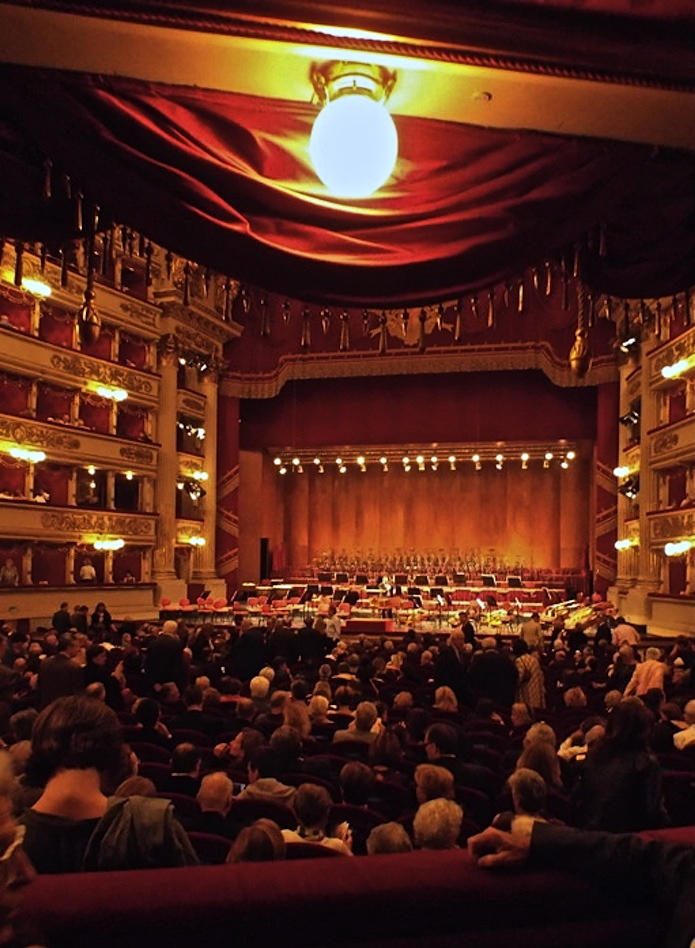
At La Scala -- photograph by MIL22

At La Scala, the world’s most famous opera house and concert hall:  neither here nor at its least glamorous counterparts elsewhere is it possible to discern, from the audience, the awful truth about what music means to some musicians — photograph by MIL22

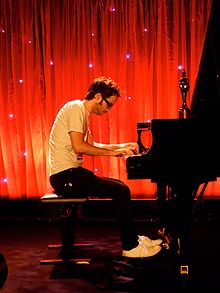
James Rhodes at the piano

James Rhodes at the piano

After you have recovered from your astonishment at seeing the Kindle price for this book, Instrumental: A Memoir Of Madness, Medication And Music£8.54, or $24.46 in the U.S., where you cannot buy a copy, at present, you click on ‘Look Inside’. First come the chapter headings most unusual for an autobiography, irresistible for any lover of classical music: ‘Track One: Bach, “Goldberg Variations,” Aria (Glenn Gould, Piano)’, ‘Track Two: Prokofiev, Piano Concerto No. 2, Finale (Evgeny Kissin, Piano),’ … and so on. The opening paragraphs are so raw, self-lacerating and articulate, at once, that you feel as if the top of your head has gone missing. You emerge from the text to Look Outside again, following your scrolling finger down to British reviews that add up to a standing ovation … but, wait! Are you seeing straight? Can this really be the first reviewer? Yes. Improbably, here are the words of the clip and credit beneath it:

A person who has suffered in the way that [James Rhodes] has suffered, and has struggled to cope with the consequences of his suffering in the way that he has struggled, has the right to tell the world about it. And there is a corresponding public interest in others being able to listen to his life story in all its searing detail. (THE SUPREME COURT)

Though we have yet to read more than the brief sample of the text on the Kindle site, it looks as if it is written in the incandescent Angry Young Men tradition of 1950s England — by one of the Oxford-educated members of the group, perhaps. The soaring encomiums it has won from reviewers are plainly not hyperbole extracted by cunning marketing and influence-peddling. The reader reviews on Amazon UK confirm that. Who has ever seen nothing but 5-star reviews for a work with more than a handful of testimonials, on the e-bookseller’s site? This one had 111, when we last checked.

Judged by the Court’s explanation for its decision, quoting James Rhodes at length — hair-raisingly — his book is the most stunning record of art redeeming life that most of us will ever have encountered. Almost equally arresting were the words the justices chose to spotlight the sublime importance of freedom of expression:

Freedom to report the truth is a basic right to which the law gives a very high level of protection. It is difficult to envisage any circumstances in which speech which is not deceptive, threatening or possibly abusive, could give rise to liability in tort for willful infringement of another’s right to personal safety. The right to report the truth is justification in itself.

News and analysis of this uplifting decision was posted in two entries in Inforrm’s Blog (the International Forum for Responsible Journalism) — one of them a re-blogging of an entry in the Injunctions Blog. Somehow, both posts failed to mention that the pianist and autobiographer was represented at the appeal by Hugh Tomlinson QC — anointed Lawyer of the Week by The Times for his victory — who happens to be the founder-editor of the INFORRM web site. The blog is invaluable to anyone trying to keep up with changes in media law in the disorienting transition from traditional publishing, but especially indispensable for independent journalists, bloggers and citizen journalists who — unlike their counterparts in corporate media — have no legal department watching their backs. Many, if not most, INFORRM posts are reproductions of entries in other blogs, mainly from the UK, Ireland and Australia — an exemplary exercise in aggregation.

The INFORRM editor was also the founding editor of the UK Supreme Court’s blog, inspired by its American counterpart, the SCOTUS blog. However, Britain’s court of last resort stole a jump on the Americans with the start of live video streaming of its proceedings in 2011 — a move still being resisted across the Atlantic. This proof of a commitment to using post-Gutenberg media to deliver radically open justice dovetails perfectly with the justices’ heavily underlined commitment to protecting free speech in all its forms.

A videorecording of Lord Toulson delivering a summary of the Rhodes case judgment can be watched here.

Below, we post extracts from the detailed exegesis of keenest interest to us.

Just how did Instrumental come to the attention of Britain’s highest court of appeal? From the opening paragraph of the judgment published on 20 May, it is possible to glean the conventionally-minded reasoning to which the lower court responded, in suppressing its publication:

By these proceedings, a mother seeks to prevent a father from publishing a book about his life containing certain passages which she considers risk causing psychological harm to their son who is now aged 12. Mother and son now live in the United States of America and so the family court in England and Wales has no jurisdiction to grant orders protecting the child’s welfare. Instead, these proceedings have been brought in his name, originally by his mother and now by his godfather as his litigation friend, alleging that publication would constitute a tort against him. The tort in question [dates back to 1897, and is] generally known as intentionally causing physical or psychological harm. What, then, is the proper scope of the tort in the modern law? In particular, can it ever be used to prevent a person from publishing true information about himself?

Then, later passages in the very long but riveting explanation for the decision show how profoundly impressed the higher Court was — to its everlasting credit — by the meaning of music for this particular musician:

The father is James Rhodes, the concert pianist, author and television filmmaker. The book is entitled Instrumental. The author believes that “music has, quite literally saved my life and, I believe, the lives of countless others. It has provided company where there is none, understanding where there is confusion, comfort where there is distress, and sheer, unpolluted energy where there is a hollow shell of brokenness and fatigue”. He wants to communicate some of what music can do, by providing a sound track to the story of his life. “And woven throughout is going to be my life story. Because it’s a story that provides proof that music is the answer to the unanswerable. The basis for my conviction about that is that I would not exist, let alone exist productively, solidly – and, on occasion, happily – without music.” So the book juxtaposes descriptions of particular pieces of music, why he has chosen them, what they mean to him, and the composers who wrote them, with episodes of autobiography. He wants the reader to listen to the 20 music tracks while reading the chapters to which they relate.

Thus far, there would be nothing for anyone to worry about. But the author’s life has been a shocking one. And this is because, as he explains in the first of the passages to which exception is taken, “I was used, fucked, broken, toyed with and violated from the age of six. Over and over for years and years”. In the second of those passages, he explains how he was groomed and abused by Mr Lee, the boxing coach at his first prep school, and how wrong it is to call what happened to him “abuse”:

“Abuse. What a word. Rape is better. Abuse is when you tell a traffic warden to fuck off.

[…]

He describes how he learnt to dissociate himself from what was happening, to block it out of his memory, how when he moved to other schools he had learnt to offer sexual favours to older boys and teachers in return for sweets and other treats. He gives a searing account of the physical harms he suffered as a result of the years of rape and of the psychological effects, which made it hard for him to form relationships and left him with an enduring sense of shame and self-loathing.

He recounts the ups and downs of his adult life: a year at Edinburgh University filled with drugs and alcohol, leading to his first admission to a psychiatric hospital; a year working and sobering up in Paris; three years studying psychology at University College London, leading to a highly successful career as a salesman in financial publishing; meeting and marrying the mother, whom he calls Jane, an American novelist then living in London; making a “perfect home” with her. He is kind about his wife – “The poor thing didn’t stand a chance” – and hard upon himself …

[…]

Then their child, whom he calls Jack, was born: “My son was and is a miracle. There is nothing I will experience in my life that will ever match the incandescent atomic bomb of love which exploded in me when he was born.” He wanted to be a perfect father, but “I don’t think that I will ever be able to make my peace with the fact that the ripples of my past became tidal waves when he was born”. His past had installed “an unshakeable belief that all children suffer through childhood in the most abominable ways and that nothing and no-one can protect them from it”. Eventually, he looked for professional help from a charity specialising in helping victims of child sexual abuse and was told that he must tell his wife about the abuse. So he did. Their child was then four years old. “It is, apparently, very common for the world to spin completely off its axis when your child approaches the age you were when the abuse began”.

[…]

Interwoven with this painful story is the story of his relationship with music. He discovered music, specifically, Bach’s Chaconne for solo violin in D minor, transcribed for piano by Busoni, while still at the preparatory school where he was being so brutally abused:

“… that piece became my safe place. Any time I felt anxious (any time I was awake) it was going round in my head. Its rhythms were being tapped out, its voices played again and again, altered, explored, experimented with. I dove inside it as if it were some kind of musical maze and wandered around happily lost. It set me up for life; without it I would have died years ago, I’ve no doubt. But with it, and with all the other music that it led me to discover, it acted like a force field that only the most toxic and brutal pain could penetrate.”

At his next preparatory school he largely taught himself to read music and play the piano. At Harrow, he had his first proper teacher, who was “awesome”. He discovered that “literally the only thing in the universe I realised I wanted was to travel the world, alone, playing the piano in concert halls”. Then he gave it up during the ten years of university, building a career and getting married. But after his son was born and the demons returned, “I looked for distractions. I looked for a way out that didn’t involve homicide or suicide”. He found it in music. He set about building a business partnership with the agent of “the greatest pianist in the world”, but was persuaded instead to train as a pianist himself. He worked hard. And when he had begun to resort to self-harm, he decided to organise his first public concert. He rented a hall on the South Bank, the hall was filled, and the concert went well: “I realise that all those fantasies about giving concerts that I had as a kid, that kept me alive and safe in my head, were accurate. It really is that powerful. And I knew I wanted to do it forever. No matter what”.

Then the suicidal ideas and attempts and hospitalisation took over. But a friend visiting him in hospital brought him an iPod nano loaded with music inside a giant bottle of shampoo (toiletries being the only gifts allowed). Once again music was his salvation. It persuaded him to do what he needed to do to get out. After separating from his wife, he started to get more involved in the piano again. And in a café he met the man who was to become his manager. Together they arranged for him to record his first CD, Razor Blades, Little Pills and Big Pianos. He found a sponsor to enable him to concentrate on his music. He did a documentary about Chopin for the BBC. His manager arranged concerts at the Roundhouse and the Queen Elizabeth Hall. Together they devised a new sort of concert, in which the pianist talked about the music, the composer and what it meant to him, in an informal way quite unlike the usual classical music concert. It was a success. Through his manager he met the woman who was to become his second wife.

[ continues: … https://www.supremecourt.uk/cases/docs/uksc-2014-0251-judgment.pdf ]