Surfer, passing by: will you pause to list the three Beatles songs you like best, today?

‘Happy Birthday, MIL22!’Photograph by postgutenberg@gmail.com

‘Happy Birthday, MIL22’

Elderly intellectual Parisian piano teachers married to each other in the latest Michael Haneke film, Amour, are exercising their right to musical snobbery when they sniff disdainfully at the idea of someone playing a tape-recording of Yesterday’ at the funeral of a member of their elevated social set. It takes less than two seconds to realise that this exchange could easily have been stolen from real life — the Beatles having been, arguably, the 20th century’s most irresistible agents of cultural democracy before the internet took off.

The letters of Samuel Beckett starred in last winter’s reading at post-Gutenberg — and made our blog’s most popular entry. This winter, the essays of a fastidious, spinsterly Cambridge don psychologically married to his mother for much of his life (or so it always seemed to us) have been our special delight. It hardly matters how E. M. Forster came by his understanding when, in 1940, he answered his own question, ‘Does Culture Matter?’:

Culture is a forbidding word. I have to use it, knowing of none better to describe the various beautiful and interesting objects which men have made in the past … Many people despise them.

[…]

I know a few working-class people who enjoy culture, but as a rule I am afraid to bore them with it lest I Iose the pleasure of their acquaintance. So what is to be done?

It is tempting to do nothing. Don’t recommend culture. Assume that the future will have none, or will work out some form of it that we cannot expect to understand. … The difficulty here is that the higher pleasures … rather resemble religion, and it is impossible to enjoy them without trying to hand them on. The appreciator of an aesthetic becomes in his minor way an artist; he cannot rest without communicating what has been communicated to him … It is therefore impossible to sit alone with one’s books and prints, or to sit only with friends like oneself, and never to testify outside.

… So, reader surfing by, this month, this year, or as long as this blog is alive … are you moved to testify on behalf of the Beatles oeuvre – put your three most beloved songs from it into a comments box below, with or without an explanation or any expectation of a reaction? … A message in a bottle cast out to sea?

Forget #Leveson. Journalism’s future is about being held to account by us, not judges or statutes

Pop Art tribute by the surrealist Giorgio De Chirico from another another angle (see last week's post)Photograph by MIL22

Pop Art tribute by the surrealist Giorgio De Chirico from another another angle (see last week’s post)
Photograph by MIL22

Lord Justice Leveson believes — or must now pretend that he does, for political reasons we explained in a recent post:

[B]loggers and tweeters … have no real reputation for accuracy or reliability but are, in many ways, no more than electronic versions of pub gossip […O]n the other hand, the established media and established journalists … have a powerful reputation for accuracy …

 — lecture at Melbourne University, 12 December 2012

… and …

The internet … does not trade in gossip. It simply publishes it online, […I]t does so without, as yet, any general standards of behaviour, such as those to which the media is held.

 speech at the University of Technology in Sydney, 7 December 2012

The truth is that without thoughtful, diligent bloggers — and other agents of free speech — this trenchant perception from nine decades ago would still apply with full force:

[J]ournalism is supposed to tell us what is happening. It actually serves up a mixture of true facts, false facts, and comment … ‘The high mission of the Press.’ Poor Press! As if it were in a position to have a mission! It is we who have a mission to it.To cure a man through the newspapers or through propaganda of any sort is impossible: you merely alter the symptoms of his disease. We shall be purged only by purging our minds of confusion. The papers trick us not so much by their lies as by their exploitation of our weakness.

— E. M. Forster, 1925

Here is the concluding sentence of an exposé of serious misreporting by the press of an important government reaction to Lord Justice Leveson’s report — a warning by the Information Commissioner, Christopher Graham, about just one of the judge’s recommendations, in a favourable overall assessment of them:

Unfortunately, the press has once again, sacrificed balanced and accurate reporting of facts in order to promote its own political agenda.

Of course that would hardly surprise Forster, a subtle and deep social observer (whose perspicacity we have alluded to before, in the very different context of the British Raj in India). The blog post from which we clipped that grim conclusion is reproduced below with the kind permission of Hugh Tomlinson at the International Forum for Responsible Media (INFORRM) — which, as far as we can tell, is run not by members of the media but lawyers with a social conscience.  Its subject is the distorted newspaper reports of the Information Commissioner’s reservation about Lord Justice Leveson’s suggestion on ‘subject access’ — that the subjects of news stories be permitted to examine the information about them in the files of journalists (with the 1998 Data Protection Act as his context). This is an eminently reasonable objection: opening journalists’ records to their subjects would make it it impossible to protect vital confidential sources. … But that is no excuse for the comprehensive misrepresentation by the press of what the Commissioner said about the Leveson report — as the INFORRM post explains in the fine and somewhat technical details it must, to justify its condemnation beyond any possible defence.

Independent voices like INFORRM’s are exactly what Forster wanted — members of the public, us, purging press lies from society’s store of critical information, without fear or favour, and treating upmarket broadsheets like The Guardian no differently from downmarket tabloids like the Daily Mail, when they are guilty of the same offences against the truth.

News: Leveson Recommendations – the Information Commissioner responds and the Press misreports

9.01.2013

The Information Commissioner has published his response to the Leveson Report.   His response was overwhelming positive, agreeing with the large majority of recommendations including, in particular, the recommendations about tougher sentencing for data protection offences.  This would not, however, have been clear to readers of the British press.  Newspaper reports of the response concentrated on one sentence of the 20 page document dealing with one part of one recommendation.

The Recommendation in question was number 49 – concerning the removal of the right of subject access from the “journalistic exemption” in section 32 of the Data Protection Act 1998 (a recommendation qualified by reference to the need to ensure the protection of journalist’s sources was not affected).  The Information Commissioner commented (on page 11 of the Response) that

“The area of subject access is particularly problematic in that there are legitimate concerns about the ‘chilling effect’ Lord Justice Leveson’s proposal might have on investigative journalism. This area will need very careful consideration. This again is a matter of balance of interests and is ultimately a matter for Parliament”.

This comment was transformed into the “Daily Mail” headline, “How investigative journalism ‘could be harmed by Leveson’, says Information Commissioner”.  The words “could be harmed” do not, in fact appear in the Information Commissioner’s response. The opening paragraph of the “Daily Mail” story is wholly misleading

“Key proposals in the Leveson Report could harm investigative journalism, the Information Commissioner warned yesterday”.

The Commissioner gave no such warning and did not cast doubt on “key proposals” – but rather, raised a question about one small part of one proposal.  The “Daily Telegraph” had the headline “Leveson could have “chilling effect” on journalism, Information Commissioner warns”.  No such warning was given.

The Guardian did not do much better with the headline “Leveson data protection plans ‘could have chilling effect on journalism‘.  Again, the words “could have a chilling effect” do not appear in the response.  The “Guardian” also, wrongly, states that the Commissioner said he would “actively oppose” changes to the role of the ICO in relation to the press.  What was, in fact, said was that the ICO was “not actively seeking” a wider role.

None of the newspapers mentioned the fact that the Information Commissioner had welcomed the overwhelming majority of the recommendations – and in particular, the one relating to section 55 (which, as Julian Petley’s recent series of posts have shown, the press has been campaigning against for many years, see Part 1, Part 2, Part 3 and Part 4).

The Daily Mail and Guardian stories have been tweeted on several occasions and the disinformation is spreading.  In order to assist our readers who do not have time to read the full response we will endeavour to provide a more balanced and accurate account.

The relevant recommendations fall into three areas: ones directed to the Ministry of Justice concerning the press and data protection, ones made to the Information Commissioner directly and ones with data protection implications generally.

First, there are those directed to the Ministry of Justice (Recommendations 48 to 57). These concern various amendments to Data Protection legislation in relating to the press.  As a general point, the Commissioner says that

“Taken as a whole package, Lord Justice Leveson’s recommendations on reforming the DPA would, if implemented, move the ICO closer to becoming a mainstream statutory regulator of the press. The significance of the proposed changes should not be underestimated. It is clearly for the Government and Parliament to consider what role the ICO should ultimately play in regulating the press“.

The Commissioner makes it clear that the ICO is not actively seeking such a role but that, ultimately, this is involves “public policy decisions” for the Government and Parliament to make (p.9).

In relation to the specific recommendations under this head

Recommendation 48 – amendment of the exemption in section 32: The Commissioner says that this has merits but the key is creating the right balance which is a matter for Parliament.

Recommendation 49 – narrowing of the scope of the section 32 exemption:  The Commissioner says this requires careful consideration and, as already mentioned, that there are “legitimate concerns” about the chilling effect of the proposal in relation to “subject access”.  It is noteworthy that he does not add any example or analysis or express a view as to whether these concerns can properly be met in amended legislation.

Recommendation 50 – right to compensation to cover pure distress – The Commissioner strongly supports this recommendation.

Recommendation 51 – repeal of certain procedural provisions in the DPA – The Commissioner supports this recommendation

Recommendation 52 – provision relating to “balance” of freedom of expression and data protection regime.  The Commissioner sees no difficulty with this but questions whether it is necessary.

Recommendation 53 – provision to have regard to a recognised system of regulation.  The Commissioner, again, sees no difficulty with this but suggests that it reflects existing policy and practice.

Recommendation 54- bringing into force amendments to section 55 of DPA (custodial sentences and enhanced public interest defences).  The Commissioner hopes that “there will be no further delay in implementing this recommendation”

Recommendation 55 – extension of ICO prosecuting powers -The Commissioner agrees that there is some benefit in an express power to prosecute for related offences although believes that its powers should not be extended to cover all crimes in which personal data is processed unlawfully.

Recommendation 56 – a new duty to consult with CPS –  The Commissioner has no difficulty with this recommendation but wonders whether it is necessary to introduce a formal duty.

Recommendation 57 – reconstitution of ICO as an Information Commission –  The Commissioner agrees that the opportunity should be taken to consider this option but mentions a number of alternative models.

The Leveson Report makes then makes nine recommendations “to the Information Commissioner” (Recommendations 58 to 66).  These recommendations are all substantially accepted.

Finally, there are three recommendations that impact on the work of the ICO (Recommendations 67, 69 and 70).  The Commissioner “welcomes” or “agrees with” all these recommendations.

In short, the balance sheet is that of the 22 recommendations relevant to the ICO, 17 are agreed with, welcomed or strongly supported.  In relation to the others, the Commissioner believes that some require further consideration or should be accepted in part and that some (those relating to the journalistic exemption) require careful consideration by Parliament.  None of the recommendations are said to be “harmful”.

So, a more accurate headline would have been “Information Commissioner welcomes Leveson Data Protection Recommendations”.  There could be no proper complaint if newspapers had reported the Information Commissioner’s response and then added their own comments.  Unfortunately, the press has once again, sacrificed balanced and accurate reporting of facts in order to promote its own political agenda.

Quick screen grabs: the internet generation reacts to #Leveson LJ lecturing about laws on the way for online life

SUPER sceptical blonde student Screen Shot 2012-12-12 at 00.06.54

Watching Lord Justice Leveson speak to a predominantly middle-aged audience at the University of Melbourne’s Centre for Advanced Journalism four hours ago, post-Gutenbergers were struck by the extraordinary scepticism and disengagement on the few young and youthful faces among his listeners. The yawning gap in perspective is unsurprising. How could someone who has never blogged, tweeted, or commented on articles online understand the power and glory of communicating on the web? How could he be expected to do more than issue grim warnings about freedom’s end?

We rushed to take some fast-and-dirty screen shots.

In a future post — before the new year, time thieves permitting — this blog should have rather more to say about the judge’s speech.

tweet tries boring int into submission Screen Shot 2012-12-12 at 00.59.18

sceptics, 2, young, small scr Screen Shot 2012-12-11 at 23.58.52

lev S sceptical pink Screen Shot 2012-12-11 at 23

sceptical or sleeping aud members Screen Shot 2012-12-12 at 00.11.29
sceptical yng mn wmn Screen Shot 2012-12-11 at 23.40.14
sceptical blonde girl (b) Screen Shot 2012-12-12 at 00.06.51
LJL warning Screen Shot 2012-12-11 at 23.42.19

tweet lev pedestrian + BLOGGERS NOT NECESS A DANGER Screen Shot 2012-12-12 at 01.02.11

Lord Justice Leveson in Australia, fear of ‘mob rule’ on the internet — and a case of wobbly telepathy?

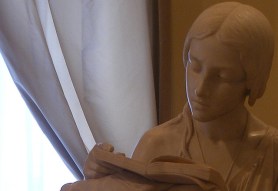
Barbarians on the net? A blogger, even a putative 'troll,' could easily be a civilised, cerebral girl like this one'La leggitrice' -- Photograph by MIL22

Barbarians on the net? A blogger, even a putative ‘troll,’ could easily be a civilised, cerebral girl like this one
‘La leggitrice’ — Photograph by MIL22

Zounds. The original header for this entry, first published a day and a half ago, was:

‘Congratulations, #Leveson LJ, for leaving the blogosphere and online publishing alone — and for declining to succumb to neurotic fear of the “mob”‘

We linked to an announcement of Lord Justice Leveson’s speaking engagement in Sydney, at a symposium held there today. And … guess what we have just found on Google? A BBC News report, still warm from the oven, with this fragment from his speech: ‘Laws are needed to prevent “mob rule” on the internet and “trial by Twitter”, Lord Justice Justice Leveson has said … .’ This is the first record we at post-Gutenberg have ever heard or seen of him mentioning ‘mob’ in the same sentence as ‘internet’, even though we would hardly be surprised if he did so in some exchange in his Inquiry. Might telepathy explain this astonishing development — or (but, no, surely not) did an aide to Leveson LJ draw his attention to re-tweets about this post by the two most constructive blogs on the Inquiry, Hacked Off and INFORRM (the International Forum for Responsible Media)? 

If it was indeed a telepathic connection, it was a bit spotty, because, according to the BBC bulletin, the judge is every bit as worried as the rest of the Establishment about the lawlessness of the net. What we said in our post (below) is still perfectly accurate. He deserves high praise for not warping the evolution of the internet as a radically democratic medium with poorly conceived and premature rules for online publishing. He could have used his Inquiry to do the wrong thing and copy King Canute commanding the sea to roll back — as so many newspaper proprietors and obtuse columnists had hoped he would. 

He did not.

We should note, here, that post-Gutenberg is as keen as anyone else on the arrival of the day on which we finally have a wise and far-sighted set of rules for online life — not least because we care passionately about protecting artists’ and writers’ right to eat, through reasonable copyright enforcement. (See ‘Might audience jealousy of artists explain why copyright is being officially destroyed on the internet?‘)

As for our apparent anticipation of the Inquiry leader’s interest in the topic of ‘mob rule,’ we hope that he reads all the way to the end of this post. 

Quel wheeze. 

Many journalists are worried about the impact of the Leveson report. […] What I’m worried about is about how Leveson will empower the people who lurk below the line […] How will Leveson empower these people? […] The scum below the line will mobilise and use the regulatory system to complain online, and en masse. Plenty of people already dedicate their time to making the lives of journalists a misery …

Columnist ranting in The Telegraph about reader comments on newspaper websites

Like certain unwitting colonisers from the Northern Hemisphere in the late 1700s, the eponymous judge leading the Leveson Inquiry into press behaviour and standards has gone to Australia. Never mind if he is a willing transportee serving the aims of H. M.’s government, whereas so many English who travelled the same route two centuries earlier were not. In the hostile unease in today’s Establishment that Lord Justice Leveson went to pains to pacify in his report published last Thursday, there are echoes from the past — from Establishment debates and anxieties that inspired the founding of the penal colony Down Under.

Judging by what we at post-Gutenberg have been able to read of the Leveson report, so far — in a true annus horribilis leaving us scarcely any time for blogging — his execution of the judiciary’s task of restoring calm and order to society has been thorough and careful.

But especially commendable is this: he did not let the hysteria of the ruling class — especially the segment of it that the press represents — force him into any unwise, premature attempt to draft rules for the blogosphere, or indeed any online publishing competing with old print media.

Lord Justice Leveson appears to understand perfectly that it is too soon to check or discipline a medium so new that it still has slippery fragments of afterbirth clinging to it, and will not be mature enough to be teachable for a while. ‘If we wish to compress something,‘ — for instance, constrain online publishing — ‘we must first let it fully expand,‘ was the advice we ourselves relayed from a sage of long ago, in answering the Inquiry’s request for public comment and suggestions.

The traditional press, railing at the Leveson report, sounds like online publishing’s envious, vengeful sibling, demanding that a parent impose equal punishment on all offspring regardless of culpability. Why must newspapers face new controls and rules, with or without statutory underpinning, when the Inquiry made no such recommendations for, eg., bloggers? Under the headline, ‘Leveson angers press over internet control,’ The Financial Times recorded this fury:

Lord Justice Leveson has angered UK newspaper bosses …

In an editorial on Friday, The Sun, Rupert Murdoch’s flagship tabloid, wrote “an over-regulated press in parallel with an unregulated internet spells chaos and will be the nail in the coffin for the newspaper industry”.

Yet again, newspaper reporting on the Inquiry has been wickedly selective. Leveson LJ notes in his findings that ‘the work of very many bloggers and websites … should rightly and fairly be characterised as valuable and professional’ — but scarcely anyone in old print media was brave enough to record that statement.

Only Private Eye and a few blogs like this one have been drawing attention to such omissions and distortions over the eighteen months of the Inquiry. How has the traditional press been getting away with this crime against honest journalism?

Irrational fear of ‘the mob’ is the answer we suggest. In the past, this sanctioned rank injustice actually codified in law. Robert Hughes’ references, in his magisterial history, The Fatal Shore, include the habit in Georgian England of referring to the masses beneath the elite as ‘the mobbish class of persons’. You could easily substitute ‘bloggers’ or ‘the internet’ for ‘mob’ where he notes,

The ‘mob,’ as the urban proletariat was called, had become an object of terror and contempt, but little was known about it. It was seen as a malign fluid, a sort of magma that would burst through any crack in law and custom, … easily inflamed…

and especially, here:

The ‘mob’ was Georgian society’s id — the sump of forbidden thoughts and proscribed actions …

The irrational terror meant that no one in any position of responsibility went to the trouble of doing any research into the factual basis for the elite’s misconceptions of the proletariat. The actual rise in crime that followed the population explosion that in turn followed the Industrial Revolution was vastly exaggerated, and used to justify ever more unjust laws that especially victimised the poor:

One could be hanged for burning a house or hut, a standing rick of corn, or an insignificant pile of straw; for poaching a rabbit, for breaking down ‘the head or mound’ of a fishpond, or even cutting down an ornamental shrub; or for appearing on a high-road with a sooty face.

What made all this particularly dire was that there was, increasingly, no competing authority to keep the judiciary in check. Eighteenth-century England, Hughes observes, witnessed

the growth of the Rule of Law … into a supreme ideology, a form of religion which, it has since been argued, began to replace the waning moral power of the Church of England.

That is even truer today, in an officially secular society in which the upper crust is free to speak of religion with spitting contempt. We should be all the more grateful to Lord Justice Leveson for his resistance to Establishment pressure to recommend legal controls and disciplinary action for the expression of thoughts and ideas, and dissemination of facts, on the internet.

Perhaps, in his time in the Antipodes, he can congratulate himself on his moderation as he is reminded, simply by being there — haunted in his dreams, perhaps, by the clanking chains of convicts — of the excesses of his predecessors in judicial robes:

The belief in a swelling wave of crime was one of the great social facts of Georgian England. It shaped the laws, and the colonisation of Australia was the partial result.