Quick screen grabs: the internet generation reacts to #Leveson LJ lecturing about laws on the way for online life

SUPER sceptical blonde student Screen Shot 2012-12-12 at 00.06.54

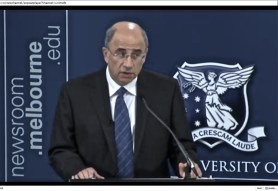
Watching Lord Justice Leveson speak to a predominantly middle-aged audience at the University of Melbourne’s Centre for Advanced Journalism four hours ago, post-Gutenbergers were struck by the extraordinary scepticism and disengagement on the few young and youthful faces among his listeners. The yawning gap in perspective is unsurprising. How could someone who has never blogged, tweeted, or commented on articles online understand the power and glory of communicating on the web? How could he be expected to do more than issue grim warnings about freedom’s end?

We rushed to take some fast-and-dirty screen shots.

In a future post — before the new year, time thieves permitting — this blog should have rather more to say about the judge’s speech.

tweet tries boring int into submission Screen Shot 2012-12-12 at 00.59.18

sceptics, 2, young, small scr Screen Shot 2012-12-11 at 23.58.52

lev S sceptical pink Screen Shot 2012-12-11 at 23

sceptical or sleeping aud members Screen Shot 2012-12-12 at 00.11.29
sceptical yng mn wmn Screen Shot 2012-12-11 at 23.40.14
sceptical blonde girl (b) Screen Shot 2012-12-12 at 00.06.51
LJL warning Screen Shot 2012-12-11 at 23.42.19

tweet lev pedestrian + BLOGGERS NOT NECESS A DANGER Screen Shot 2012-12-12 at 01.02.11

Lord Justice Leveson in Australia, fear of ‘mob rule’ on the internet — and a case of wobbly telepathy?

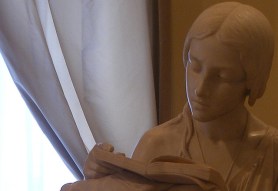
Barbarians on the net? A blogger, even a putative 'troll,' could easily be a civilised, cerebral girl like this one'La leggitrice' -- Photograph by MIL22

Barbarians on the net? A blogger, even a putative ‘troll,’ could easily be a civilised, cerebral girl like this one
‘La leggitrice’ — Photograph by MIL22

Zounds. The original header for this entry, first published a day and a half ago, was:

‘Congratulations, #Leveson LJ, for leaving the blogosphere and online publishing alone — and for declining to succumb to neurotic fear of the “mob”‘

We linked to an announcement of Lord Justice Leveson’s speaking engagement in Sydney, at a symposium held there today. And … guess what we have just found on Google? A BBC News report, still warm from the oven, with this fragment from his speech: ‘Laws are needed to prevent “mob rule” on the internet and “trial by Twitter”, Lord Justice Justice Leveson has said … .’ This is the first record we at post-Gutenberg have ever heard or seen of him mentioning ‘mob’ in the same sentence as ‘internet’, even though we would hardly be surprised if he did so in some exchange in his Inquiry. Might telepathy explain this astonishing development — or (but, no, surely not) did an aide to Leveson LJ draw his attention to re-tweets about this post by the two most constructive blogs on the Inquiry, Hacked Off and INFORRM (the International Forum for Responsible Media)? 

If it was indeed a telepathic connection, it was a bit spotty, because, according to the BBC bulletin, the judge is every bit as worried as the rest of the Establishment about the lawlessness of the net. What we said in our post (below) is still perfectly accurate. He deserves high praise for not warping the evolution of the internet as a radically democratic medium with poorly conceived and premature rules for online publishing. He could have used his Inquiry to do the wrong thing and copy King Canute commanding the sea to roll back — as so many newspaper proprietors and obtuse columnists had hoped he would. 

He did not.

We should note, here, that post-Gutenberg is as keen as anyone else on the arrival of the day on which we finally have a wise and far-sighted set of rules for online life — not least because we care passionately about protecting artists’ and writers’ right to eat, through reasonable copyright enforcement. (See ‘Might audience jealousy of artists explain why copyright is being officially destroyed on the internet?‘)

As for our apparent anticipation of the Inquiry leader’s interest in the topic of ‘mob rule,’ we hope that he reads all the way to the end of this post. 

Quel wheeze. 

Many journalists are worried about the impact of the Leveson report. […] What I’m worried about is about how Leveson will empower the people who lurk below the line […] How will Leveson empower these people? […] The scum below the line will mobilise and use the regulatory system to complain online, and en masse. Plenty of people already dedicate their time to making the lives of journalists a misery …

Columnist ranting in The Telegraph about reader comments on newspaper websites

Like certain unwitting colonisers from the Northern Hemisphere in the late 1700s, the eponymous judge leading the Leveson Inquiry into press behaviour and standards has gone to Australia. Never mind if he is a willing transportee serving the aims of H. M.’s government, whereas so many English who travelled the same route two centuries earlier were not. In the hostile unease in today’s Establishment that Lord Justice Leveson went to pains to pacify in his report published last Thursday, there are echoes from the past — from Establishment debates and anxieties that inspired the founding of the penal colony Down Under.

Judging by what we at post-Gutenberg have been able to read of the Leveson report, so far — in a true annus horribilis leaving us scarcely any time for blogging — his execution of the judiciary’s task of restoring calm and order to society has been thorough and careful.

But especially commendable is this: he did not let the hysteria of the ruling class — especially the segment of it that the press represents — force him into any unwise, premature attempt to draft rules for the blogosphere, or indeed any online publishing competing with old print media.

Lord Justice Leveson appears to understand perfectly that it is too soon to check or discipline a medium so new that it still has slippery fragments of afterbirth clinging to it, and will not be mature enough to be teachable for a while. ‘If we wish to compress something,‘ — for instance, constrain online publishing — ‘we must first let it fully expand,‘ was the advice we ourselves relayed from a sage of long ago, in answering the Inquiry’s request for public comment and suggestions.

The traditional press, railing at the Leveson report, sounds like online publishing’s envious, vengeful sibling, demanding that a parent impose equal punishment on all offspring regardless of culpability. Why must newspapers face new controls and rules, with or without statutory underpinning, when the Inquiry made no such recommendations for, eg., bloggers? Under the headline, ‘Leveson angers press over internet control,’ The Financial Times recorded this fury:

Lord Justice Leveson has angered UK newspaper bosses …

In an editorial on Friday, The Sun, Rupert Murdoch’s flagship tabloid, wrote “an over-regulated press in parallel with an unregulated internet spells chaos and will be the nail in the coffin for the newspaper industry”.

Yet again, newspaper reporting on the Inquiry has been wickedly selective. Leveson LJ notes in his findings that ‘the work of very many bloggers and websites … should rightly and fairly be characterised as valuable and professional’ — but scarcely anyone in old print media was brave enough to record that statement.

Only Private Eye and a few blogs like this one have been drawing attention to such omissions and distortions over the eighteen months of the Inquiry. How has the traditional press been getting away with this crime against honest journalism?

Irrational fear of ‘the mob’ is the answer we suggest. In the past, this sanctioned rank injustice actually codified in law. Robert Hughes’ references, in his magisterial history, The Fatal Shore, include the habit in Georgian England of referring to the masses beneath the elite as ‘the mobbish class of persons’. You could easily substitute ‘bloggers’ or ‘the internet’ for ‘mob’ where he notes,

The ‘mob,’ as the urban proletariat was called, had become an object of terror and contempt, but little was known about it. It was seen as a malign fluid, a sort of magma that would burst through any crack in law and custom, … easily inflamed…

and especially, here:

The ‘mob’ was Georgian society’s id — the sump of forbidden thoughts and proscribed actions …

The irrational terror meant that no one in any position of responsibility went to the trouble of doing any research into the factual basis for the elite’s misconceptions of the proletariat. The actual rise in crime that followed the population explosion that in turn followed the Industrial Revolution was vastly exaggerated, and used to justify ever more unjust laws that especially victimised the poor:

One could be hanged for burning a house or hut, a standing rick of corn, or an insignificant pile of straw; for poaching a rabbit, for breaking down ‘the head or mound’ of a fishpond, or even cutting down an ornamental shrub; or for appearing on a high-road with a sooty face.

What made all this particularly dire was that there was, increasingly, no competing authority to keep the judiciary in check. Eighteenth-century England, Hughes observes, witnessed

the growth of the Rule of Law … into a supreme ideology, a form of religion which, it has since been argued, began to replace the waning moral power of the Church of England.

That is even truer today, in an officially secular society in which the upper crust is free to speak of religion with spitting contempt. We should be all the more grateful to Lord Justice Leveson for his resistance to Establishment pressure to recommend legal controls and disciplinary action for the expression of thoughts and ideas, and dissemination of facts, on the internet.

Perhaps, in his time in the Antipodes, he can congratulate himself on his moderation as he is reminded, simply by being there — haunted in his dreams, perhaps, by the clanking chains of convicts — of the excesses of his predecessors in judicial robes:

The belief in a swelling wave of crime was one of the great social facts of Georgian England. It shaped the laws, and the colonisation of Australia was the partial result.

On the threshold of ♯Leveson’s d-day, The Guardian shuts reader-citizens out of the debate


Citoyens
 should be king in a democracy, but are being denied free speech on press regulation — by the press.
Photograph by postgutenberg@gmail.com

In the autumn of last year, in the prelude to formal hearings for the Leveson Inquiry, Baron Judge, the Lord Chief Justice, said:

It is the birthright of the citizen that the press should be independent. It is therefore not a right of one section of the community, not just a sectional right. It is the right of the community as a whole. It is, if you like, our right, the right of every citizen.

Reporting on the curious omission by newspapers of any mention of that warning to the press, post-Gutenberg asked:

Why … is no one in the British media mentioning the prohibition by a leading newspaper of free discussion – by ordinary citizens – of the future of the press, on three separate occasions last week?

On the last Sunday before d-day — the 29th of November, when Lord Justice Leveson is due to deliver his report – The Guardian belatedly opened to comment by readers two vital contributions to the press regulation debate from Observer writers. Reader commenting had been barred for most of the day after these pieces were posted in the (ahem) Comment-is-free section of the web site shared by these newspapers but administered by The Guardian (which bought its rival several years ago).

That must have been quite a fight behind the scenes, before The Guardian relented and, by mid-morning on the 25th, let justice and common sense prevail.

Read the excerpts from these opinions The Guardian found so threatening, and be amazed. Better yet, follow our links, read the rest – especially the few reader comments permitted before commenting was once again closed, after less than half a day – and be astounded by the usual categorisation of The Guardian as a ‘liberal’ newspaper.

(i)

— from the Will Hutton column, ‘Why I, as a journalist and ex-editor, believe it is time to regulate the press’ [24 November 2012]:

The precious freedom of speech of an individual is different from the freedom of speech of a media corporation with its capacity to manipulate the opinions of millions, which is why it must take place within the law and within a framework of accountability. Freedom is not only menaced by the state; it is also menaced by private media barons and their servants, …

An avalanche of highly spun journalism to serve partisan interests has become habitual. The public realm has become degraded. The trade and craft of journalism has been abused; the journalists who work in newsrooms, where standards are routinely sidelined, need protecting.

(ii)

— from an editorial in The Observer, ‘Leveson report: do we need a new law to rein in the press?’ [24 November 2012]:

The press – as anachronistic as that term now sounds in a digital age – have not, on the whole, been a great advert for plurality in the last month. In that time, they have fixed Leveson in their cross hairs and unleashed a ferocious ordnance in his direction.

[…]

There are reasonable, cogent arguments to be made about regulation or the lack thereof. There is a proper debate that we need to have post-Leveson, one characterised less by tribalism and more by reason.

As we wondered, last November:

[The] question no one in the media apparently wants to face is, will the public grant professional journalists a continuation of special privileges in the digital age if they no longer adhere to the traditions of fairness, neutrality and dedication to the truth that won them those privileges in the 18th century? Earlier this month, this blog mentioned the media’s refusal to acknowledge – or indeed discuss at all – the public’s dismay about an increasingly partisan press.

There are other alarming silences …

Now you see them, now you don’t …

Structural priming — or why you can’t put an arts career on hold to get rich, then become Van Gogh or Nabokov

Conversational sketch, at lightning speed, by ACB
Photograph by Louise Dumitriu and Drew Collins

Photograph by postgutenberg@gmail.com

A lawyer and the doctor practice their callings. The plumber and the carpenter know what they will be called upon to do. They do not have to spin their work out of themselves, discover its laws, and then present themselves turned inside out, to the public gaze.

Daybook, Anne Truitt

‘Artistic people aren’t respected.’

Such was the sorrowful reason given to a mother by a mid-twenties daughter for abandoning the drawing and painting garlanded with praise by teachers at her school. Post-Gutenberg hopes that this daughter, a newly-discovered second cousin, was only having a temporary fit of the glooms and has yet to donate her 2B pencils to the Salvation Army.

We are reluctant interventionists. We are unlikely to collar this cousin and warn her about one common, possibly universal, form of pressure indiscriminately applied to young people with artistic talent.

It comes in the form of this advice: just build a secure nest egg, first, by chopping off the mental equivalent of arms and legs in the service of a Procrustean accommodation to conventional expectations – by working in (say) plumbing, podiatry, linear programming, or as a technology entrepreneur. Get a mortgage. Pay off most of it. Then, and only then, allow yourself to yield to your daemon – or whatever wonderful madness compels people to sculpt, write musical scores, etch, scribble, and so on – ‘and become successful and world-famous.’ That last part is often laced with irony the advisers like to imagine they have successfully concealed.

Ignore this well-meaning counsel, we would tell anyone with a true vocation. Toss it into the nearest circular file, because it amounts to dispatching someone on an impossible mission. Where are the ex-financiers and former Silicon Valley stars rocking and reshaping the arts world with their surpassing contributions, in second careers? (as even post-Gutenberg fondly imagined, long ago: see ‘Literary Capitalism’.)

That’s right. There is virtually no life that fits that arc.

Why not?

Once, we could only have offered a hunch based on years of watching lives unfold. Now, we can point to possible support for our intuition in speculating about the wider application of findings in psycholinguistics – of which the gist is that what we do strengthens and biases our neurocircuitry towards doing more of the same; also, that this can become a sort of mental rut not easily escaped.

For example, someone churning out executive memos day after day is unlikely to be capable of writing with the freedom and literary finesse of, say, a Sean McNulty (Murray) – recently featured on this blog – on nights after work, or years down the road, in retirement. Sean, judging by what he has told us over the years, chooses jobs for the time and brainpower they allow for writing – that free as much mental circuitry as possible for polishing risky, high-wire prose like his new novel, Twentieth Century Transmissions.

Post-Gutenberg would recommend Sean’s solution, working in the time-honoured tradition of ‘day jobs’, to anyone else young, talented and patron-less —  as far preferable to the ‘art as second career’ option that is really not realistic at all. Some means of keeping a talent alive by practicing it every day must be found, if only in the chinks and crannies of a life.

ACB, for example – someone as militantly anonymous as MIL22, whose photography frequently graces this site – has never stopped drawing, sneaking it in much like Jane Austen shoving her manuscripts under a blotter every time a family member entered the drawing room. When she mentioned bearded irises to us last week, in just the minute and a half it took post-Gutenberg to hunt for our photograph of one specimen, she had sketched – from memory — the flower she was referring to in the notebook she keeps at her side. ACB, we might add, is 81 and a half years old, and still, despite the acute arthritis in her hands, the multi-tasker she learnt to be long before whizzy digital technology filtered down to the public.

We had never seen so clear a pointer to the advantages of keeping your hand in, to preserve a talent, as the one we found in the implications of this explanation of ‘structural priming’ – in the way we all use language – in a recent column in The New York Times:

[Y]our brain’s activity in one part of the day shapes it in another, especially when it comes to creating sentences. This is a real phenomenon, described by psycholinguists, who call it “structural priming” or “syntactic persistence.” Basically, earlier patterns in what you say or read or write “prime” you to repeat them when you’re acting automatically. Our tendency to say the same sorts of sentences as those around us was first studied by someone looking at, of all things, walkie-talkie conversations between burglars. Our words and sentence patterns are also primed in the same way, such that the words we chose are the words we will choose later.

If I write Kevin gave Sally a pen, I’m more likely later to write John sent Tim the files than I am to write John sent the files to Tim.

[…]

Each time you sit down to write, you should cleanse your linguistic palate by reading some things that are vastly unlike what you’ve been writing.

[…]

Also, it’s imperative that you shut off the Web and don’t look at e-mail while you’re writing. Each time you look at Facebook or Twitter, you get primed with another kind of language, whether it’s your friends’ or your own. But maybe you want to write like you tweet. In that case, prime away.

We make no claim to being neuroscientists, at post-Gutenberg. We have no official license to speculate as we have about the critical importance of priming not just as a sort of mental conditioning for scribblers, but a guide to managing a life in the arts. Even so, we suspect that many readers here will find all this cod obvious.