for   25. 12. 2023

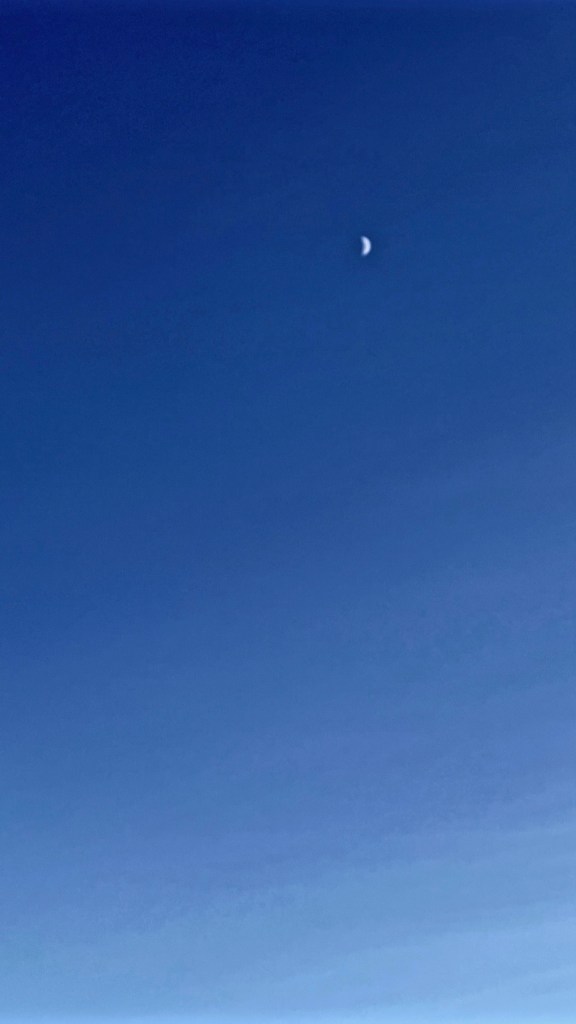
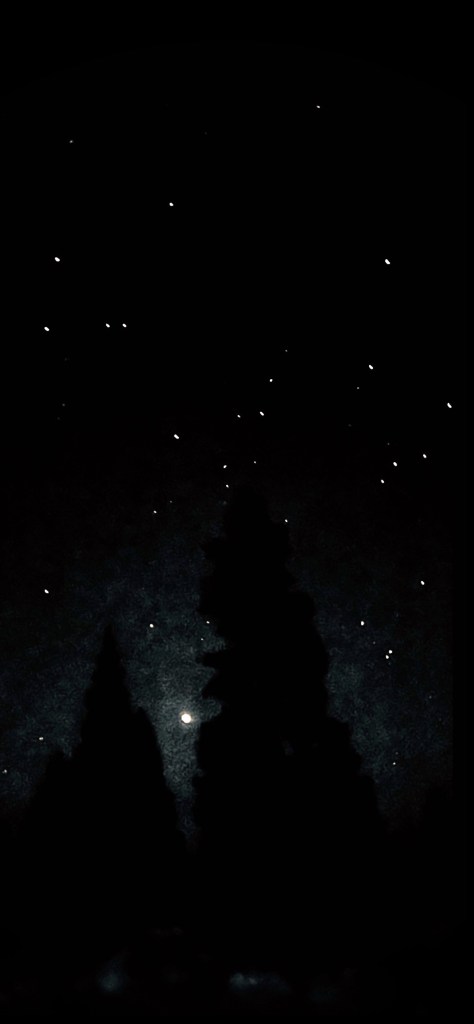
They are out there and high up a long way from the electricity grid, the inspirations for the artificial indoor lights of this season. They are there just as art is — for art’s sake, and no reason we can discern by reasoning. The man-made tributes to them, no matter how ingenious and beautiful, look pointless when considered beside the originals — which can seem to demand that you acknowledge them, as Jupiter beaming into a kitchen window did in 2022 when it came closer to earth than it had for fifty-nine years and dwarfed the rest of the constellation ( top ). It was an irresistible presence in the night sky for months. Vital indoor tasks were dropped to make records of its nearness, and these went directly into a file of personal astronomical treasures which also contains a haiku-like poem for the eyes from earlier this year: a half-moon in a cloudless blue yonder ( scroll all the way down past the moon shining on ponderosa branches ). 

If only Robert Frost were alive to ask why he singled out China for special mention in setting down a universal truism. (Was it a reference to Chinese philosophy?) In all other ways this poem below, better-suited to a snowless, warm, El Niño Christmas than any carol, is perfect. It is transcendent in spite of its author’s famous insistence on plainer, conversational versifying and in a different poem, preference for terra firma — ‘Earth’s the right place for love/ I don’t know where it is likely to go better.’

On Looking Up By Chance At The Constellations

You’ll wait a long, long time for anything much

To happen in heaven beyond the floats of cloud

And the Northern Lights that run like tingling nerves.

The sun and moon get crossed, but they never touch,

Nor strike out fire from each other nor crash out loud.

The planets seem to interfere in their curves —

But nothing ever happens, no harm is done.

We may as well go patiently on with our life,

And look elsewhere than to stars and moon and sun

For the shocks and changes we need to keep us sane.

It is true the longest drought will end in rain,

The longest peace in China will end in strife.

Still it wouldn’t reward the watcher to stay awake

In hopes of seeing the calm of heaven break

On his particular time and personal sight.

That calm seems certainly safe to last to-night.

HAPPY CHRISTMAS

Why O hushed October morning mild … ?

autumn leaves (2) 2018 postgutenberg@gmail.com

shadows on the grass postgutenberg@gmail.com

October

O hushed October morning mild,

Thy leaves have ripened to the fall;

Tomorrow’s wind, if it be wild,

Should waste them all.

The crows above the forest call;

Tomorrow they may form and go.

O hushed October morning mild,

Begin the hours of this day slow.

Make the day seem to us less brief.

Hearts not averse to being beguiled,

Beguile us in the way you know.

Release one leaf at break of day;

At noon release another leaf;

One from our trees, one far away.

Retard the sun with gentle mist;

Enchant the land with amethyst.

Slow, slow!

For the grapes’ sake, if they were all,

Whose leaves already are burnt with frost,

Whose clustered fruit must else be lost—

For the grapes’ sake along the wall.

Robert Frost, A Boy’s Will, 1913

With apologies to Robert Frost, who probably has no equal as a 20th-century nature poet writing in English, we confess that we have always thought that his tribute to October misses Olympian perfection by a hair’s breadth. What we see as a flaw is a single word, its first word, one letter long. Strapping a frilly bonnet onto a Degas ballerina would have a similar effect. In our frankly inexpert view, the first line scans perfectly well without this archaism. Somehow, it fails to irritate in its repetition in line six, so why not just let it be there?

In some biographical tome or critical exegesis we have no time to look for, there must be an explanation for why Frost chose to begin with ‘O’. Could he have set himself a test, in which he had to try to knock John Keats’s ‘To Autumn’ off its pedestal? Was it both an hommage — Frost’s love of the early Romantic poets is well knownand friendly competition?

Certainly for ears in our time, Frost’s is the greater poem because it is so lean and quirky — deeply felt yet flintily austere; and as true in every detail it observes as the strong, beautiful muscles in Degas’s balletomane bronzes. Nature serves the Keats verses as a backdrop for a passionate reverie. For Frost, it is at front and centre.

But it would be unfair for history — when the 20th century also seems much further away than it does now — to judge Frost to be the better poet, not just because each man wrote for a different era of literary conventions and taste, roughly a hundred years apart. Keats, who would die at 25, only a year after ‘To Autumn’ was published, was 23 when its lines came to him.  It would take a heart of stone to escape an excruciating twinge of sadness, reading or recording these facts. What he managed to accomplish in his firefly’s span certainly warrants his pegging as a young poet of genius.

By contrast, Frost was slow to make his mark as a poet, having ‘allied himself with no literary school or movement.’ He was on the verge of his fifth decade when his October poem appeared in his first collection, A Boy’s Will — which he had to publish himself, after years of having his work rejected by magazines.

Almost no one learns poetry by heart after school, but there must be lots of other people, we suspect, who committed it to memory as adults and recite it this month, year after year, feeling a shiver up the spine at the end of it.


for  1. 1. 2018

december 20 2017 cusp of the solstice

surprised deer FINAL

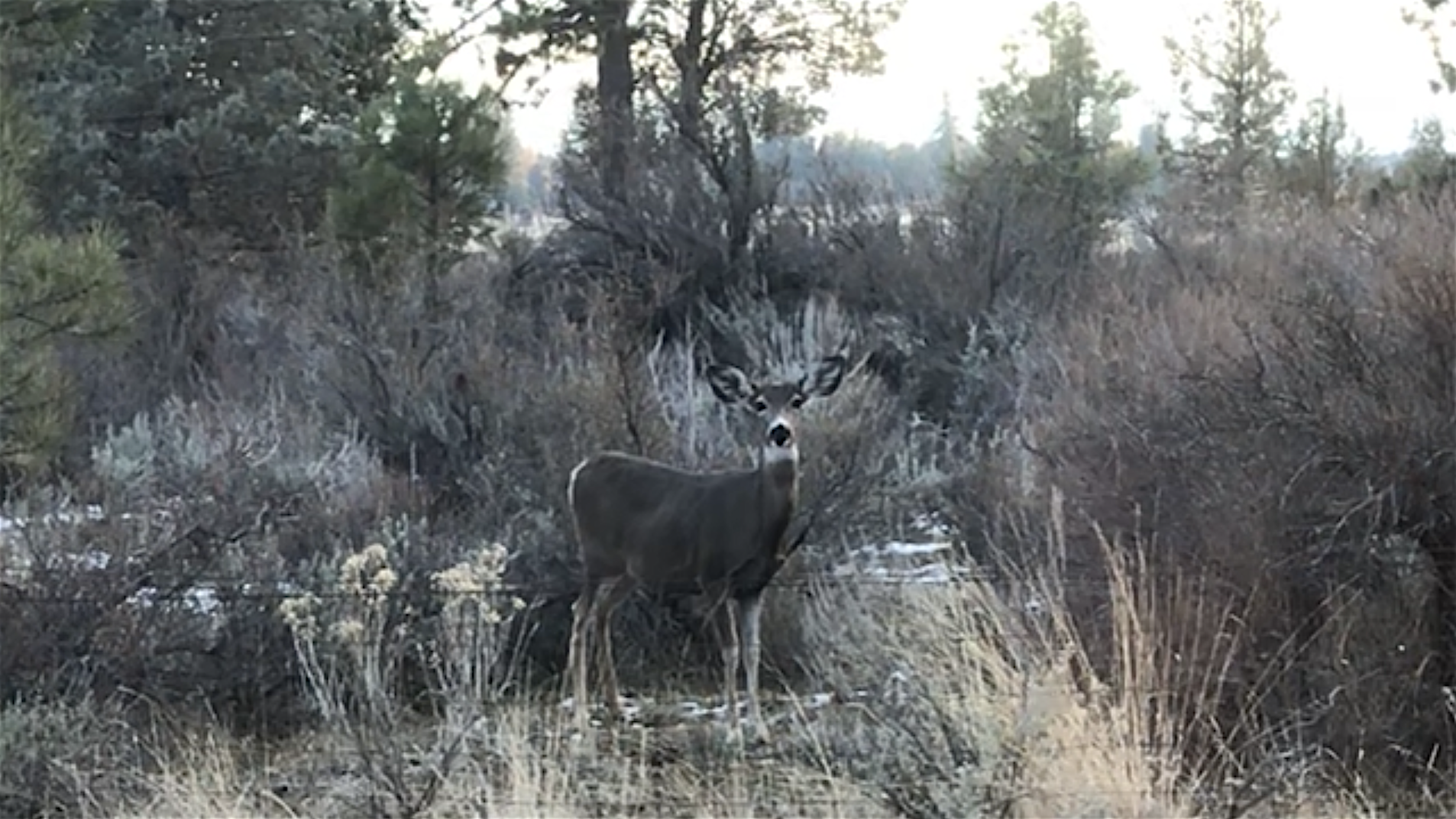
A poem we came across fit our 2017 exactly — both our personal experience of it and impressions of the state of things everywhere. No matter how closely we paid attention to what should be perfectly insulated from ugliness — always a good idea — there was seemingly no escaping the spirit of the year.

From a quick check, we learnt that this poem could easily have been written during the Second World War. With more time, we’d be interested to know what was happening in the life of the frequently magnificent Robert Frost, then.

Not only sands and gravels
Were once more on their travels,
But gulping muddy gallons
Great boulders off their balance
Bumped heads together dully
And started down the gully.
Whole capes caked off in slices.
I felt my standpoint shaken
In the universal crisis.
But with one step backward taken
I saved myself from going.
A world torn loose went by me.
Then the rain stopped and the blowing,
And the sun came out to dry me.

‘One Step Backward Taken,’ Robert Frost, 1947

Here’s hoping for a rather different backdrop for 2018 …

H  A  P  P Y    N  E  W   Y  E  A  R