Why is The Guardian censoring debate about press reform and ignoring the Lord Chief Justice’s endorsement of citizen journalism?

Britain’s Lord Chief Justice, Lord (earlier, Sir Igor) Judge, whose endorsement of citizen journalism in a speech on 19 October was not reported by the press

Readers who would first like to see the unimpeachably polite comments deleted by the Guardian’s moderators on 30 October – reproduced exactly as published on its site** before they were censored – can scroll down further on this page. The deletions fall into four classes:

● Comments directing readers to the post on this site titled, ‘Wanted: a brave newspaper for an experiment in which readers become stakeholders,’ and to a paper published by the Oxford Internet Institute,  ‘The Keiretsu-Cooperative: a Model for Post-Gutenberg Publishing,’ downloadable at no charge, here on the Social Science Research Network site.

● Comments pointing to a post on this site showing how the ‘business model’ the press runs on today can radically distort the truth: ‘How competition for advertising in print media let Steve Jobs warp history and steal the credit for the computer revolution.’

● Comments highlighting an addition to this site titled, ‘Will the calls for press reform during Britain’s Hackgate lead to action — or business as usual?’  It starts by quoting the Deputy Prime Minister, Nick Clegg, about the need to diversify media ownership.

● Comments linked to an article on this site showing how Switzerland makes super-democracy work well: ‘Extreme democracy is not an impossible dream if you copy Switzerland, not California.’ In its first paragraph, this blog entry mentions that the Swiss experience could be a good guide for an experiment in restructuring newspaper ownership.

The Leveson enquiry convened by David Cameron’s government to investigate the British phone hacking scandal and ‘the culture, practices and ethics of the press’  will make recommendations about whether the 4th Estate should be trusted to regulate itself.

Can the public be expected to trust self-regulation when a leading newspaper is going out of its way to obstruct debate about media ownership, and the question of whether the media should be restructured to include non-traditional disseminators of information?

Could this restriction of free expression be related to the omission from press reports of any mention of a clear and ringing  endorsement of ‘citizen journalism’ – and the rest of the 5th Estate – by Britain’s top judge, the Lord Chief Justice, Lord (Igor) Judge, in a speech on press regulation in mid-October? So few newspapers reported the speech at all that I learnt about it from a Twitter feed.

The Guardian, like The Sun, only mentioned what he said about the importance of a free press in a brief news item, leaving readers to find their own way to his careful qualification of that remark in a transcript of the whole speech posted on its site. It failed to draw its readers’ attention to a point he emphasised at the start of his lecture. It was about the tendency of the press to wilfully misread a famous statement in 1762 by the reformer and political activist, John Wilkes, as restricting the right to uncensored expression to the privileged minority that the 4th Estate represents. Justice Judge began by quoting Wilkes, then explained what the agitator meant:

“The liberty of the press is the birthright of a Briton, and is justly esteemed the firmest bulwark of the liberties of this country”. 

We embrace that statement. The significance of what John Wilkes said was not, as those connected with the media sometimes suggest, that the statement is upholding the liberty of the press. That is undoubtedly a direct consequence of what John Wilkes said, but in reality on close examination what he was saying was much more profound. He was asserting that the liberty of the press is the birthright of every citizen, that is, the community as a whole. It is birthright of the citizen that the press should be independent. It is therefore not a right of one section of the community, not just a sectional right. It is the right of the community as a whole. It is, if you like, our right, the right of every citizen.

I cannot believe that The Guardian thinks its moderators should be deleting proposals for a mere experiment in co-owning part of a newspaper site with reader-citizens. But I had no reply after I tweeted the paper’s editor, Alan Rusbridger, an alert about the removal of a comment containing a link to my piece about the pernicious effects of advertising on the presentation of the truth. Earlier messages asking the newspaper’s moderation team for an explanation for the cuts also received no answer. This is puzzling. The editor has been giving speeches about ‘the mutualization’ of his newspaper, announcing that ‘our readers have become part of what we do. . . lending a hand with research and ideas, bringing us up short when we get things wrong.’ 

Cheryll Barron

** As we live in an age of digital forgery, I have saved not just the deleted comments by postgutenberg but the threads on which they were posted, and would willingly present them for authentication to any democratically licensed official body. Correspondence to: postgutenberg@gmail.com

THE CENSORED COMMENTS

Here is a sample of the comments by postgutenberg that were deleted by the Guardian on 30 October. Most of the censored contributions were left undisturbed for several days or weeks until I posted the first of these pointers to this site – after which there was a grand retrospective purge:

(1)

Steve Jobs: The Exclusive Biography by Walter Isaacson – review

Peter Conrad 

‘postgutenberg

30 October 2011 11:39PM

This comment was removed by a moderator because it didn’t abide by our community standards. Replies may also be deleted. For more detail see our FAQs.’

What the censored comment said:

postgutenberg

30 October 2011 11:39PM

Read this and you can make up your own mind:

How competition for advertising in print media let Steve Jobs warp history and steal the credit for the computer revolution

https://post-gutenberg.com/2011/10/25/how-competition-for-advertising-in-print-media-let-steve-jobs-warp-history-and-steal-the-credit-for-the-computer-revolution/


(2)

A register of journalists’ interests would help readers to spot astroturfing

George Monbiot http://www.guardian.co.uk/commentisfree/2011/sep/29/voluntary-register-journalists-interests-astroturfing

‘postgutenberg‘s comment 29 September 2011 9:34PM

This comment has been removed by a moderator.’

What the censored comment said:

postgutenberg

29 September 2011 9:34PM

An interesting idea, but you can share the same tiny media cubicle, and never discover who your workmate knows, or what his or her true interests are. So if there were such a register, would people tell the truth?

Secrecy is so often the essence of power.

What would prevent fake transparency in declaring your interests?

Addressing Whealie‘s point, what if the Guardian were to try out an experiment in which commenters become part-owners of a section of the online newspaper and helped to decide on policies, including moderation?

More details here: Wanted: a brave newspaper, for an experiment in which readers become stakeholders.

https://post-gutenberg.com/2011/09/05/wanted-a-brave-newspaper-for-an-experiment-in-which-readers-become-stakeholders/

(3)

Occupy Wall Street? These protests are not Tahrir Square but scenery

Simon Jenkins http://www.guardian.co.uk/commentisfree/2011/oct/20/occupy-wall-street-tahrir-scenery

postgutenberg‘s comment 20 October 2011 10:14PM

This comment has been removed by a moderator.’

What the censored comment said:

            postgutenberg

            20 October 2011 10:14PM

There are serious gaps in the transparency of modern democracy. Between elections, the traditional mediators between electors and those in power have withered. The “customary associations and little platoons” have dwindled.

Spot-on.

But surely the press is that great traditional mediator?

… the 4th Estate that is now supposed to be sharing power with the even more democratic 5th Estate? Yet to the restructuring of media that this calls for, Simon is furiously opposed … Scroll to the end and see the quotation of OpiumEater’s sharp post, here:

Will the calls for press reform during Britain’s Hackgate lead to action — or business as usual?

https://post-gutenberg.com/2011/09/19/will-the-calls-for-press-reform-during-hackgate-lead-to-action-or-business-as-usual/

Why?

And a writer who turned to fiction to show us exactly what needs to change – whose work could easily supply a list of precise demands for Occupy Everything – has been mis-classified as a vacuous Dan Brown-equivalent:

Stieg Larsson, 5th estate forerunner, marginalised as a media critic      

https://post-gutenberg.com/2011/09/05/stieg-larsson-5th-estate-forerunner-marginalised-media-critic/

postgutenberg [this correction of the censored comment was left in place]

20 October 2011 10:19PM

Sorry, that was supposed to say, why is Simon opposed to restructuring the media for the 5th Estate? — far more democratic than the 4th Estate because of the greater inclusiveness of the internet as a medium.

(4)

Capitalism has learned to create host organisms

Zygmunt Bauman

‘postgutenberg‘s comment 18 October 2011 11:14AM

This comment has been removed by a moderator.’

What the censored comment said:

postgutenberg

18 October 2011 11:14AM

Good analysis and fresh thinking — even if it is pessimistic.

That new art – made possible by the shift from the “society of producers” to the “society of consumers”, and from the meeting of capital and labour to the meeting of commodity and client as the principal source of “added value” – profit and accumulation consists mostly of the progressive commodification of life functions, market mediation in successive needs’ satisfaction and substituting desire for need in the role of the fly-wheel of the profit-aimed economy.

But couldn’t we use the internet to reverse that shift? It has given us so many tools to become producers ourselves – and to set up our own websites to sell what we make, anything from the materialist bits ‘n’ bobs that pass through E-Bay to paintings, texts, — even shares in creative enterprises of every kind, through so-called ‘crowd-sourcing’.

And what if the media were to lead the way — showing how to co-opt capitalism’s limitless energy and inventiveness through co-ownership? … effectively, a cross between socialism and capitalism?

Most of the new co-operative ventures tried in the 1970s failed, usually because decision-making was slow and cumbersome. But with the blazing speeds at which detailed information can be communicated and votes tallied with today’s media, new co-operative ventures wouldn’t be burdened with the same difficulties as the old ones.

Yes, there would be new problems – there are always problems – but why not experiment and see what happens?

Wanted: a brave newspaper for an experiment in which readers become stakeholders

https://post-gutenberg.com/2011/09/05/wanted-a-brave-newspaper-for-an-experiment-in-which-readers-become-stakeholders/

(5)

Europe’s defunct idealism is like Munich all over again

Simon Jenkins

‘postgutenberg‘s comment 19 October 2011 2:07AM

This comment has been removed by a moderator.’

What the censored comment said:

postgutenberg

19 October 2011 2:07AM

A rare treat — constructive new thinking, actually being implemented:………………..found a few minutes ago in a NYT column by Joe Nocera:

We Can All Become Job Creators

By JOE NOCERA

Howard Schultz. God bless him.

Here we are two months later, and Schultz [founder-president of Starbucks] is back with Big Idea No. 2. It is every bit as idealistic as his first big idea, but far more practical. Starbucks is going to create a mechanism that will allow us citizens to do what the government and the banks won’t: lend money to small businesses. This mechanism is scheduled to be rolled out on Nov. 1. This time, Schultz is not tilting at http://www.nytimes.com/2011/10/18/opinion/nocera-we-can-all-become-job-creators.html?_r=1&ref=opinion&pagewanted=printwindmills.

Wanted: a brave newspaper for an experiment in which readers become stakeholders

https://post-gutenberg.com/2011/09/05/wanted-a-brave-newspaper-for-an-experiment-in-which-readers-become-stakeholders/

An open letter to Walter Isaacson, the Steve Jobs biographer and channeller-in-chief

'Me as my iPhone', a reveller in Luzern dressed for Fasnacht, the Swiss winter carnival (photographs by Walter Wieland)

[ part II of an assessment: part I is here ]

Reading about Steve Jobs’s estimation of his talents in the biography of the moment reminded me of a descendant of generations of Iranian painters sketched in a 1937 travelogue, The Road to Oxiana. Muzaffar launched his career ‘decorating pen-boxes,’ but has graduated to portraits in both the Persian and European manner. He shows the traveller, Robert Byron, his poster of two peacocks painted for a cigarette advertisement:  ‘”There!” he announced proudly. “I can do miniatures and I can do this. Rubens couldn’t have done both.”’ Byron, speechless, asks himself, ‘Why Rubens? Why Rubens particularly?’ … And that is the perfect frame for a conversation I would like to have with Steve’s biographer.

Dear Walter Isaacson,

Why didn’t you fight harder to resist Steve Jobs’s infamous ‘reality-distortion field’? You mention it repeatedly in your book, which reads like a ghost-written autobiography in the third person – if not outright channelling. It was authorised, but could never be seen as authoritative. I tried making excuses for you as I read the first half of your text. Acting as imperial scribe to a man as you watched him die must have been excruciating. But why did you submit to his publishing timetable, obviously set to capitalise on the impact of his demise, when your years at Time – a good incubation tank for journalists – should have told you that Steve’s way with the facts meant that you could not afford to cut a single corner in your research?

I am sure you are laughing as you read this. Only a minute fraction of your readers know enough to spot the effects of the two main smoke-and-mirrors wiles that he used on you – and in the second half of this post, I will explain why this matters too much to be dismissed with a shrug:

(1) Taking off all his clothes. He turned disarming candour of such elephantine proportions on you that it has worked, in its transmission to the minds of book reviewers, like the venerable military shock tactic known as a diversionary skirmish. Steve’s confessions about thieving, outlandish eating habits, hard drug use, paternity denial, child abandonment – and miscellaneous mistreatment of almost everyone he knew – were outrageous enough for the genial Guardian columnist Alexander Chancellor to nominate him for an effigy for Guy Fawkes Day. They have created such a swirling chaos of impressions that your text has duped intelligent people who have no idea of the dimensions of all they do not know about technology into calling him an ‘inventor’.

Even the usually hawk-eyed Maureen Dowd, who opinionates fizzingly for a large New York newspaper, arrived at precisely the summing-up of his life that Steve intended: that his behaviour (about which he was unashamed) was the price for what he cared about most, which was to be seen as having attained ‘the brightest heaven of invention’ in his time on earth. Your conclusion carefully states that ‘he didn’t invent many things outright,’ – I cannot name even one – and yet you used the Bard’s words for the title of your closing chapter.

Tricky.

You grant him the conceit of ‘inventing the future.’ What he actually did was to manage, by dint of super-human focus and force of personality, the execution of visions other people had long ago. You predict that ‘history will place him in the pantheon right next to Edison and Ford.’ But not once do you pause for the task of comparing what he did with either man’s accomplishments to justify such hyperbole. 

(2) Sticking his head into picture frames where he did not belong. Glamour by association, if done skilfully enough, can create an impression of achievement with very little or nothing behind it. You say that you were mystified when he approached you at a Palo Alto signing session for your Einstein biography to suggest that you make him your next subject. That seems disingenuous. Anyone who met Steve’s formidable instincts for PR would have understood in a flash that he was already plotting for the all-capitals banner near your e-book’s opening, trumpeting: FROM THE AUTHOR OF THE BESTSELLING BIOGRAPHIES OF … and hey presto! there he is, linked to the most sacred name in Western science, after Newton. You and your career have been used just like subliminal images of cowboys on horseback in cigarette advertisements commissioned to foster new generations of nicotine addicts.

Walter Isaacson, I would like to see you rise to the standard set by your excellent biography of Benjamin Franklin – a copy of which I own – with a drastically revised second edition of your book about Steve. I have never aspired to be a book critic because I am too keenly aware of my own defects as a scribbler to enjoy dissecting other people’s work. But a new, reflective version of this book is essential because of the scale of his impact on thinking about success and failure. I would like to offer these suggestions:

Use your own head to write the book you owe us, without fear or favour. Reviewers have complained that your biography offers practically no insight into his character or actions. That was because you wrote the book he wanted you to. He was a man of action, like most successful businessmen, never mind all he said about Zen and the art of vegetarianism. No entrepreneur I have ever met has struck me as capable of serious, unflattering introspection. Unless your book contract bound you to duties as a medium after Steve left us, you should eventually find the distance and perspective missing in your first version of his life. I noticed in a review of the cluster of new works about Charles Dickens – who died at 58, just two years older than Steve, at his end – how infinitely more perceptive he was about his flaws, in spite of childhood deprivation that makes your subject’s unhappiness about being put up for adoption inconsequential. Dostoyevsky said that Dickens told him:

All the good simple people in his novels, Little Nell, even the holy simpletons like Barnaby Rudge, are what he wanted to have been, and his villains were what he was (or rather, what he found in himself), his cruelty, his attacks of causeless enmity toward those who were helpless and looked to him for comfort, his shrinking from those whom he ought to love, being used up in what he wrote.

Oh, for the faintest glimmer of such comprehension in Steve’s opinion of himself.

● Give us the social context for the life and work and, especially, address the sacrifices and suffering of hundreds of thousands of others who have made Silicon Valley famous. You owe it to the families of the many dazzling scientists and technologists Steve robbed of credit for their work. ‘We have always been shameless about stealing great ideas,’ as he glibly told you, throwing in a remark of Picasso’s for justification. But uncountable other gifted men and women in the Valley go home grey-faced with exhaustion, night after night, for years on end. Yes, the illness that killed Steve was horrific. How many others have endured fates far worse than his, as well as divorce and estrangement – even madness, and clinical depression — through chronic overwork?

You wrote as if only he was dealt a cruel fate, falling in with the delusions of the narcissist’s dream life he led from start to finish.

Deal with the ‘Criticism of Apple Inc.’. That is a whole entry in the Wikipedia, listing a range of topics you have barely skimmed, and one that you have ignored altogether – the sweatshop conditions in which workers in China made Apple products, an environment so inhuman that it is blamed for more than one suicide.

Amazingly, you avoided the subject even when the Chinese factory made a back door entrance into your text. You described a 45-minute meeting with Barack Obama earlier this year:

‘You’re headed for a one term presidency,’ Jobs told Obama at the outset. To prevent that, he said, the administration needed to be more business-friendly. He described how easy it was to build a factory in China, and said that it was almost impossible to do so these days in America, largely because of regulation and unnecessary costs.

No mention of the implications of any of that in your report. Take that, you ‘Occupy’ movements around the world raging about corporate greed! Let us copy what is worst, not best, in modern China!

● Give a lot more thought to the question of who in business history Steve most resembles. Henry Ford was obsessed by the welfare of his workers, just as Jamshetji Tata — India’s most revered industrialist — was about his labourers in steel-making. Clearly, Steve does not belong in their slot. You might well find that his closest equivalent was Ray Kroc, who made McDonald’s the multinational burger bagger nonpareil. Like Steve’s, the secret of his success lay in his ability to profit from his talent as an instinctive mass psychologist. They believed in the same take-no-prisoners ethic. This passage of Fast Food Nation by Eric Schlosser will, like Steve’s  rage about the iPhone competitor called the Android, seem strangely familiar to readers of your biography:

He was a highly competitive man who liked, whenever possible, to settle the score. “If they were drowning to death,” Kroc once said about his business rivals, “I would put a hose in their mouth.”

Please drop the nonsense about placing Steve’s accomplishments at ‘the intersection of the humanities and science’ – mimicking his deployment, on his own behalf, of the marketing ploy known as ‘product positioning’. In no conversation I ever had with him, or have seen recorded by anyone else, did he give any sign of knowing more than a moderately curious teenager would about history, literature, political science, or indeed any branch of the arts unconnected with design.

Steve had no education whatsoever in the science behind the products for which he was famous, which were the fruit of research in solid state physics, electronics, classical numerical analysis, mathematical logic and computer science. These are hardly disciplines that can be mastered by intuition.

Have you noticed the deafening silence from computer scientists in the hullabaloo about his death?

His exceptional achievements were at the intersection of commerce and industrial design (and about the latter, I see that some industrial designers have a bone to pick with you.)

I have written this letter mostly because of one aim of this web site, which is to test the speed at, and degree to which, internet communication – and the advent of the 5th Estate — can correct distortions of the truth. I mean, banish the unfortunate side-effects of limiting the authority to disseminate facts to the club you and I grew up in, the 4th Estate, when that is no longer necessary or desirable.

Best wishes,

Cheryll Barron

How competition for advertising in print media let Steve Jobs warp history and steal the credit for the computer revolution

[  part I of an assessment: part II is here  ]

I stayed up all night vetting for accuracy Walter Isaacson’s super-sized, authorised biography of Steve Jobs, the i-entrepreneur’s posthumous message to the planet. In Apple’s first decade, I worked as The Economist’s computer correspondent – probably as punishment for unspeakable behaviour in earlier incarnations – and made a case for putting him into the magazine for the first time. It was in a piece about the birth of an industry — a business so incomprehensible that mentioning it at dinner parties was asking to be treated as a conversational leper.

Bob (Robert W.) Taylor, visionary leader of the computer scientists who developed the revolutionary technology Apple copied for the Macintosh. Photograph by Annie Leibovitz for Rolling Stone magazine, 1972

I plan to extend this post in fits and starts over the next few days, as I find time to read all the way through the tome’s 630 pages. My verdict, so far: the narrative is generous with intimate details, especially about his childhood. These either supply (a) all the evidence the Vatican needs to canonise Steve’s adoptive parents, Paul and Clara Jobs, whether or not they were Catholic; or, (b) ample justification for their posthumous arrest – if this were possible – for creating, through staggering over-indulgence, a mini-god that Walter Isaacson reveals to have been infinitely more insufferable and tyrannical than any journalist who resisted his manipulations knew or could have imagined. Small wonder that the one living family member who seems to have evaded the biographer’s tape-recorder is Patty Jobs, adopted by the same parents two years after Steve.

But this biography is profoundly misleading about the history of the computer age, not through errors of statement but of omission.

The key word search I did as soon as I downloaded the e-book confirmed my guess. Not once does it mention Steve thanking or explicitly acknowledging the visionaries and inventors whose revolutionary technology he refined and popularised, striking gold when he packaged it as the Macintosh and its successors.

We are reliably informed that in the months when he knew he was dying, Steve arranged valedictory meetings with friends and old rivals, including Bill Gates. He certainly had enough energy to follow a true genius, Isaac Newton, in his famously modest allusion to ‘dwarfs standing on the shoulders of giants’ — referring to a 12th-century scholar’s reflection on intellectual indebtedness for foresight.

But, no. When I typed in Robert W. Taylor’ or ‘Bob Taylor,’ my e-reader said: Search Result: Showing All 0.  I was looking for any record in the book of the man hardly anyone knows, to whom Bill Clinton gave a National Medal of Technology and Innovation for visionary leadership in the development of modern computing technology, including computer networks, the personal computer and the graphical user interface.

That was the work Steve appropriated for his own innovation mill. While it is true that the commercial specialists at Xerox — the company for which Bob Taylor and his computer scientists developed personal computer technology – did not grasp its significance, or market all but a fraction of it successfully, that hardly exempts the Apple entrepreneur from finding the grace to insist on including the researchers in his story and saying, simply, thank-you. (I am putting proof of the technology’s origins into a footnote** quoting The New Yorker, whose fact-checking is legendary; also appropriate because Bob is a friend of mine.)

What about Doug Engelbart, the gentle, dreamy inventor of the computer mouse, crucial to the transformation of the personal computer from a Heath-Robinsonian (or Rube Goldbergian) contraption into a cousin – for ease of use and simplicity – of a kitchen appliance? The same answer: Search Result: Showing All 0.

What and who are responsible for this monstrous distortion of the historical record, plain to see in the many obituaries and encomiums, including some from heads of state, referring to Steve as an inventor – rather than a businessman and aesthetic editor — of genius?

Media lust for advertising revenue. Or, you might say, the ‘business model’ used to run mass media today — whose lifeblood is advertising.

By the mid-1980s, if you — as a writer charged with informing readers about the computer industry — did not have your wits about you, you failed to use the most reliable ruse for being awarded more precious column inches in your print magazine or newspaper. That was to announce that you had winkled out a story on Steve Jobs or Apple. Personal computers themselves could not dispatch the glaze of boredom from the eyes of your editors. Even though some of them had reluctantly begun to give up their typewriters for computerised word-processing, the word ‘computer’ would have been perfectly interchangeable with ‘tractor’ or ‘fork-lift truck’ for most of them.

But if you had an offering about the gorgeous, absurdly young — and yes, charismatic — multi-millionaire who looked so good on a cover or under a masthead that streams of articles about him sent advertising revenue screeching upwards – well, your editors loved you. As the Isaacson biography notes, Steve and his chief advisor on press relations understood all this perfectly, and manipulated the media accordingly.

By contrast, if you wanted to write about a Taylor or an Englebart, your first obstacles were these men themselves. They were – are – living to see their visions realised, and thought of journalists as irritating distractions. Steve treated us as pieces in the chess game he was playing with Apple’s competitors.

If your media mouthpiece gave any of Steve’s competitors credit or attention that made him jealous, your publication could be shunned by Apple, which would suddenly overlook you in feeding your rivals choice tidbits of news and hints about marvellous gadgets to come. No matter how seriously your publication took the media’s version of the separation of church and state, knowing about the magical streams of advertising revenue he attracted was operating more or less unconsciously in editorial minds. If you, the reporter, displeased Steve, he unhesitatingly picked up the phone and rang your editor to complain – and the Isaacson book supplies a fine example of an incident exactly like that at Time.

On Monday, George Monbiot wrote a too-rare jeremiad against advertising for The Guardian. He called it ‘poisonous’ —  ‘a drug destroying society’ — for tricking people into craving and buying things they do not need and too often, cannot afford.

But surely its most insidious effect is distorting truth, warping history – and anointing too many of the wrong people, who serve its purposes, as models for future generations?

Monbiot concludes pessimistically that we are stuck with media financed by advertising. But are we, really? And why will no senior editor or media chief publicly discuss alternatives to it, like this suggestion:  The Keiretsu-Cooperative: A Model for Post-Gutenberg Publishing?

Cheryll Barron

______________________________________________________________

** from a discussion on the Guardian site:

postgutenberg

21 October 2011 11:32PM

lotushunter,

Sorry, but you are wrong.

Jobs provided platforms to do great things. I don’t blame him for how people use the device. Gutenberg changed the world when he developed movable type. I don’t at the same time think less of him because he created a device that led to the printing of Mein Kompf.

Though you don’t actually use the word ‘invent’ or ‘create’ here, your paragraph puts Steve Jobs in Gutenberg’s bracket. That isn’t true because Jobs had nothing to do with the creation of the platform — only with its refinement and popularisation. He was a shrewd and canny entrepreneur with a good eye for design.

The real inventors of the platform did not on the whole look like film stars, as Jobs did — some of the computer scientists worked for the Pentagon and others as researchers for Xerox PARC. Here is The New Yorker on the subject, andthe meticulousness of its fact-checkers is legendary:

Apple was already one of the hottest tech firms in the country. Everyone in the Valley wanted a piece of it. So Jobs proposed a deal: he would allow Xerox to buy a hundred thousand shares of his company for a million dollars—its highly anticipated I.P.O. was just a year away—if parc would “open its kimono.” A lot of haggling ensued. Jobs was the fox, after all, and parc was the henhouse. What would he be allowed to see? What wouldn’t he be allowed to see? Some at parc thought that the whole idea was lunacy, but, in the end, Xerox went ahead with it. One parc scientist recalls Jobs as “rambunctious”—a fresh-cheeked, caffeinated version of today’s austere digital emperor. He was given a couple of tours, and he ended up standing in front of a Xerox Alto, parc’s prized personal computer.

An engineer named Larry Tesler conducted the demonstration. He moved the cursor across the screen with the aid of a “mouse.” Directing a conventional computer, in those days, meant typing in a command on the keyboard. Tesler just clicked on one of the icons on the screen. He opened and closed “windows,” deftly moving from one task to another. He wrote on an elegant word-processing program, and exchanged e-mails with other people at parc, on the world’s first Ethernet network. Jobs had come with one of his software engineers, Bill Atkinson, and Atkinson moved in as close as he could, his nose almost touching the screen. “Jobs was pacing around the room, acting up the whole time,” Tesler recalled. “He was very excited. Then, when he began seeing the things I could do onscreen, he watched for about a minute and started jumping around the room, shouting, ‘Why aren’t you doing anything with this? This is the greatest thing. This is revolutionary!’ ”

Read more http://www.newyorker.com/reporting/2011/05/16/110516fa_fact_gladwell#ixzz1bSRKXGWG

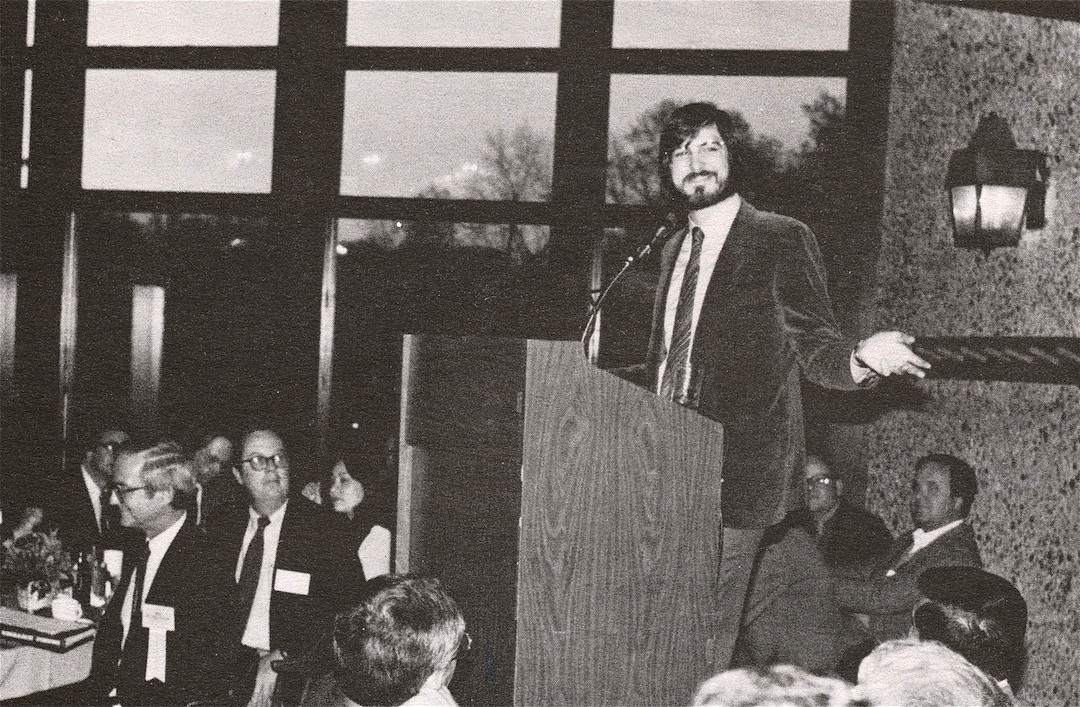
Steve Jobs making his pitch to venture capitalists, investment analysts and the odd journalist

David Talbot drops serious clangers in his appeal for the resurrection of Salon.com, an e-publishing pioneer

'The Great Grievance', an etching associated with the French Revolution, by an unknown artist

Salon.com is not actually extinct. It is just that its readership has declined precipitously, and no one talks about it any more – even though it is still capable of running first-rate pieces, like a report on Sunday about the indispensable Google Translate’s implications for multilingualism.

David Talbot is clever, likeable and tremendously enterprising. He deserved the towering pile of laurels that all but suffocated him and his fellow-Salonniers when they co-pioneered online journalism in the mid-1990s. I myself wrote a piece or two for him, at his invitation, in those early years. I enjoyed the typhoons they whipped up in reader reactions enough to sign on as a subscriber when the magazine slipped behind a pay wall a few years ago. It virtually disappeared behind it.

Not long after that, the e-zine lost David and its groove.  I let my subscription lapse and forgot all about it. But into my email box, a few days ago, dropped a surprise announcement – at least, for me – that he was trying to revive the magazine. The message said that he was back as its über-manager, after stepping down as editor-in-chief around 2005.

Unfortunately, what I could glean of his strategy ignores – or gives only the faintest nod to — the rise of the 5th Estate, the new media voices on the verge of eclipsing the once supremely authoritative 4th Estate with which Salon.com evidently still identifies. A more realistic plan would at least experiment with giving readers a chance to share ownership of the publishing sites that they sustain with their eyeballs and clicks – as in, for instance, this proposal recognising that the philosophical DNA encoded in the term ‘4th Estate’ belongs to the run-up to the French Revolution.

Instead, here is the gist of David’s email circular:

Dear Salon reader and Premium supporter:

I founded Salon 16 years ago […] For the first time in my life as a journalist, we — editors, reporters and critics — were in sole control of our work, not managers and corporate sponsors. […]

Now, six years after leaving Salon, I’ve decided to return as CEO, because I think the country needs a fighting, independent media more than ever. […]

I wanted you to know first because your previous support for Salon has meant a great deal to us — not just the money, but the sense of solidarity from your choice to become a Salon Premium member. […W]e are revamping and renaming Salon Premium. [ …]

We are adding many new benefits, amongst which are: opportunities to engage with writers and editors, magazine subscriptions, and if you choose, benefits from select marketers. […]

With the American people struggling to stay afloat in the Great Recession, and their hopes and well-being largely ignored by our political system, a free press is more vital than ever. We need an independent media to […] fight for the people. […]

I could be mistaken, but honestly do not see that getting many takers. What’s wrong with his appeal?

  • It’s the same old model. Reporters and editors perform on a stage. Readers pay to watch and listen. It ignores the new reality, which is that readers expect to have a chance to do star turns themselves. When I first visited the site a day or so ago, I found that a section of it, Open Salon, has since 2008 been dedicated to featuring readers’ blogs. I have been back twice. That might not be enough, but I have so far found no arresting or startlingly good – or simply startling – contribution, even though I remember that there were hundreds of readers with the requisite talent among the 100,000 paid subscribers the magazine once had.
  • Without a serious financial incentive – or at least, stake – in Salon’s revival and, ideally, voting rights in at least part of its running, why should anyone outside David’s small circle bother to post their best efforts on Open Salon? Its part of the site looks so strictly functional and dull that it could almost have a sign saying, ‘Makeshift Kiddie Corner’. Joan Walsh, the last editor-in-chief, said that OS would make the magazine’s ‘smart, creative audience full partners in Salon’s publishing future’. Her replacement, Kerry Lauerman, has promised, ‘We’ll also be unveiling ways for you to earn money for your great work on Open.I hope to find my pessimism unjustified, when that veil drops, but from his tone, it does not sound as if the Salonniers plan anything more enticing than some equivalent of the old 4th Estate offers of small cash prizes for ‘tastiest reader recipe’ or ‘best holiday snapshot’.
  • David’s appeal is addressed to ‘the American people’. Big mistake. Online readers are best addressed, for the most part, as citizens of the world. This part of his pitch sounds like the blinkered parochialism of George W. Bush. What do we expect now? The phrase ‘accelerated global conversation’ says it all. I found it here, in a piece reporting that,

    […[Pete] Cashmore, the soft-spoken chief executive of Mashable, the one-man blog he turned into a popular news site … appeared totally at ease [in his video interview.] … [W]ithin half an hour, an important measure of success was achieved. [Elie] Wiesel, who wondered aloud during the talk what might have happened if Moses — and also Hitler — had used social media tools to get their messages across, was trending worldwide on Twitter.
    “It just shows the acceleration of the global conversation and that Mashable is a force online,” said Mr. Cashmore, whose company worked with the United Nations Foundation ….”

Worldwide. Global. United. Online. Surely those are the essential thoughts, not just for me but all of us – and the hour.

Why, I wonder, is David ignoring them?