Humour does not travel well — not even in doing business — a fact that the net can only alter slowly, if at all

Everyone’s lens on the world --even from thousands of miles away -- has been darkened by the Charlie Hebdo killings  -- postgutenberg@gmail.com

Everyone’s lens on the world — even from thousands of miles away — has been darkened by the Charlie Hebdo killings — postgutenberg@gmail.com

  1. Nothing justifies butchery – ever.
  2. The right to free speech is inseparable from the joy of being alive, and deserves to be treated as very nearly our highest value (after, or on a par with, the right to love as we choose).

But underlining these truths does nothing for the anguish of looking at the Charlie Hebdo faces no longer with us. It is so close to unbearable that post-Gutenberg has grabbed at the distraction of thinking about the massacre tangentially, in the abstract.

For instance: are human beings more or less likely to change our behaviour, customs and beliefs by being teased or mocked about them? And can we expect teasing about religion to cross yawning cultural gaps, when jokes across narrow secular divides — within the English-speaking world and in business circles far removed from religion — must be made sensitively?

David Brooks, writing in The New York Times yesterday, came to a conclusion that seemed exactly right:

The massacre at Charlie Hebdo should … remind us to be legally tolerant toward offensive voices, even as we are socially discriminating.

On the other hand, a quotation by the Daily Mail of one victim, Jean Cabut, induced shudders on behalf of the most heedless creative geniuses:

Despite all the controversy, Mr Cabut was insistent that art should not be constrained. Perhaps his most famous quote was: ‘Sometimes laughter can hurt – but laughter, humour and mockery are our only weapons.’

That word, weapon, arrests the eye. If your countrymen include Albert Camus’s L’Etranger — minorities still making the transition from feeling like strangers and outsiders — can wit mocking soul-sustaining beliefs of theirs make them feel like insiders, rather than victims of barbarous attacks? That would depend on the styles of humour they consider within the pale.

For a comparison, consider these illuminating, fine-grained perceptions about differences in the sense of humour of English-speaking nations on Culture Resource Centre, an Australian website – recommending extreme caution in doing business with jokes, internationally:

Have you ever been in this position in an overseas business meeting when you thought it was appropriate to crack a joke and things go horribly wrong? …

Americans often consider Australian humour offensive as it often aims at taking the ‘micky’ out of themselves or a situation. American humour is considered a bit dull by the Australians; it is too ‘safe’ and aims far more at sharing the agreeableness among business partners. The British humour takes both the micky out of themselves and others and is probably considered a bit too sophisticated for both Australians and Americans. It hints at the fact that the Brits feel they have a unique knack for using words, phrases, and expressions: it allows them to show off their intellectual ability and using their famous understatements.

Contrary to the Brits, Americans and Australians often tend to use their language much more as a functional rather than intellectual tool to get messages across as can be seen in the use of for example Australian language: arvo, barbie, mozzie, pressie, etc. The Australian humour is probably a bit too rough and shallow for the Brits as it is often too direct without the intellectual cleverness so aspired to in the UK. But in all fairness, as long as you talk among English native speakers you might actually get away with your own culturally specific humour as the concepts underlying the humour are not always so different and are less likely to be so offensive as to cost you the business relationship.

[…]

Humour is very much culturally influenced and you need to be aware of it before using your favourite joke as it might just cost you the deal… Leave it at home until you are familiar with the do’s and don’ts of humour in the new culture and then adjust your style.

In the future, will gleefully transgressive cartoonists turn in the opposite direction from open, all-inclusive net culture, to publish their work in cultural pods – like Facebook’s gated communities of friends?


The Supreme who reads Proust to live by, and to understand his fellow human-beings

Marcel was surely here: a Parisian backstreet not far from Sacré Couer - postgutenberg [@] gmail.com

Marcel Proust was surely here: a Parisian backstreet not far from Sacré Couer
– postgutenberg [ at ] gmail.com

‘Artistic people aren’t respected.’ We quoted someone to that effect a year ago – a close relation of someone else of strikingly conventional views, but unusually plain-spoken, who says frankly, ‘I want power,’ and would like to have been a lawyer or politician.

We thought of her as we read a recent interview with an American Supreme Court judge, Justice Stephen Breyer, translated by The New York Review of Books from a French literary journal, La Revue des Deux Mondes. Justice Breyer was talking with marvellous fluency about his near life-long love of Proust’s In Remembrance of Things Past. The edited transcript of the conversation reads like an early Christmas card – except that the most winning images of doves, poinsettias, Boticelli angels and white-bearded old men clad in scarlet, humping sacks of gifts, cannot compete, as channels to transcendent happiness, with what he says about the supreme importance of literature:

Q: This year marks the centennial of the publication of Swann’s Way. In your opinion, what is the novel’s greatest contribution?

A: What I especially remember is the meditation on the passing of time at the very end of that volume, when the narrator strolls through the Bois de Boulogne just as Odette used to do so many years before. But the forest he walks through is no longer Odette’s forest. Time has passed. Women are no longer dressed the same way, the fashion has changed, automobiles have made their appearance. And as he watches the women promenade down the chestnut-lined allées, the narrator wonders: “Where has Odette’s world gone? Has it vanished forever?” The answer of course will come much later, in Time Regained. This world still exists, but it does so in our memory, in our recollections, and what gives it new life, what rescues it from oblivion, is literary creation. It is the work of art that allows us to rediscover lost time.

Q: During a lecture you delivered at New York Law School, a student asked you what major you would recommend he select in order to become a lawyer. Your answer was quite surprising: you suggested that he choose “whatever major you want, as long as it has nothing to do with the law.” You, in fact, studied philosophy at Stanford and Oxford before studying the law at Harvard. How can the humanities or foreign languages be an asset for a jurist?

A: It’s true, I’ve always thought that it was not particularly useful to study law as an undergrad. We are only allowed to live one life: it’s the human condition, there’s no escaping it. In my view, only by studying the humanities can we hope to escape this fundamental limitation and understand how other people live. Because literature, history, or philosophy all provide extraordinary windows on the world. Foreign languages, too, are fundamental.

The French language gave me an entrée into another culture. It allowed me to discover different means of expression, a different way of life, different values, a different system of thought. Because when you’re a judge and you spend your whole day in front of a computer screen, it’s important to be able to imagine what other people’s lives might be like, lives that your decisions will affect. People who are not only different from you, but also very different from each other. So, yes, reading is a very good thing for a judge to do. Reading makes a judge capable of projecting himself into the lives of others, lives that have nothing in common with his own, even lives in completely different eras or cultures. And this empathy, this ability to envision the practical consequences on one’s contemporaries of a law or a legal decision, seems to me to a crucial quality in a judge.

… Literature is crucial to any democracy. Take the field of women’s rights, for instance. You have to read Mme de Lafayette’s La Princesse de Clèves to realize how narrow a range of opportunities were available even to a highborn young woman in the seventeenth century. They had a choice of either marriage or the convent. It only got worse in the nineteenth century, because along with the pressure of the church, there was the male stranglehold on all property rights. It’s evident in Balzac’s novels, for example. In Balzac, there are mainly two types of women: prostitutes and brebis, or ewes, who are all victims. Eugénie Grandet is a victim. Madame de Mortsauf, in Le Lys dans la vallée (The Lily of the Valley), is one too.

… Personally, I get a great deal of pleasure from writing. I take great satisfaction in drawing out the substance of matters that are separate and unrelated and giving them form on paper, through writing: that too is a creative process.

Q: In France, there is a very special prestige that attaches to being a president who is a “man of letters” or a “friend of the arts.” In the United States, the label of “man of letters” seems to be much less valued in the realm of politics. A presidential candidate or a sitting president is unlikely to express his or her literary tastes publicly, much less claim to be “cultivated.” How would you explain this difference between the two cultures?

SB: I think that Tocqueville can help us to understand that difference. He very rightly pointed out that there is a mistrust of elites in the United States. […] Now, in France, art and power have always been bound up together, whether under the monarchy or in a republic. You will not find the same proximity between the spheres of power and culture in the United States.

… [T]heater tickets—could they be considered basic necessities, and could they be regulated as such? The majority thought the theater was not a necessity. The great Justice Oliver Wendell Holmes Jr. replied in his dissent: “We have not that respect for art that is one of the glories of France. But to many people, the superfluous is the necessary.”

Q: You often emphasize the beneficial role of artistic creation for all of us.

A: To me, the distinguishing characteristic of human beings is the desire to create order out of chaos, to give form to the universe. We are surrounded by colors, shapes, and sounds. We can arrange all these things in an attractive and constructive manner, as in a painting or a symphony. And that is what Proust did with his writing. Of course, he was supremely talented—but I firmly believe that every one of us can, to some extent, try to establish order amid chaos.

One hundred posts, but many more kudos to Annalisa Piras and Bill Emmott for a post-print work of genius focused on Italy

giac b+w title

<i>Girlfriend in a Coma</i> encourages viewers to join its creators in knocking down and neutralising ‘Bad Italy’ – a podgy monster, in Phoebe Boswell’s conception of it

Girlfriend in a Coma urges viewers to join its creators in neutralising ‘Bad Italy’ – a podgy monster, in Phoebe Boswell’s conception

Phoebe Boswell

Phoebe Boswell
photograph by Sky Arts

[…an inadvertently belated appreciation…]

Our 100th post-Gutenberg entry amounts to a standing ovation for two old media journalists — one Italian, the other English —  who have unzipped their imaginations to create a model of transmedia fence-jumping, using digital tools to communicate subtler and more penetrating information than can be transmitted through either conventional opinion journalism or documentary film-making.

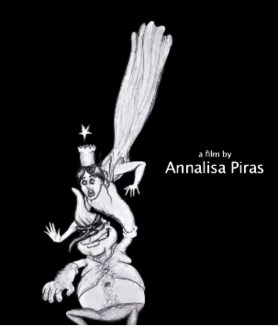
The key to realising their extraordinary ambitions for their collaborative video production, Girlfriend in a Coma, was the free hand they gave a hair-raisingly original and gifted young British artist and animator, the Kenyan-born Phoebe Boswell. Hers is a talent that had us scribbling the names of the manically brilliant English cartoonist Gerald Scarfe, his ghoulish American kindred spirits, Edward Gorey and Charles Addams, the Alice in Wonderland illustrator Tenniel, and Salvador Dali, as we ruminated about influences.

Girlfriend is based loosely on Good Italy, Bad Italy (2012), a contemporary portrait in a book by Bill Emmott, The Economist’s editor from 1993 to 2006. He is listed in the video’s credits as co-writer and co-director with Annalisa Piras, credited as director, and the prime mover behind the project. She is about ten years younger than Bill, who happens to be a former colleague of p-G’s remembered for true and exemplary collegiality. This makes it not in the least surprising that – as well as he plays his part as the video’s unassuming narrator, and as much as the narrative is technically filtered through his memories of Italy, his thoughts, and his feelings about Europe’s high-heeled boot — the production is saturated with a wildness and emotional intensity so unlike him that they could only have been conjured by his collaborators. Bill is clearly a first-rate encourager.

Annalisa (as referring to Bill as Emmott feels awkward, we’ll dispense with surnames) has explained how she sketched Girlfriend’s essential requirements for Phoebe and Jenny Lewis, Phoebe’s partner in animating her drawings and imaginings: ‘the Italian characters — the Good Italy, based on the female image since Roman times, the Bad Italy, a thug wearing a “Pulcinella” mask from the Commedia dell’Arte — and the ideas I wanted to convey, and they ran with it.’

Actually, they flew. Annalisa stayed closely involved: frame by frame, they flew together. (See updated Q & A about ‘the making of …’ here.) The result made p-G, a jaded lifelong observer of Italy, sit up and marvel, as if for the first time, about the paradox of a country easily seen as a screaming basket case — as far as economics and politics go — somehow managing to hold its place, for decades, among the world’s leading economies. If this trans-documentary has a single flaw, it is that it fails to offer an adequate explanation for the Italy that, against long odds, has not merely survived but often prospered mightily in modern times. But this is beside the point for Girlfriend — mistakenly slated by some critics for a lack of balance. It is a call to arms. It is a manifesto for the reform of a deeply marvellous but also staggeringly corrupt, inefficient, uncaring and misogynistic society.

Not that anything as dreary as ‘consciousness-raising’ remotely describes its tone. This is set by Phoebe’s surreal, dreamlike imagery, briskly intercut with footage frequently shot from clever camera angles that recalls the films of Michelangelo Antonioni, especially Blowup, and micro-clips from interviews – the interviewees as diverse as high-ranking politicians, Mafia prosecutors, all-too-understandably outraged feminists, top industrialists, historians, political theorists, the irresistible novelist-philosopher Umberto Eco, workers and inmates in a home for the disabled – that justify the video’s charming frame.

And what is that?

Italy is presented to us as a girl with whom Bill fell helplessly in love as a tourist in his student days. Not any old girl but an ethereal and languorous jeune fille who happens to be a touch eccentric, neurotic to the core, and assailed by homicidal inner demons – encapsulated in the figure of the mega-ogre with the Pulcinella mask. She has, for him, come to fit the skin-crawling title of a pop song by the Smiths; a girl so severely afflicted as to end up, virtually, on artificial life support.

No wonder Girlfriend was financed as an indie project – by Annalisa’s own company, Springshot Productions. Though her potted biography mentions her education in Rome in history, politics and cinematography, and two decades of shooting documentaries while she also served as the London correspondent of L’Espresso, we cannot imagine any part of the old media establishment backing such a commendably outlandish project.

That does say something disappointing in the extreme about the reluctance of our dominant communicators to get to grips with the future. Fear of the unfamiliar in other quarters – among arts reviewers – could also explain why p-G is writing about Girlfriend nearly a year after its release in Europe.

We learnt of its existence by accident, last month – having been mostly cut off from news about arts-and-letters at the time of its launch last November. Online searches show that though it did indeed cause the intended stir in Italy, at the loftiest levels, and was shown in art cinemas and nominated for awards in European cities, it has so far failed to be noticed for the right reasons. Though it has had some laudatory reviews in the Anglosphere, including a rave here and there, these have mostly been short (a single glowing paragraph in The Financial Times, for instance). Where, we have been wondering, are the lavish allocations of column-inches that this trans-documentary deserves? The colour photo-spreads? The probing investigations on the front pages of arts sections of how Annalisa, Bill and Phoebe came to be the pioneer-collaborators they are? The questions about their insights into the evolution of post-print media?

Funny, to say the least, that no one apparently saw plenty to write home about in watching the calm, gently reasonable ex-editor of a well-known magazine drifting in silhouette through shadowy stone arches, up and down dark stairways that evoke dungeons — sequences near the start of his narration that evoke both the vicious underside of Italy that includes the Mafia, and our narrator’s own unconscious mind.

Are we being invited, in this segment, to believe that Italy is where Bill’s muse or — from one perspective in psychological theory — anima, in the form of this Girlfriend, resides? Later in the video, one of the readings from Dante Alighieri that interrupt the narrative periodically goes, ‘O lady, you in whom my hope gains strength.’  This is stimulating allusiveness. In the hands of Girlfriend’s creative quartet, it hugely enhances all the information it packs in – is sophisticated, successful sugar-coating for the flow of statistics, miniature history lessons and political science lectures that barely register as anything so dull.

Some highlights (not necessarily in the right sequence):

• Blisteringly incisive insight and commentary in clips from interviews with Roberto Saviano, a (now) 34 year-old investigative journalist and novelist obliged to live in hiding, under police protection, from Mafiosi infuriated by his revelations. His handsome shaved head, winglike black eyebrows and dark eyes shot in stygian gloom are in perfect harmony with the sinister animation sequences.

• Bill talks to the intellectual and left-leaning Canadian-Italian industrialist, Sergio Marchionne, who made his name by restoring the fortunes of Fiat; who hopes that we will see the evolution of a healthier form of capitalism, and says that ‘People who engineer the free market have a responsibility to keep it clean.’ His point is underlined by the words of Dante – reaching us by way of the disembodied voice of the actor Benedict Cumberbatch – to which we listen looking at a panorama of industrial sprawl, probably Turin: ‘[Y]our avarice afflicts the world:/ it tramples on the good, lifts up the wicked.’

• Maurizio Viroli, a slender, elfin professor of political theory at Princeton sits at a dining table talking to us over the remains of what appears to have been a simple, vinous meal all the more delicious for its informality. He points out that the three main leaders of the 19th-century Risorgimento or ‘resurgence’ that created modern Italy – Cavour, Mazzini, and Garibaldi — ‘had a deep religiosity inspired by currents of Protestanism – Jansenism.’ He adds that ‘all three were critical of the Catholic attitude of making deals with those who are powerful,’ and he mainly blames the Catholic Church for the besetting national flaws, ‘sloth and moral weakness’.

• Sad, wraithlike, girlish figures sketched by Phoebe rise from Lake Pellicone, a dramatic expanse of blue set in a rock-walled canyon. Dante’s lines, here: ‘This miserable way / is taken by the sorry souls of those / who lived without disgrace and without praise. / They now commingle with the coward angels, / the company of those who were not rebels / nor faithful to their God, but stood apart. /’ In the rocks above the water, in another superimposed animation, the demonic ogre bashes Bill’s girlfriend.

• Bill cycles around a deserted, sparkling Ferrero chocolate factory, dressed in one of a succession of dapper outfits, many in brilliant colours that recall swinging ‘60s London. The ghastly, thankfully deposed Silvio Berlusconi, three times Italy’s prime minister – who did not keep his promise to appear in the film — was apparently thinking of Bill’s appearance as well as his politics in nicknaming him ‘Lenin,’ yet the cumulative impression he makes is a hybrid of Agatha Christie’s brainy Hercule Poirot, Charlie Chaplin in Modern Times, and Amélie’s beloved globe-trotting garden ornament in the film by that name.

Not many experimenters with post-Gutenberg communication will have either the funds or connections to match the excellence of the musical sound track, or engage the likes of Cumberbatch for poetry recitations. What any of us can still learn from Girlfriend is the importance of re-conceiving from scratch our presentation of what we want to say; of not merely pouring well-worn forms and conventions for shaping information into new-media bottles, but grabbing the chance to communicate what was virtually impossible to communicate before about non-fictional places, events and people.

As far as we can tell, Girlfriend is as scrupulously factual as the finest old-fashioned print journalism. But it exploits special capacities of moving pictures to show us how the facts about its subject impress and affect its chief observer and fact-gatherer, Bill, drawing us beneath the surface of hard reality into psyche – with the animation sequences drawn and directed by Phoebe ensuring a clear demarcation of the boundary between the actual and the strictly impressionistic. One parallel for such innovativeness that we mentioned in a recent post is Carl Djerassi’s revisiting, re-sifting, and powerful re-enlivening of the mental preoccupations and lives of pre-war intellectuals in his Four Jews on Parnassus – by recasting them as dialogue; as a spikily argumentative conversation.

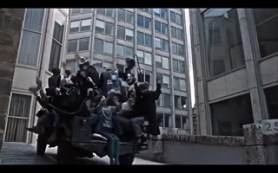
This appreciation of Girlfriend will end with a whiff of the uncanny. A day or so after we first watched it, we kept thinking of Blowup, and wondering why. After we had tapped a tentative explanation into a keyboard, we went to the Wikipedia looking for the year of the film’s release – 1966, and there was a New York Times arts correspondent attributing part of critics’ reaction to this ‘stunning picture’ to the way it is ‘beautifully built up with glowing images and color compositions that get us into the feelings of our man,’ its photographer-protagonist. No, there was nothing uncanny about that discovery. The spine-prickling came from being told something we never knew, in the same Wiki entry. Antonioni had used as the backdrop for Blowup’s carnivalesque opening scene (below) the plaza of a London office building — part of a streaky-concrete-and-glass specimen of Brutalist architecture — where we had once toiled long past sunset, years after we had forgotten details of the film. … And that was the office where, bizarrely, we once worked with Bill.

Did Girlfriend’s collaborators have Blowup in mind when they were mulling over the look and feel they wanted for their project? We must remember to ask.
Screen Shot 2013-09-21 at 00.23.13

Carl Djerassi’s sumptuous foretaste of publishing’s mixed-media future, part 1


Angelus Novus, Paul Klee, 1920 - photograph by David Harris

Angelus Novus, Paul Klee, 1920
– photograph by David Harris

Now, here’s a strange thing: the most thrilling media-bending creation that we at post-Gutenberg have met is not by a gangling, google-eyed nineteen year-old muttering ‘mashup’ and ‘re-mix’ in sleeptalk, but by someone who will be ninety in October, writing imaginatively in voices brought back from the dead.

Carl Djerassi, featured here in April,  … who made his name as an inventor of birth control pills and has won high honours as both a scientist and technologist, is somehow cramming at least four lives into a single lifespan. His harbinger of mixed-media publishing’s future evolution is a hybrid of ingeniously animated philosophical debate, art appreciation, experimental graphics and dramatization. It comes pressed between cardboard covers, titled Four Jews on Parnassus, and fitted with a pocket holding a CD compilation of clips from musical tributes by five composers to a single painting by Paul Klee.

We will call the result simply a book for shorthand. The right-sounding term for it has yet to be invented. It is available as an e-book**, but the images in it – roughly half of them feats of larky digital tinkering, and as essential to its purposes as the pictures John Berger chose for Ways of Seeing were to his – are best savoured on paper. Rolls Royce-grade colour printing on luscious glossy pages makes Four Jews on Parnassus virtually pirate-proof; cheap knock-offs are inconceivable.

If, as we believe, the only adequate reply to a great poem is a dance, if not another poem, then Four Jews is a re-creation — in the identical spirit — of just what was so great about German Jewish intellectuals of the early 20th century. Few of us brought up in the Anglophone tradition know much about their gifts to culture – our enlightenment having been obscured by lingering antipathies from the two world wars – even though many of us have heard their circle described as the pinnacle of discerning European aestheticism in modern times.

Had Djerassi tried to evoke this milieu and four of its superstars through making a film, the usual limitations of bio-pics – which lean to simple-mindedness and put too great a strain on our ability to suspend disbelief – would have got in the way. Four Jews reminded post-Gutenberg of the happiness of eavesdropping in cafes in the romantic city on the Seine – listening to strangers who happen to be old friends teasing each other, exposing all their foibles, as they tackle weighty and absorbing questions about art and culture with the confident casualness of master-chefs whipping up meringues.

Djerassi, who was born in Vienna, migrated to America at sixteen. Yet he has retained the European talent for using intelligent discursiveness to engage and charmingly instruct — in spite of his success as a technologist and scientist among colleagues for whom conversation is strictly about finding the shortest distance between two points, ignoring entrancing scenery en route.

The Jews of his title are not easily slotted. Gershom Scholem (1897-1982) was a Hebrew scholar, but also a historian. Theodor Adorno (1903-69) was a sociologist, philosopher and musicologist. Arnold Schoenberg (1874-1951) was an Austrian composer and painter.

Copyright-haters have recently been apt to invoke the name of the fourth, the cultural theorist and critic, Walter Benjamin (1892-1940) – interpreting his famous essay, ‘The Work of Art in the Age of its Technical Reproducibility’ to mean that technology has so commodified art that it needs rescuing by nullifying the copyright of the replicators responsible for that commodification (and if this also destroys artists’ rights to own their own work, too bad.) By some impenetrable sequence of mental acrobatics, this reading of Benjamin is seen by the anti-copyright camp as proof that copyright causes commodification. (See ‘Does copyright turn art into commodities?’ part 1).

In Four Jews, Djerassi filters actual and imaginary debates between his philosophical quartet through his own, idiosyncratic mental preoccupations. He places the men on Mt. Parnassus, classical Greece’s equivalent of heaven for cultural supremos. The book is written as a long play whose most dramatic passages occur in revisiting episodes in the lives of the protagonists before their ascent to the clouds – peaking in outrageous sexual peccadilloes and other marital betrayals and travails. The talk is interrupted now and then by explanations of context and rich, complex and playful pictorial illustrations. Dialogue, Djerassi explains in his introduction, has fallen out of use for exposition by scientists – though it was used to great effect in the past by thinkers of the calibre of Galileo and Erasmus. This, he says, is a shame – and he quotes the Earl of Shaftesbury’s belief that dialogue is preferable to the ‘more dispassionate third-person voice’ for encouraging an ‘Intercourse of Caresses between the Author and Reader’.

In the Djerassian scheme, his immortals can order books from Amazon, but do not have email. To help make particular arguments, the author creates an acquaintanceship between Schoenberg and the others that never existed in life.

It is unsurprising that his book had to be published by the Columbia University Press (with the help of the Pushkin Fund) – and has had practically no reviewer attention since its publication in 2008. Commercial publishers are still frightened of proposals for mixed-media books. Reviewers, like bookstores, are used to working in categories and compartments. Four Jews treats frontiers between art forms and disciplines as if they did not exist – just as its characters did, to a remarkable degree, in reality.

The astonishingly prolific Swiss and German painter Paul Klee (1879-1940) – from among whose nine thousand works Djerassi has been a collector for years – ‘profoundly affected the lives of three of my main personages,’ and more musical composers ‘than any other painter in art history’. Klee himself, he says, was ‘a superb classical musician’. In one conversational segment, Adorno tells Schoenberg that Klee inspired ‘330 composers producing over 500 compositions’ and calls these a ‘minimal estimate’ with the actual count being over eight hundred, including an Icelandic pop song by Egill Olafsson (included in the musical offerings on the book’s CD).

Schoenberg, who invented a variant of chess for four players, managed to earn a place in the musical firmament even though, as Djerassi explains, his early career as a composer was as discouraging as his start in his other vocation, painting – in which he never made his mark:

Schoenberg’s first public exhibition in 1910 Vienna was panned by the critics – as much of his music had been – yet the following year he was prepared to paint portraits for a living.

Is there a single contemporary sociologist who can presume to the authority with which Adorno theorised about music? Our guess: no. The Wikipedia says: ‘As a classically trained pianist whose sympathies with the twelve-tone technique of Arnold Schoenberg resulted in his studying composition with Alban Berg […] Adorno’s commitment to avant-garde music formed the backdrop of his subsequent writings and led to his collaboration with Thomas Mann on … Doctor Faustus.’

Benjamin’s mind and psyche were so profoundly engaged by art that he did more than merely collect Klee’s works before the painter became famous. He used one picture that particularly fascinated him, ‘Angelus Novus,’ to focus his thoughts about history for an essay titled ‘Theses on the Philosophy of History’. As his – mostly posthumous – renown grew in the second half of the last century, that particular Klee work acquired iconic status.

Nothing is more stimulating to speculative minds than contrarianism. Djerassi teaches his readers a great deal about his quartet’s contributions to culture through inventing an argument between them, using this to explain his personal conviction that Benjamin should have made a different selection from the fifty-odd angel paintings by Klee – a picture far better suited to his essay’s theme and tone than ‘Novus’. (An extract from that argument can be read here.)

Then, in a leap into pure fun – remarkably effective at deepening interest and perception in his readers – Djerassi offers impish graphic demonstrations of other angelic possibilities by mixing and matching Klee pictures in close collaboration with a contemporary Austrian artist, Gabriele Seethaler. With his generous permission, we have reproduced these in a companion entry in this blog. (See part 2.)

‘Th’intertraffique of the minde’ to which the Oxford historian John Hale refers in his Civilization of Europe in the Renaissance (1994), quoting a medieval scholar, was incalculably stimulated during the grand transformation by travel, translation, and scholarly forums. Crucial to it was the invention of Gutenberg’s press, whose printed books ‘facilitated discussion over distance because page numbers and diagrams could be cited from identical copies’.

Post-print mindes communing across continents have, for some time, been able to look at the same web page simultaneously, and help themselves freely to the treasures of many disciplines and art forms.

Mixed-media creation is infectious. After hours of – sometimes hypnotic — immersion in Four Jews, post-Gutenberg is loath to return to offline works-in-progress. Mere static texts that do not speak, sing or lean exclusively on images to make a point here and there have begun to feel as quaintly dated and limiting as swirling script lettered by quill pen.

** An earlier version of this entry mistakenly said that Four Jews on Parnassus is not available as an e-volume. We cannot remember what gave us that impression when we bought it a few weeks ago, but apologise for our error.

[ Update on 11.11.2019: For the record, post-Gutenberg had yet to meet Carl Djerassi when this series of entries on Paul Klee was written in 2013 (see part 2 and part 3)  — but did in early autumn 2014 . All exchanges with this intellectually generous correspondent about ideas of mutual interest were made across vast distances. ]