Of an orange pig, a wolf, and using literary clips to rescue literature from hyperinflated praise

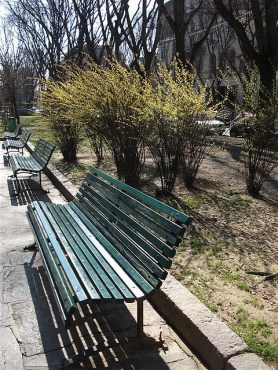
'Ritorna il sole, ritornano i colori' photograph by MIL22

‘Ritorna il sole, ritornano i colori’
photograph by MIL22

When the currency of literary praise has been so debased as to be all but worthless, returning to a form of barter is long overdue.

What are we saying?

Before some wily genius invented money – which too often earns its reputation as the root of all evil — people traded in actual things other people wanted, not in symbolic representations of the value of those things. So many of us are fed up of being misled by book jacket hyperbole and dishonest reviews dressing up mediocre or shoddy work as ‘brilliant,’ ‘masterly,’ ‘luminous,’ and ‘stunning’ that it is time to melt down the defunct adjectival coinage, shelve it, and return to the actual substance of literature. We mean that we would love to see a trend for favouring clips of the writer’s own arrangements of words, in drawing attention to works of literature — over the encomiums of word-floggers and other tricksters.

Still making our slow – savouring — way through Storm DamageJohn A. A. Logan’s collection of short stories mentioned on this blog in January — we came across one accorded the rare distinction, in our reading over the years, of being read more than twice by us.

Like our photograph in honour of early spring – a gift of the eyes of generous MIL22 – this story, ‘The Orange Pig,’ is the work of an artist interested in satisfying nothing but exacting, deeply interior aesthetic standards. And if that sounds too serious – well, this is a tale that had us shaking with amusement as often as it left us rapt from the recognition of wisdom dextrously confected as a soufflé.

Without further ado we leave you, dear reader, to consider these extracts chosen to avoid giving away too much – and to let you marvel at a publishing revolution that makes it possible to acquire the thoughts that link them together on your e-reader almost instantaneously. All for no more than what it would take to put a frothing coffee into your hands.

‘I only want to walk to the top of the hill,’ said the orange pig.

‘No-one is stopping you,’ said the wolf. ‘But surely you can see that we can’t let incidents like these go unexamined or unreported. I assume you are from the farm.’

‘Where I am from is my own business.’

‘I understand,’ said the wolf, ‘but …’

The wolf waved a paw in the direction of the dead bird.

‘In circumstances like this,’ said the wolf, ‘we all must account for ourselves, our actions, our motives. It may be in the next world we will all be free to move where we wish like phantoms in the mist, but you are from a farm. You know the meaning of a fence, or a gate, a sty or a barn, a wall or a door. Do not pretend to be naïve. I find you here, and then I find this. What am I to think?’

‘The only time is now,’ said the wolf.

‘It is very late.’

‘Not so very,’ said the wolf.

They walked past the dogs like ghosted whispers and soon they were beyond the limits of the farm, their legs working hard against the steep hill’s power.

‘Under the moon there is no market day,’ said a deep, bass voice from further to the orange pig’s left than his thick neck could twist to let him see. ‘No lorry to take us away, no slaughterhouse, no scheduled death.’

‘For scheduled death is dishonour,’ said the black wolf.

‘Amen,’ said all the wolves in a clear chorus.

Somehow, though, the orange pig’s personality had not attracted fame, only a non-profitable cache of oddity. Good enough to bring a few of the farmer’s friends around the orange pig’s sty to stare at him awhile, but nothing solid to build a business on. The newspapers had come once, and taken photographs, but interest had not been ignited in the public.

‘To hell with farms and farmers,’ said a bitter voice the pig had not heard before.

Amen,’ said the wolves.

‘It is here in the moonlight things are shown truly,’ said a quiet voice from among the sea of silver heads. ‘With the sun in the morning comes all the illusions and divisions. Here in the silver shining, we are our truest selves, is it not so my brothers?’

‘Amen,’ said a strong chorus.

‘No farm could ever be thought of or established in the moonlight. It is an idea of the day, born of heat and dazzle.’

‘I told this pig I would take him another night to wash in the salt of the sea,’ said the long wolf.

‘The waters of the sea are great, its waves caress and cool us,’ said the quiet voice.

‘That pig’s legs are too short to run with you to the sea,’ said a voice.

‘We will all go,’ said the black wolf. ‘We will go to the sea another night and we will go at his pace. There are thoughts that come when we stand in the sea and feel the waves lap at our legs that can come in no other way. It is time we did go to the sea again.’

[ … continues …]

Marcel Proust, punk rocker avant la lettre (… a post about, well, … language)

Fasnacht in Switzerland's MittellandPhotograph by postgutenberg@gmail.com

Fasnacht in Switzerland’s Mittelland

In some lucky, freezing parts of the world, this is a time for the licensed collective madness called winter carnivals. In German-speaking Switzerland, the prelude to Lent named Fasnacht or Fastnacht gives the famously orderly Swiss an excuse for escaping their usual selves in ritualised abandon and disciplined bacchanals – all dressed up in fantasy.

We suspect that it was in this state of mind that a Swiss correspondent of post-Gutenberg’s sent us a link to one of the most unlikely obituaries we have ever read. It might have been written specially for Fasnacht – in deepest sympathy with the spirit of this celebration – even if it is an actual encapsulation in a London newspaper of the life of a 1960s English rocker we confess we had never heard of.

What is it about the life of Reg Presley of the Troggs that makes us especially ashamed of our ignorance? These extracts (below) will explain, to anyone too busy to read the original — who will want to know that the Larry Page mentioned in our first clip was the group’s manager.

Two conclusions occurred to us when, frantic for oxygen, we reached the obituary’s end:

(i) It would seem that long before the villainous internet killed culture — if you believe some of our fulminating, fuddy-duddy, cultural guardians — our era’s counterpart for sumptuously graphic Chaucerian language, describing essential functions of the human body, entailed using a single word beginning with the sixth letter of the alphabet a lot. Okay, an awful lot — through mindless, spontaneous repetition.

(ii) It was not some ignorant online – Amazon! — reviewer but a professional dead-tree critic in faraway 1971 who pronounced rocker Reg the equal of the most venerated writer in the French literary canon.

Page dressed his protégés in loud striped suits and urged them to maintain an impeccable image offstage. Presley, a moderate drinker who smoked, by his own estimation, an average of 80 a day for most of his life, never took illegal drugs. But Page was also particularly insistent that the group refrain from swearing. With time, the musicians found this stricture more difficult to adhere to.

In the late 1960s, a studio engineer secretly kept the tape rolling while The Troggs were airing musical differences between takes. The recording begins on an optimistic note, with one member explaining that: “This is a f—— number one. It f—— is. This is a number f—— one, and if this bastard don’t go, I f—— retire. I f—— do. Bollocks. But it f—— well won’t be unless we spend a little bit of f—— thought and imagination to f—— make it a f—— number one. You’ve got to sprinkle a little bit of f—— fairy dust over the bastard.”

Later in the discussion (ironically the song in question, never released, was entitled Tranquillity) a note of disharmony begins to creep in. Presley offers some advice to Ronnie Bond, the band’s drummer. “You can say that,” Bond responds, “all f—— night. Just shut your f—— mouth for five minutes. Don’t keep f—— ranting down that f—— microphone. F— me, Reg. Just f— off and let me keep going f—— through it. I know it ain’t f—— right. I can f—— hear it ain’t right you —-. F— me. When I f—— hear it in my f—— head, that that’s what I’ve gotta f—— do, then I’ll do it. You big pranny.”

“The Troggs’ Tapes”, as the bootlegged session became known, became one of their most enduringly popular recordings. Parodied in a scene of Rob Reiner’s 1984 comedy This is Spinal Tap, it was eventually issued legally, as a bonus CD in Archaeology, a 1992 boxed set of the group’s collected works. “I was a bit annoyed about the tape at the time,” Reg Presley said, “because it was a while before we knew it even existed. We found out in a pub, in west London. This bloke came up to us and said: ‘You’re the Troggs, aren’t you? Have a listen to this.’”

Presley was informed that pirated copies of the 11-minute tape, unpurged of its 114 expletives, had been eagerly purchased by his rivals in the music business, and that black market vendors were reporting a more satisfactory level of customer feedback than was usual with a Troggs recording.

This was unfair. For Wild Thing, With a Girl Like You and Any Way That You Want Me were outstanding singles which inspired a host of performers, including Iggy Pop. The late American writer Lester Bangs even went so far as to publish a 25,000 word eulogy to The Troggs, which hailed them as the godfathers of punk and called their music “holy”. At one point Bangs, whose critical instincts occasionally betrayed his prodigious consumption of narcotics, compared Reg Presley to Marcel Proust.

[…]

When discussing space travel, Presley tended to depart from the standard vernacular, referring to interstellar craft as “the bugger” or “the bastard”, and to interplanetary communications systems as “tackle”. In 1994 he claimed to have obtained footage of a metallic disc seen hovering over crops, an object which, he said, was “nosin’ around at corn height”, and “sniffin’ around the field”. This, he argued, was “one of the little fellers – the ones with the big cow eyes, which in UFO circles we call the greys. I’ve got a sneaking feeling that they are engineered by aliens who can see the future; if they know a woman is going to lose a baby they take it and they convert it. They put in a bit of extra brain. Maybe no vocal. But they can mind-read you.”

If an alien craft landed and offered to abduct him, Presley reflected in 2006, “I hope I would have the bottle to go. Because I’d like to ask them a lot of bloody questions. And they’ve probably got all the answers. These beings may be 20 million years in advance of us. What kind of technology must they have? You could come back to earth and not know a soul on the planet. But perhaps you would have seen something that would help save the whole human race. And maybe some people have done that.”

Note at a publishing crossroads: is it time for Ian Rankin to move over and let younger Scots writers take his place?

postgutenberg@gmail.com

They’d said it would take me 105 days to get to Mars in Unicorn One. I’d only been going for eight days. The window was facing away from the sun but a glint of refracted light must have found its way through the thick quartz glass. I saw my image reflected amongst the stars. My hair looked terrible.

Now, who on earth could that be?

Ah, … the main character in a delectable short story, ‘Unicorn One’, in a collection titled Storm Damage. Any reader who tests works of fiction by sampling random paragraphs is immediately compelled by this e-work to scroll back a few pages to learn that

 … within ten years of standing on that hill with Tommy, I would be selected as Scotland’s first astronaut. Not the first Scot to go into space, of course, but the first one to be chosen for Scotland’s Independent Space Program. The world’s media had regarded our endeavour as a joke. Too long had we been seen as England’s or America’s poodle. The German press had shown photographs of our most dilapidated, forsaken housing estate ghettoes and asked what kind of people would begin a Space Program with this kind of poverty rampant in their back yard.

[…]

Even within the Space Program, I had not been a popular choice for first astronaut. They had turned down pilots and scientists, Marines and arctic explorers, mountaineers and deep sea divers, only to choose me, a hairdresser from a remote Scottish town.

‘It’s necessary nowadays,’ they had told me, ‘to find people the public can relate to …

When we reached that sentence, at post-Gutenberg, we were not simply shaken out of a mood best described as chiaroscuro-verging-on-dark. Soon, we were reading all the way back from the beginning – an opening that we would have found just as irresistible, had we started where most people do:

There was a beautiful bird on the branch, singing. It was small with brown wings and perfect white chest feathers. Its tone was too shrill and its eyes darted. Its whole manner was erratic. The sunlight was salmon-pink among the trees and I knew something was wrong, something was going to happen. I didn’t hear a sound, except the bird singing, until the shot went off and chips of wood sprang towards my cheek from the tree I was standing near …

To think that in the old days of traditional print publishing, we might never have had the luck of reading John A. A. Logan — a marvellous writer happily undaunted by chronic cold-shouldering by literary gatekeepers. His success in e-publishing turned him into a lodestar for anyone publishing unmediated e-books as independently as Virginia Woolf once released her own experimental novels in print.

When we wrote about him and other young literary Lochinvars a few weeks ago, we did not mention that we had been thinking of how wonderful it would be if Ian Rankin could only award John his latest monster advance from his publisher in recognition of the e-book writer’s infinitely fresher perspective and fizzing imagination. The once-unique Rankin creation, the boozy, crusty and jaded police detective, John Rebus, has suffered, in recent years, from his inventor’s all too-obvious irritation and boredom with being forced to spin yet another tired yarn about him.

In November, this trend earned poor Ian Rankin the gimlet-eyed attention of a contributor to Private Eye’s books section (issue no: 1328) reviewing his latest novel – described as

full of reliable Scots wisecracking and people saying ‘Back in the day’, and … clearly written at one hell of a lick. Like many a previous Rebus outing, its final effect is to call the whole basis of Ian Rankin’s career into serious question.

Ouch. The Eye did not mince its words, fingering the culprit for this apparently lazy and self-indulgent offering by a writer who has by now grown accustomed to having an overstuffed piggy bank:

Brought to a waiting world amid a flourish of publishers’ trumpets, attended by wall-to-wall publicity … Standing in Another Man’s Grave can be marked down as a triumph for the old-style trade-book model …

Of course old-fashioned publishers are still capable of surprising and thrilling us with new discoveries, but at today’s publishing crossroads, you would have to be a fool to look only in their direction for the best new work.

Book publishing’s future: a distinguished Spanglish record of a catastrophe foretold

 Giorgio De Chirico, the founder of the Metaphysical school of painting -- a forerunner of Surrealism -- created this sculptural work, 'The Mysterious Baths,' in 1973 -- when he was eighty-five. Photograph by MIL22


Giorgio De Chirico, the founder of the Metaphysical school of painting — a forerunner of Surrealism — created this sculptural work, ‘Fontana dei Bagni Misteriosi’ (‘The Mysterious Baths,’) in 1973 (aged 85).
Photograph by MIL22

A dig through papers stored in cardboard boxes on a freezing day in silver January light yielded a forgotten scrap of treasure. Who would deny that there is a touch of divine Borgesian surrealism about the circular below, from July, 1994?

Two years ago, we found ourselves arguing with a handsome Swiss nineteen year-old, the son of a novelist, who haughtily condemned the efforts of Google Translate — and was impervious to any suggestion that the translator-robot might be better than nothing, and improving steadily. What, we wonder, would that Adonis make of our vintage circular from the Spanish publisher of the likes of Octavio Paz, Gabriel Garcia Marquez, Mario Vargas Llosa, Milan Kundera and Italo Calvino? This relic, though unsigned, was clearly the work of one of those gentlemanly, perfectionist luminaries of the old print-book publishing world who could — at the drop of a sombrero — have summoned any number of helpers capable of a more straightforward rendering of Spanish thoughts into English.

It is astonishing to read this author complaining about excessive haste — the hurried new tempo being born, for people in his trade — even though no literary proletarian of the time was obliged to answer email around the clock, or multi-task, or check thought-streams in social media.

Still, we are delighted with our discovery. No text we have read, for days, has lifted our spirits to quite the same degree. This is not so much because it reminded us of the high comedy of our own inept attempts to communicate in, say, rusty French. It is the writer’s gung-ho, embrace-the-future-or-perish sentiments about the future of publishing — and eagerness to join forces across cultural borders, for the transition — that we find both moving and endearing.

TUSQUETS EDITORES

PUBLISHERS MEETING ON THE 25TH ANNIVERSARY OF TUSQUETS EDITORES

the 5th July from 10.00 to 13.30 hours
at the Museum of Science (Museu de la Ciència de la Fundaciò de ‘la Caixa’)

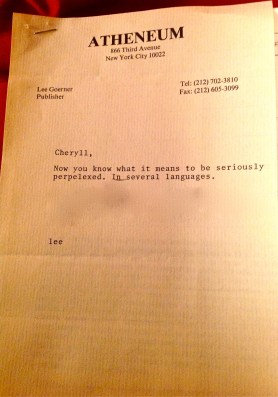
The perplexity of the publisher at the end of the century
Proposal for a debate

Our starting point is the fact that we have been living, on last years, great, swift changes which depthly affects the habits in publishing within the field in which we usually work, which is essentially the literary one, under whichever its forms. I think that all of us, now and then and in one way or another, have plunged into perplexity when faced to some of these changes, sometimes rude. From a special way of working, in which time was that of reading and the mechanisms of making contracts, of production, distribution, advertising and selling were relatively clear and simple, we have gone over to a new way of working, mastered by a hurried tempo and increasingly more complex mechanisms. This has often been generating into us doubts and hesitations concerning the future of our very activity as literary publishers and editors, whose activity, fundamentally based on risk, is to discover and experiment, both of them functions which need most of all, at first sight, different manners and time from those of an uniformised and accelerated production, distribution, advertising and selling. I suppose that this approach is valid, although very different nuances, whatever might be the kind of company in which usually works a literary publisher or editor, either an independent one, or a national or multinational group.

Therefore I suggest to divide our contributions into two interacted blocks:

1. Considerations on the present situation and analysis — avoiding as far as possible useless nostalgias — of those aspects from the past which we consider indispensable to safeguard, and even to fight for and maintain, and which complement or come into conflict with the steps each of us has been taking to grapple with the changes of these last years.

2. Reflections on how and what could be done in forthcoming years for the survival of this vocationally cultural activity, intact in its original purpose and spirit, but integrated into the new habits of both publishing and new reading communities, which already became unavoidable and are a part, like it or not, of our everyday task.

The contributions and the debate will be held either in English, French or Spanish, and we’ll have at our disposal, whenever needed, a simultaneous translation service to and from the three languages.

photo

lee to cb