Yes, cooperatives are idealistic … like marriage and parenting, and no, they do not have to be run like AA meetings

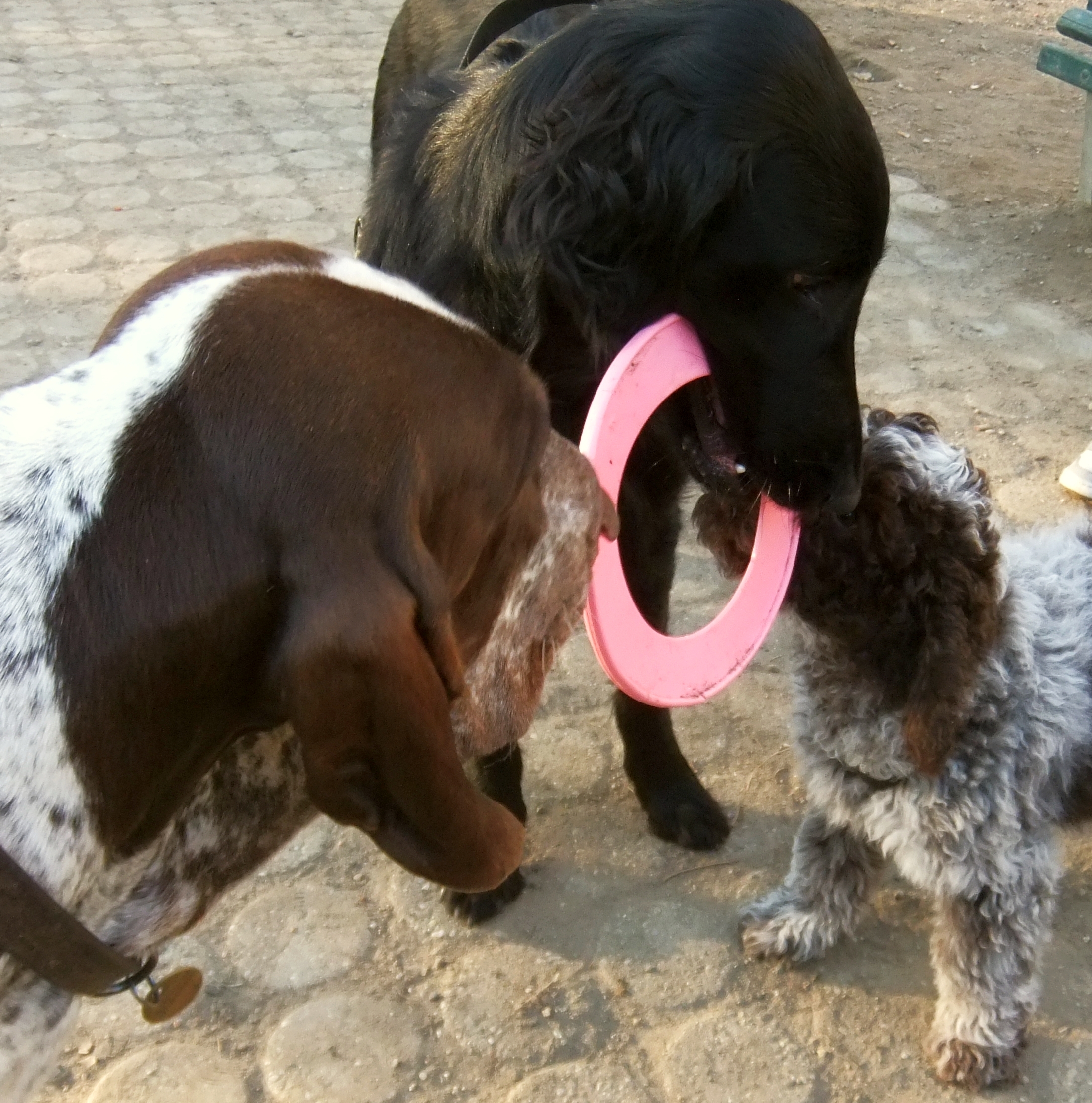
Cooperation or a Mexican standoff? Photograph and mise-en-scène by MIL22

When there is separation, there is coming together. When there is coming together, there is dissolution.

Chuang-Tzŭ (Zhuangzi), Inner Chapters,4th century BCE

[ trans.: Gia-fu Feng and Jane English ]

It is curious that anger about inequality is boiling over around the world precisely when we have new tools capable of taking us a long way towards a solution.

Yet disillusioned, battle-weary romantics who once joined some attempt to make democracy more democratic — or run a cooperative as an alternative to the Darwinian capitalism so adept at spawning plutocracies — have been telling us how they failed so gloomily that they could be competing for hopelessness with the Icelander Halldor Laxness and his Independent People.

Is it unreasonable to ask that, instead of justifying their pessimism, they collect and broadcast their thoughts about what they learnt from those failures and would do differently if they were to try again? And might they sit up and notice exactly what is possible with the new, democracy-friendly tools that could have helped them to avert disaster — if these had only been invented in time?

If paying attention, the nay-sayers might avoid the unfortunate misperception of cooperatives as cuddly, slow-moving, necessarily lovable ‘kumbaya’ institutions – as in a newspaper columnist’s suggestion last week that members of worker-owned coops might specialise in listening to each other as patiently and empathetically as people at meetings of Alcoholics Anonymous.

… er, please, … no! … ideal co-owners are far more likely to be reading at their own pace – in most cases, fast and online — than attending in the same room to statements of each other’s positions on any issue. Or they might be watching a short video clip on the subject – in the information-gathering and debating prelude to making a decision.

As this blog noted six weeks ago, technology has made it possible for everyone to consider the same information simultaneously, and to spell out goals and policies crisply. The deciding in a cooperative could be done at – well, why not say, warp speed, and that hardly seems an exaggeration when you consider the spread of ‘clickers‘ linked to polling software, and mentioned on the front page of the New York Times last week as

… hand-held wireless devices with just a few buttons.

[…] In recent years, college students have been bringing clickers to lecture halls, where professors require their use for attendance, instant polls and multiple-choice tests. Corporate executives sometimes distribute the devices at meetings, and then show survey responses immediately on Power Point slides. Just two of many companies that make clickers have sold nearly nine million units, which typically cost between $30 and $40 apiece, in under a decade. One of the companies, Turning Technologies, sold 1.5 million in 2011 alone.

But clickers can now be found in […] churches, fire departments, cruise ships and health care providers […] spreading the phenomenon of online crowdsourcing to off-line crowds. Fans of the devices say they are efficient, eco-friendly and techno-tickling, allowing audiences to mimic TV game-show contestants.

Do not, dear reader, mistake me for a neophile. I put off admitting digital innovations into my life until the penalties for resisting them are nipping at my heels – or a brother of mine has nagged me to distraction. I never forget that no matter how much more tools let us do today than we could yesterday, human nature remains the same at its core — fallible and perverse.

No technological wizardry has made it possible to hand over to robots the effort it takes to succeed at marriage, child-rearing, or working productively and in harmony with other people. All that calls for unceasing trial and error – and persistence, staring down disappointment and discouragement. I found a statement of this truth, twenty-five centuries old, browsing in my ravishing edition of the Chinese philosopher Chuang-Tsŭ’s Inner Chapters – for a reason to be explained in next week’s post.

‘When you wrack your brain trying to unify things,’ the passage begins,

… it is called ‘three in the morning’. What do I mean by ‘three in the morning’? A man who kept three monkeys said to them, ‘You get three acorns in the morning and four in the evening.’ This made them all very angry. So he said, ‘How about four in the morning and three in the evening?’ – and the monkeys were happy. The number of acorns was the same, but the different arrangement resulted in anger or pleasure. This is what I am talking about.

Empathetic listening could be a good guiding principle for some cooperatives, like the one the newspaper columnist has in mind. Other coops will want a different arrangement of acorns. It will all depend on the rules they make for running them.

I have yet to read Howard Rheingold’s latest book, Net Smart: How to Thrive Online — but look forward particularly to seeing what he has to say in it about cooperation and collaboration, having glimpsed in this section his introduction to the ideas of Elinor Ostrom, a political scientist who won the Nobel Prize for Economics in 2009.  He quotes her conclusion that

… ‘institutions of collective action’ were more likely to succeed when a small number of design principles were observed, and more likely to fail in the absence of these measures.

He lists her suggested principles, of which these struck me as most important:

  • Ÿ Rules governing the use of collective goods are well matched to local needs and conditions.
  • Ÿ Most individuals affected by these rules can participate in modifying the rules.
  • Ÿ The right of community members to devise their own rules is respected by external authorities.

… Discussing suggestions like hers is exactly where the conversation about cooperatives needs to go next.

Micro-funded advances for artists is good news: micropayments for finished work — like paying for mobile apps — would be better

The tall droid was originally a female bimbo. Photograph: http://www.zazzle.com/starwarselection

Creativity needs flexibility, as I was reminded through the demise of someone who had a hand in creating robots who inhabit a patch of my dreams.

R2D2 is the fictional character of the last hundred years I would choose to give the run of my house – in an eye-blink – although I would settle for his Star Wars comrade, C3PO.  A domestic cleaner-robot with charm is my only hope of indoor snow – of experiencing inside my house the supreme happiness of watching frozen H2O blanket everything messy and unsightly in a landscape and turn it into a serene Japanese garden. Yes, reader, untidiness is one of my besetting sins. I like the idea of being pandered to by a droid whose raison d’être is serving humans, and it hardly matters that Threepio’s responsibilities in the George Lucas series are protocol, etiquette and translation (from ‘six million forms of communication’ – really, just look up his wiki). He is programmable. He is sophisticated. Being so much more intelligent, he would sail over the hurdle before which I always collapse – I mean, work out how to de-clutter my existence without hobbling my attempts to do the few things that justify it. He would strap his frilly apron in place and get on with it, expecting me to do no more than keep his antivirus software up-to-date.

But Threepio might never have found his way onto cinema screens. If not for a sort of creative miscarriage, he would not have been born, and this relates to a question I have been weighing since last week’s post about micropayments. Could crowd-funding art with cash advances amassed from micropayments be less helpful than getting artists decent compensation from micropayments collected for finished work?

Let me explain.

You can pay a carpenter an advance on a set of kitchen shelves, agree on a design and choice of wood, and receive more or less what you thought you would. Though the best carpenters are unquestionably artists of a kind, they rarely derail expectations comprehensively – delivering, say, a four-poster bed in pine instead of the birch shelving grid promised for your heirloom pots and pans. Things are rather less predictable in the arts – even in the most extroverted and collaborative branches, like film-making for mass audiences. Capricious flitting about is of the essence of imagining.

C3PO, you see, was originally a woman – not just an anyone with breasts, but ‘a tall, elegant, expression-less Art Decoesque golden female robot’. I made this discovery a few days ago in a New York Times obituary for Ralph McQuarrie,  an artist who served as a sort of medium for directors of science-fiction and fantasy films. He rendered in gouache detailed externalisations, through  interpretation, of their vague imaginative stirrings about characters – a skill he acquired as a technical illustrator and from some years spent at an animation company. The obituary records that his help was crucial to the success of George Lucas’s quest for the financial backing he needed to make Star Wars — to

… persuading the board of directors of 20th Century Fox to finance the first film in the series, and to distribute the others …

“These paintings helped George get the movie approved by Fox because it gave them something to visualize, instead of just a script,” said Steve Sansweet, the author of 16 “Star Wars” books and until recently the director of fan relations for Lucasfilm.

Now, I reckon that those producers made no fuss about a sex-change operation on what is, for some of us, one of the most endearing characters in the series (not Luke Skywalker, Princess Leia or Darth Vader, who are merely archetypes of the hero, heroine and villain as old as mankind). Hollywood has always worked the way small towns do – like publishing does in London or New York. Those producers would have known quite a lot about George Lucas before they invested in him. I could be mistaken, but am guessing that clubbiness would have given him the creative license of a friend who was once so well-connected in literary New York that her publisher made no protest when she used the advance paid for a non-fiction book about wild animals giving birth to submit, instead, a romantic novel involving safaris and social justice.

A cautiously optimistic report last Saturday by Patricia Cohen, an author and arts & culture editor at the NYT, noted surging interest in online backing for artistic projects by small-scale investors being given credit for betting on and supporting talent. Many – if not most of these actual or prospective micro-investors — do not seem to know the artists they are helping.

Some consequences and implications of this particular route to aiding struggling artists are bothering me:

● Seeking and accepting money in advance can constrain creativity. Anticipating prospective backers’ anxiety about squandering even small sums on inconsequential, pig-in-a-poke projects, artists are puffing up their planned works and divulging details of visions that have yet to meet the challenge of execution. How much room for creative manoeuvring and play – or simply changing their minds – will they have when, to reward their micro-investors’ trust, they feel that they must treat proposals as promises?

● Whereas George Lucas had Ralph McQuarrie toiling over the supply of his mock-ups, artists are being diverted from their own work to create elaborate sales pitches – like the multi-media presentations of a bold new British book-funding and publishing site, Unbound. (See, for instance, this lively appeal by five women historians for their planned collaboration on Our Reigning Queens.)

● The clarity and precision required to design and deliver an investment pitch do not fit the fuzzy, dreamlike state that neuroscience is revealing to be ideal for creativity – as Jonah Lehrer has shown in his new book on the subject.  Yes, the fund-raising part of a creator’s life can be separated more or less from doing the actual work, but there is arguably too much inimical to the right frame of mind claiming our attention already — even for people keeping their distance from social media. As Lehrer puts it, ‘… we live in an age that worships focus—we are always forcing ourselves to concentrate, chugging caffeine’, even though this bias of the zeitgeist ‘can inhibit the imagination’.

● People are confusing micro-advances for art and literature with micropayments for  work that has been completed independently and put up for sale – like the small sums that authors of short e-books or long e-essays have begun to ask for, both independently and through conventional publishers.

Of course payments ‘upfront’ and for finished work are not mutually exclusive. But transferring the balance of cash-gathering sweat to work that has yet to be done is surely a bad idea.

There is some danger that disappointment with microfunding could lead to disenchantment with micropayments of every kind. That could delay the shift from conventional ways of selling art (through publishers, galleries and so on) to the liberating alternatives that new technological inventions have begun to bring us.

I am thinking once again of Threepio’s trans-gender leap. What if one of George Lucas’s backers for a Star Wars script financed by micro-investors had been an ardent feminist who contributed $500 for the pleasure of introducing audiences to a female robot in a key supporting role – and then had to confront  the horror — oh, the horror!  — of a gender re-programming?

… I say, let’s focus on using micropayments to make it easy for painters, film-makers, sculptors, writers, musicians and their kin to be paid for their ‘products’ — as easy as for developers of software apps for our portable electrovices. ( Sorry, that was meant to read, electronic devices.)

The market for apps has been booming. Why should someone who can afford to pay €3.47 — or its equivalent — for an electronic game app not part as readily with the same amount for a short story by an up-and-coming Gabriel Garcia Marquez, and be drawn inexorably, blissfully and unforgettably into an opening like this one, for GGM’s ‘Maria Dos Prazeres’:

The man from the undertaking establishment was so punctual that Maria dos Prazeres was still in her bathrobe, with her hair in curlers, and she just had time to put a red rose behind her ear to keep from looking as unattractive as she felt …

Why a keiretsu-cooperative is a gentle transition for old media — and how about saying, ‘an exaltation of bloggers’?

Parallel and convergent thinking about co-ownership

What’s in a name?

A lot, I suspect, when the subject is cooperatives.

Writers delete or tear up drafts, painters scrape paint off canvases that refuse to match the visions of a mind’s eye – and versions of co-owned enterprises, surely hundreds of thousands of them over the years, have ended up on some equivalent of the cutting-room floor.

But associations with failures of the past should hardly be allowed to stain the excellent solution cooperatives could be. Certainly not now, when – as noted on post-Gutenberg last week in a post about Facebook – the World Wide Web is proving to be a matchless engine for running them, and getting around the classic banes of collaborative ownership and administration.

What if our name for these organisations has become the chief enemy of their promise? Should we call them something else? Say, leaps – as in a leap of leopards, to convey a  jump in the right direction for co-ownership and co-action? Peer-to-peer pods, anyone? Straightforwardly, collaboratives? Or just flats, perhaps, as shorthand emphasising that these are anti-hierarchical, anti-authoritarian and decentralised structures.

The next few years should see the evolution of specialised terms for variations of such online organisations – or simply net-related groupings – that meet different needs. I have for some time been fondly considering an exaltation of bloggers for our key-tapping multitude, in a nod to the seductive title of James Lipton’s book about collective nouns, An Exaltation of Larks.

Since last week, search engines have led me to others who think that Facebook should be turned into a cooperative – although there was little open support for this suggestion when it was first proposed under the screen name ‘postgutenberg’ last September in a comment beneath David Mitchell’s semi-serious call for the ‘nationalisation’ of the social mega-network. (That comment, too, was inexplicably censored by The Guardian, but I have a copy of the page as it was before the axe descended.)

A writer for Reuters, Paul Smalera, carefully set out the reasons why a collaboratively owned and run Facebook makes sense:

Why not share the company itself? It’s fine to talk about technology’s power to change the world if you’re the one who’s going to profit from it. But this isn’t really a change […] it should become a nearly one-of-a-kind company for the technology sector: a co-op.

[…]

Facebook wouldn’t be forgoing its fundraising if it abandoned its IPO and became a co-op. […] In Facebook’s virtual community, its 845 million users could easily pay a small sum — say $5 in the U.S. and some locally adjusted equivalent in other countries — to become an owner. Some of that money would be used to buy out existing stock owners and set up the new management model — it would still have Zuckerberg as CEO with a management team, but with the same one vote that every other member has. Over time, if Facebook’s owners keep the cost of becoming a member as low as possible without in any way starving the site for cash, Facebook could even become the world’s first trillion-dollar company — just in a way no one has ever previously imagined.

He went on to give even more specific suggestions for how it might operate:

Facebook already offers voting tools, organization pages, recommendation links, polling, etc. With the help of a management team and committee structure, it would be pretty easy to let members assign themselves to committees and shape Facebook into the community they want it to be.

[…]

[T]hink of a sample proposal. Say a user wants Facebook to give 10 percent of its income to charity.

1. She creates a new page and persuades her friends to follow it. The page holds the pro and con discussions of the proposal.

2. After hitting a certain threshold of followers, the page makes the Revenue Committee agenda, where a subcommittee is assigned to study its feasibility and write a summary about the proposal’s impact on Facebook, including how it would affect the bottom line.

3. The committee then votes on the summary — if it’s approved, it goes into a general Facebook meeting, where the entire user base gets to vote. […]

Commenters on the Smalera piece were understandably pessimistic about the chances of Mark Zuckerberg handing over Facebook to its members. So was a colleague of his, Edward Hadas, in a critical but beautifully balanced consideration of his arguments a few days later. He concluded on an encouraging note:

[T]he limited success of the cooperative movement does not equate to a resounding triumph for its ideological opposite – the shareholder value cult. If profits were all that mattered for the economy, then more than a quarter of all American workers would not be employed by enterprises that function, often quite well, without profit motive – 17 percent by governments and another 11 percent by private, not-for-profit, organisations.

[…]

In organising the economy, greedy schemers and utopian dreamers are not the only alternatives. Like well-run government agencies and prudent shareholder-owned companies, well-designed cooperatives can be efficient servants of the common good.

The expectation of resistance to a pure cooperative explains why the keirestu-cooperative — first proposed two years ago for the evolution of publishing – does not entail starting a co-owned enterprise from scratch.

It lays out, instead, a scheme that amounts to a halfway house for old print media moving into the future. A newspaper publisher could experiment with sharing ownership of a segment of its site with readers paying small sums for their subscriptions or shares. This section would ideally be one in which readers already contribute most of the content today, in their role as commenters.

As part of the experiment, the co-owners would share any profits from advertising attracted to the trial site, which would give them an extra incentive to lure more readers and part-owners to it.

Setting up such a site – starting with software design and registering co-owners – would cost money. A newspaper publisher could share that, and the expense of site administration, by entering simultaneously into a funding partnership with, say, a book publisher catering to essentially the same audience.

That would make for a collaboration resembling the loose affiliations between firms that the Japanese call a keiretsu.

People who reject that word as too exotic need to know that it is easy to say – ky-ret-su – and should remember that there was a time when we were just as frightened of the word karaoke, which has since become as unremarkable as pizza.

The scheme is all. A keiretsu-cooperative by any other name would be fine by me – as long as someone, I mean, some few, are brave enough to try it out.

A better Facebook — or why cooperatives run on the web should work better than the old hippie kind (republished)

‘Sometimes it lasts in love, but sometimes it hurts instead.’ When the music suddenly breaks from its expected pattern, our sympathetic nervous system goes on high alert; our hearts race and we start to sweat … [E]motionally intense music releases dopamine in the pleasure and reward centres of the brain, similar to the effects of food, sex and drugs.’

Anatomy of a Tear-Jerker,’

Michaeleen Doucleff,  The Wall Street Journal, 11 February 2012

Digesting a grisly dissection of the bio-chemical effects of romance set to music in a financial newspaper told me that February the 14th can only become a more diabolical conspiracy between commercial and scientific calculation.

No sooner had I slogged through the neuroscientific perspective on l’amour than I found an email message from Hewlett-Packard offering me a 50 per cent discount on printer ink with the coupon code ‘HPLOVE20’. The promotion was not stingy with fake sentiment: ‘Our adoration for you is lasting – this offer is not.’

And there you have the reasons why post-gutenberg.com would rather dedicate today not to courtship or its consequences but to the perfect potential marriage of means and ends that we have in the World Wide Web — for redesigning the way companies make money from social networking.

The plan for this Alternative Valentine’s Day was inspired by reading Deborah Orr’s thoughtful anti-Facebook protest in The Guardian last week:

“While the US was extolling the virtues of neoliberal corporatism […] Tim Berners-Lee was inventing the world wide web, and gifting it to the planet, for people like Mark Zuckerberg to exploit.”

And to make sure no one had missed the significance of what she said, commenters on her piece underlined its essence:

Not sure how many will realise that what Deborah is saying amounts to this:

(i) Tim Berners-Lee, while working as a research scientist in Geneva, gave us all the World Wide Web for nothing

(ii) Facebook users are giving the world information about themselves for nothing

(iii) Mark Zuckerberg came along and used Tim’s and everyone else’s generosity to everyone else to make a pile for himself.

1 extremely remarkable member of the 1% indeed.

When will the average Facebook user catch on?

That users are beginning to grasp the dimensions of the Facebook heist – in plain sight and with the full cooperation of its victims – is clear from  newspaper articles elsewhere:

Facebook Users Ask, ‘Where’s Our Cut?

Nick Bilton

The New York Times

February 5, 2012, 11:00 am

SAN FRANCISCO — By my calculation, Mark Zuckerberg, Facebook’s founder and chief executive, owes me about $50.

Without me, and the other 844,999,999 people poking, liking and sharing on the site, Facebook would look like a scene from the postapocalyptic movie “The Day After Tomorrow”: bleak, desolate and really quite sad. (Or MySpace, if that is easier to imagine.) Facebook surely would never be valued at anything close to $100 billion, which it very well could be in its coming initial public offering.

So all this leaves me with a question: Where’s my cut? I helped build this thing, too. Facebook laid the foundation of the house and put in the plumbing, but we put up the walls, picked out the furniture, painted and hung photos, and invited everyone over for dinner parties.

Some of Deborah Orr’s commenters – or at least one – thought the remedy for this injustice obvious:

[ lightly edited for repetition ]

[W]e need to start a movement to turn Facebook into a giant cooperative — in which the users make up the rules, and personal information is not sold to anyone.

[…]

Alternatively, …I have heard that a new, improved Mark Zuckerberg wants to be perceived as a force for good in society — and that he is clashing with the strictly business-oriented senior executives in his company over this…. If he’s serious, why not acknowledge that Facebook’s users supply the personal information about themselves that he has exploited to get rich — as Deborah Orr says — and that this is deeply wrong, …and flip ownership of his company over to Facebook’s members?

Lots of us had our first encounters with cooperatives in the 1970s — as places owned and run by early evangelists for whole-grain and organic foods that were hard to find anywhere else. Sometimes, those hairy hippies operated cafés where you could eat earnest, do-gooder sandwiches fringed with medicinal bean sprouts and tasting like specially aged damp sawdust.

Many such organisations disintegrated because of warring and secretive factions that did not always share what they knew; slow communication between members; the logistical difficulties that meeting in person often entailed, and confusion about aims and aspirations.

For cooperatives using these digital thingies we all have now, many of those problems would never arise.  The new tools make it easy for everyone to see the same information, and to spell out goals and policies crisply. And, as the same commenter said.

To run an organisation designed as a cooperative, everyone involved could study complex new information together online, and decide questions at the blinding speed that, … for instance, … The Guardian’s opinion polls work on this very site.

Consider, please:

‘the scheme of social organisation which places the means of production of wealth and the distribution of that wealth into the hands of the community.’

That is a dictionary definition (Chambers) of what became a dirty word for many of us, because the idea was so corrupted in its execution. Yes, I mean, socialism.

But that was before this means of communicating and transparent  decision-making was invented.

A hybrid between socialism and capitalism is what we need as a transitional scheme, and you can download a no-holds-barred exchange on that subject here (a free download: see the comments and response to them at the end, if in a hurry): The Keiretsu-Cooperative: a Model for Post-Gutenberg Publishing http://papers.ssrn.com/sol3/papers.cfm?abstract_id=1532173

Well alright, I’ll admit that those comments closely echo sentiments expressed on this blog. They might even have been made by the same tiresome blogger.

Cooperatives sound embarrassingly utopian. But they are the finest examples of socialism in action that we have. An earlier entry in this spot quoted an authority on the subject saying that in the U.S., capitalism’s Mecca, 13 million American already work for these organisations.

Some people react to philosophical nudges in that direction with a silence in which you can almost hear them thinking, ‘But who are you to propose evolutionary possibilities for business?

Actually, nobody. But Albert Einstein anticipated this little difficulty. In a 1949 essay, ‘Why Socialism?’,  he reached far back into history to analyse people’s reluctance to break out of well-established patterns, noting:

The priests, in control of education, made the class division of society into a permanent institution and created a system of values by which the people were thenceforth, to a large extent unconsciously, guided in their social behavior.

But, as he said in his conclusion,

[W]e should not assume that experts are the only ones who have a right to express themselves on questions affecting the organization of society.

Where is it engraved in stone that Facebook has to be owned by a wealthy 1 per cent enriched by the 99 per cent sharing their private information as unquestioningly as feudal serfs?