Will Flattr, a micropayment specialist, prove to be PayPal’s equivalent for blog financing?

Rooftops, or all we can see of the future of blogging

Welcome, Flattr.

Yours is the most practical solution I have seen so far to the question of how bloggers can make a living from blogging – without selling out to corporate advertisers.

I only learnt of your existence last week from a tweet about your ‘Pay a Blogger Day’. I am doing my best to help make tomorrow, 29 November, the start of something wonderful.

I shall be picking three bloggers to support, and will try to put a Flattr button here, soon – when I extend this post I am tapping out with too little time in a month of travelling and disruption.

Workable micropayments are crucial to the success of an egalitarian model for net publishing outlined in a blog entry here and described in detail in this paper.

Until I can post again, I will think about your descriptions of the Flattr enterprise, and the meaning of tomorrow:

Pay a Blogger Day is our effort to put the bloggers in the spotlight to recognize the value they bring to the internet.

………………………….                 and                     …………………………..

Flattr was founded to help people share money, not just content. Before Flattr, the only reasonable way to donate has been to use Paypal or other systems to send money to people. The threshold for this is quite high. People would just ignore the option to send donations if it wasn’t for a really important cause. Sending just a small sum has always been a pain in the ass. Who would ever even login to a payment system just to donate €0.01? And €10 was just too high for just one blog entry we liked…

Flattr solves this issue. When you’re registered to flattr, you pay a small monthly fee. You set the amount yourself. At the end of the month, that fee is divided between all the things you flattered.

2 December 2011 

I did indeed open an account with Flattr – which happens to be in Sweden – but its software has so far rejected my attempts to pay anonymous micro-tributes to two of the bloggers I chose. Nor does the Flattr button I added to this blog work yet. As I have had fires to tend elsewhere, there has been no time for a sustained attack on the problem.

So … that is another reminder of PayPal – not as the well-oiled and useful service it has become today, but in its early years, when it was still keeping its parents awake with teething traumas.

The idea behind Pay A Blogger Day remains excellent. This modest scheme, like Flattr itself, could be one stepping stone to collaborative publishing that is jointly owned and run by many. We do not know whether Flattr will live up to its promise but if it fails, some other organisation will find a way to act as a medium for computing and distributing microscopic sums of cash.

Computers, as most of us still perceive dimly, will turn out to be crucial to real democracy not just because they have brought us the net, with its capacity to gather and mobilise groups of people, but because they do complex arithmetic so effortlessly. In not-mathematics designed to give a mathematician a blue fit, you could say — to make this memorable,

 many equals = share precisely = an awful lot of counting

Governing Switzerland — the world leader in extreme democracy, as I have pointed out before, on this site  entails extraordinary feats of number-crunching. In explaining how the Swiss system works, the historian and political scientist Jonathan Steinberg has noted:

The Swiss prefer proportional representation to majority systems. ..[T] he ‘Sovereign,’ ‘the people’, is really sovereign …

The most striking single manifestation of that sovereignty is the intricacy of voting.

He supplies illustrations of the extreme delicacy of Swiss ‘instruments for measuring the popular will’. Do not worry about the specifics of his context – which has to do with the ways in which proportional representation divides seats on a certain governing council between different political parties (in some cantons). Consider only the complexity and sophistication of the calculations involved – for one example of which he quotes a fellow-scholar, Christopher Hughes:

Divide the total vote (60,000) by the number of seats plus one (11). The result is called the Provisional Quotient (5,454). In our example, it gives the provisional result of 6:2:1:0:0. But this only adds up to 9, and there are ten seats to be allocated. The second sum seeks the Final Quotient. This is obtained by dividing each party’s votes by the provisional number of seats it obtains, plus one. Thus List A (36,000) is divided by 7 (6 plus 1) and gives the result 5,142. This sum is repeated for each seat in turn, and the highest of the results is the Final Quotient; in our example, 5,142 is the highest. It is the number which when divided among each result in turn gives the right number of seats.

Got that? Right. Thought you would.

True democracy = massive computation.

We need you, Flattr, but please get the bugs out of your software – unless it turns out that mine is to blame for my inability to make another blogger’s day.

Citing bloggers — or a consideration of what Diabelli was to Beethoven

Anton Diabelli's waltz -- or was it a 'shoemaker's patch'?

No, musicologists, I am not saying that the Austrian composer Anton Diabelli blogged – not even as an exercise in anachronistic steampunk fiction.

Geduld! … patience, please, while I first explain that I am going out of my way on this site to do as I wish scribes paid for all the words they publish would. I want them to credit bloggers for ideas they glean from their blogs. I would like them to say thank-you for inspiration from comments they read on internet publishing sites, instead of silently making off with the goods.

I hope to see the most influential print writers, as they move online, make it unremarkable to add pointers like these to the sparky thoughts of OpiumEater and H. Barca in earlier entries in this spot.

It is tedious to see net-haters confidently dismiss the blogosphere as worthless; a repository of nothing but lies, half-truths and bad writing. Of course their opinions are ridiculous, but too many of these people are still powerful in places that matter.

I have been trying to answer these questions about enemies of publishing’s future:

 ● Why are they so much more afraid of giving up the power they have today than of being doomed to irrelevance as brontosauri – in the near future?

 ● Why – denouncing bloggers and all their other new media competitors through gritted teeth – do they resist acknowledging the possibilities for mutually beneficial co-existence? Why, in other words, do they cast the debate about restructuring publishing for the future exclusively as ‘us’ vs. ‘them’ when it could be ‘us-and-them’?

 ● Why are they so immune to experiencing internet publishing — mixing media and hyper-linking and almost every other new, net-related skill – as a stimulus to creativity?  And is Twitter the exception for this crowd because: (a) they condescend to using it to draw attention to their change-resistant, conventional opinions and work; and (b) the quickness and (relative) will-o’- the-wisp insubstantiality of tweeting let them underline how little of their attention the new media deserve?

These thoughts floated into my head as Beethoven’s spine-steeling, enchanting Diabelli Variations – 33 miniature piano pieces, by way of the wizard Vladimir Ashkenazy  – were surging through my house and, I could have sworn, raising the roof beams. The sounds fit my mood so well that I found myself reading the CD’s liner notes, where I discovered the story behind this set of musical compositions. (Listen to this short clip from a Maria Yudina performance for an idea of their range.)

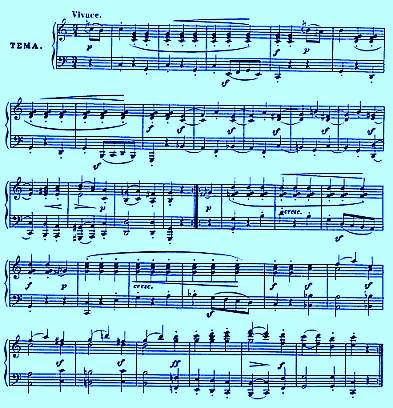
In 1819, from Vienna, Anton Diabelli – who had begun his own career as a composer as an adolescent, and eventually started a small music-publishing firm with a friend – sent 51 composers a waltz he had composed himself. As a publicity stunt, he invited them to write a variation on it. Beethoven’s was the most famous name on his list. Verging on 50, the great man had entered his famous ‘last period’, often called sublime,  in which he composed the Missa Solemnis and his Ninth Symphony.

His first reaction to the Diabelli offering was undisguised disgust. Michael Steinberg, who wrote my liner notes, said that Beethoven called it a ‘shoemaker’s patch’ – and recounts the composer’s contradictory reaction after that:

Before long … in the words of the scholar Ludwig Finscher, “his displeasure became productive and he began to work, admittedly not on a variation but on ‘big variations,’ which was not at all what Diabelli expected and which also took a long time”. When the package finally arrived it contained thirty-three variations. Diabelli understood what had fallen into his hands, and his announcement declared – correctly – that Beethoven’s work had but one peer: Bach’s Goldberg Variations. He was even modest enough to add that the theme was not one from which such a progeny could be expected.

You, reader, might despise classical music. But even if the sum of your knowledge about this composer is that he was the hero of the small boy we know from Charles Schultz’s penstrokes as Schroeder, isn’t Beethoven’s change of mind encouraging? Perhaps there are creative spirits inexplicably locked into prejudice against blogging and bloggers today who will undergo a similar transformation – with just as magnificent consequences? Steinberg adds:

In sum, Beethoven, who often enjoyed using skeletal material, had discovered Diabelli’s waltz to be something he could work with.

Then, Beethoven let the music soar into posterity stamped with the name of the enterprising publisher.

Why is The Guardian censoring debate about press reform and ignoring the Lord Chief Justice’s endorsement of citizen journalism?

Britain’s Lord Chief Justice, Lord (earlier, Sir Igor) Judge, whose endorsement of citizen journalism in a speech on 19 October was not reported by the press

Readers who would first like to see the unimpeachably polite comments deleted by the Guardian’s moderators on 30 October – reproduced exactly as published on its site** before they were censored – can scroll down further on this page. The deletions fall into four classes:

● Comments directing readers to the post on this site titled, ‘Wanted: a brave newspaper for an experiment in which readers become stakeholders,’ and to a paper published by the Oxford Internet Institute,  ‘The Keiretsu-Cooperative: a Model for Post-Gutenberg Publishing,’ downloadable at no charge, here on the Social Science Research Network site.

● Comments pointing to a post on this site showing how the ‘business model’ the press runs on today can radically distort the truth: ‘How competition for advertising in print media let Steve Jobs warp history and steal the credit for the computer revolution.’

● Comments highlighting an addition to this site titled, ‘Will the calls for press reform during Britain’s Hackgate lead to action — or business as usual?’  It starts by quoting the Deputy Prime Minister, Nick Clegg, about the need to diversify media ownership.

● Comments linked to an article on this site showing how Switzerland makes super-democracy work well: ‘Extreme democracy is not an impossible dream if you copy Switzerland, not California.’ In its first paragraph, this blog entry mentions that the Swiss experience could be a good guide for an experiment in restructuring newspaper ownership.

The Leveson enquiry convened by David Cameron’s government to investigate the British phone hacking scandal and ‘the culture, practices and ethics of the press’  will make recommendations about whether the 4th Estate should be trusted to regulate itself.

Can the public be expected to trust self-regulation when a leading newspaper is going out of its way to obstruct debate about media ownership, and the question of whether the media should be restructured to include non-traditional disseminators of information?

Could this restriction of free expression be related to the omission from press reports of any mention of a clear and ringing  endorsement of ‘citizen journalism’ – and the rest of the 5th Estate – by Britain’s top judge, the Lord Chief Justice, Lord (Igor) Judge, in a speech on press regulation in mid-October? So few newspapers reported the speech at all that I learnt about it from a Twitter feed.

The Guardian, like The Sun, only mentioned what he said about the importance of a free press in a brief news item, leaving readers to find their own way to his careful qualification of that remark in a transcript of the whole speech posted on its site. It failed to draw its readers’ attention to a point he emphasised at the start of his lecture. It was about the tendency of the press to wilfully misread a famous statement in 1762 by the reformer and political activist, John Wilkes, as restricting the right to uncensored expression to the privileged minority that the 4th Estate represents. Justice Judge began by quoting Wilkes, then explained what the agitator meant:

“The liberty of the press is the birthright of a Briton, and is justly esteemed the firmest bulwark of the liberties of this country”. 

We embrace that statement. The significance of what John Wilkes said was not, as those connected with the media sometimes suggest, that the statement is upholding the liberty of the press. That is undoubtedly a direct consequence of what John Wilkes said, but in reality on close examination what he was saying was much more profound. He was asserting that the liberty of the press is the birthright of every citizen, that is, the community as a whole. It is birthright of the citizen that the press should be independent. It is therefore not a right of one section of the community, not just a sectional right. It is the right of the community as a whole. It is, if you like, our right, the right of every citizen.

I cannot believe that The Guardian thinks its moderators should be deleting proposals for a mere experiment in co-owning part of a newspaper site with reader-citizens. But I had no reply after I tweeted the paper’s editor, Alan Rusbridger, an alert about the removal of a comment containing a link to my piece about the pernicious effects of advertising on the presentation of the truth. Earlier messages asking the newspaper’s moderation team for an explanation for the cuts also received no answer. This is puzzling. The editor has been giving speeches about ‘the mutualization’ of his newspaper, announcing that ‘our readers have become part of what we do. . . lending a hand with research and ideas, bringing us up short when we get things wrong.’ 

Cheryll Barron

** As we live in an age of digital forgery, I have saved not just the deleted comments by postgutenberg but the threads on which they were posted, and would willingly present them for authentication to any democratically licensed official body. Correspondence to: postgutenberg@gmail.com

THE CENSORED COMMENTS

Here is a sample of the comments by postgutenberg that were deleted by the Guardian on 30 October. Most of the censored contributions were left undisturbed for several days or weeks until I posted the first of these pointers to this site – after which there was a grand retrospective purge:

(1)

Steve Jobs: The Exclusive Biography by Walter Isaacson – review

Peter Conrad 

‘postgutenberg

30 October 2011 11:39PM

This comment was removed by a moderator because it didn’t abide by our community standards. Replies may also be deleted. For more detail see our FAQs.’

What the censored comment said:

postgutenberg

30 October 2011 11:39PM

Read this and you can make up your own mind:

How competition for advertising in print media let Steve Jobs warp history and steal the credit for the computer revolution

https://post-gutenberg.com/2011/10/25/how-competition-for-advertising-in-print-media-let-steve-jobs-warp-history-and-steal-the-credit-for-the-computer-revolution/


(2)

A register of journalists’ interests would help readers to spot astroturfing

George Monbiot http://www.guardian.co.uk/commentisfree/2011/sep/29/voluntary-register-journalists-interests-astroturfing

‘postgutenberg‘s comment 29 September 2011 9:34PM

This comment has been removed by a moderator.’

What the censored comment said:

postgutenberg

29 September 2011 9:34PM

An interesting idea, but you can share the same tiny media cubicle, and never discover who your workmate knows, or what his or her true interests are. So if there were such a register, would people tell the truth?

Secrecy is so often the essence of power.

What would prevent fake transparency in declaring your interests?

Addressing Whealie‘s point, what if the Guardian were to try out an experiment in which commenters become part-owners of a section of the online newspaper and helped to decide on policies, including moderation?

More details here: Wanted: a brave newspaper, for an experiment in which readers become stakeholders.

https://post-gutenberg.com/2011/09/05/wanted-a-brave-newspaper-for-an-experiment-in-which-readers-become-stakeholders/
(3)

Occupy Wall Street? These protests are not Tahrir Square but scenery

Simon Jenkins http://www.guardian.co.uk/commentisfree/2011/oct/20/occupy-wall-street-tahrir-scenery

postgutenberg‘s comment 20 October 2011 10:14PM

This comment has been removed by a moderator.’

What the censored comment said:

            postgutenberg

            20 October 2011 10:14PM

There are serious gaps in the transparency of modern democracy. Between elections, the traditional mediators between electors and those in power have withered. The “customary associations and little platoons” have dwindled.

Spot-on.

But surely the press is that great traditional mediator?

… the 4th Estate that is now supposed to be sharing power with the even more democratic 5th Estate? Yet to the restructuring of media that this calls for, Simon is furiously opposed … Scroll to the end and see the quotation of OpiumEater’s sharp post, here:

Will the calls for press reform during Britain’s Hackgate lead to action — or business as usual?

https://post-gutenberg.com/2011/09/19/will-the-calls-for-press-reform-during-hackgate-lead-to-action-or-business-as-usual/

Why?

And a writer who turned to fiction to show us exactly what needs to change – whose work could easily supply a list of precise demands for Occupy Everything – has been mis-classified as a vacuous Dan Brown-equivalent:

Stieg Larsson, 5th estate forerunner, marginalised as a media critic      

https://post-gutenberg.com/2011/09/05/stieg-larsson-5th-estate-forerunner-marginalised-media-critic/

postgutenberg [this correction of the censored comment was left in place]

20 October 2011 10:19PM

Sorry, that was supposed to say, why is Simon opposed to restructuring the media for the 5th Estate? — far more democratic than the 4th Estate because of the greater inclusiveness of the internet as a medium.

(4)

Capitalism has learned to create host organisms

Zygmunt Bauman

‘postgutenberg‘s comment 18 October 2011 11:14AM

This comment has been removed by a moderator.’

What the censored comment said:

postgutenberg

18 October 2011 11:14AM

Good analysis and fresh thinking — even if it is pessimistic.

That new art – made possible by the shift from the “society of producers” to the “society of consumers”, and from the meeting of capital and labour to the meeting of commodity and client as the principal source of “added value” – profit and accumulation consists mostly of the progressive commodification of life functions, market mediation in successive needs’ satisfaction and substituting desire for need in the role of the fly-wheel of the profit-aimed economy.

But couldn’t we use the internet to reverse that shift? It has given us so many tools to become producers ourselves – and to set up our own websites to sell what we make, anything from the materialist bits ‘n’ bobs that pass through E-Bay to paintings, texts, — even shares in creative enterprises of every kind, through so-called ‘crowd-sourcing’.

And what if the media were to lead the way — showing how to co-opt capitalism’s limitless energy and inventiveness through co-ownership? … effectively, a cross between socialism and capitalism?

Most of the new co-operative ventures tried in the 1970s failed, usually because decision-making was slow and cumbersome. But with the blazing speeds at which detailed information can be communicated and votes tallied with today’s media, new co-operative ventures wouldn’t be burdened with the same difficulties as the old ones.

Yes, there would be new problems – there are always problems – but why not experiment and see what happens?

Wanted: a brave newspaper for an experiment in which readers become stakeholders

https://post-gutenberg.com/2011/09/05/wanted-a-brave-newspaper-for-an-experiment-in-which-readers-become-stakeholders/

(5)

Europe’s defunct idealism is like Munich all over again

Simon Jenkins

‘postgutenberg‘s comment 19 October 2011 2:07AM

This comment has been removed by a moderator.’

What the censored comment said:

postgutenberg

19 October 2011 2:07AM

A rare treat — constructive new thinking, actually being implemented:………………..found a few minutes ago in a NYT column by Joe Nocera:

We Can All Become Job Creators

By JOE NOCERA

Howard Schultz. God bless him.

Here we are two months later, and Schultz [founder-president of Starbucks] is back with Big Idea No. 2. It is every bit as idealistic as his first big idea, but far more practical. Starbucks is going to create a mechanism that will allow us citizens to do what the government and the banks won’t: lend money to small businesses. This mechanism is scheduled to be rolled out on Nov. 1. This time, Schultz is not tilting at http://www.nytimes.com/2011/10/18/opinion/nocera-we-can-all-become-job-creators.html?_r=1&ref=opinion&pagewanted=printwindmills.

Wanted: a brave newspaper for an experiment in which readers become stakeholders

https://post-gutenberg.com/2011/09/05/wanted-a-brave-newspaper-for-an-experiment-in-which-readers-become-stakeholders/

An open letter to Walter Isaacson, the Steve Jobs biographer and channeller-in-chief

'Me as my iPhone', a reveller in Luzern dressed for Fasnacht, the Swiss winter carnival (photographs by Walter Wieland)

[ part II of an assessment: part I is here ]

Reading about Steve Jobs’s estimation of his talents in the biography of the moment reminded me of a descendant of generations of Iranian painters sketched in a 1937 travelogue, The Road to Oxiana. Muzaffar launched his career ‘decorating pen-boxes,’ but has graduated to portraits in both the Persian and European manner. He shows the traveller, Robert Byron, his poster of two peacocks painted for a cigarette advertisement:  ‘”There!” he announced proudly. “I can do miniatures and I can do this. Rubens couldn’t have done both.”’ Byron, speechless, asks himself, ‘Why Rubens? Why Rubens particularly?’ … And that is the perfect frame for a conversation I would like to have with Steve’s biographer.

Dear Walter Isaacson,

Why didn’t you fight harder to resist Steve Jobs’s infamous ‘reality-distortion field’? You mention it repeatedly in your book, which reads like a ghost-written autobiography in the third person – if not outright channelling. It was authorised, but could never be seen as authoritative. I tried making excuses for you as I read the first half of your text. Acting as imperial scribe to a man as you watched him die must have been excruciating. But why did you submit to his publishing timetable, obviously set to capitalise on the impact of his demise, when your years at Time – a good incubation tank for journalists – should have told you that Steve’s way with the facts meant that you could not afford to cut a single corner in your research?

I am sure you are laughing as you read this. Only a minute fraction of your readers know enough to spot the effects of the two main smoke-and-mirrors wiles that he used on you – and in the second half of this post, I will explain why this matters too much to be dismissed with a shrug:

(1) Taking off all his clothes. He turned disarming candour of such elephantine proportions on you that it has worked, in its transmission to the minds of book reviewers, like the venerable military shock tactic known as a diversionary skirmish. Steve’s confessions about thieving, outlandish eating habits, hard drug use, paternity denial, child abandonment – and miscellaneous mistreatment of almost everyone he knew – were outrageous enough for the genial Guardian columnist Alexander Chancellor to nominate him for an effigy for Guy Fawkes Day. They have created such a swirling chaos of impressions that your text has duped intelligent people who have no idea of the dimensions of all they do not know about technology into calling him an ‘inventor’.

Even the usually hawk-eyed Maureen Dowd, who opinionates fizzingly for a large New York newspaper, arrived at precisely the summing-up of his life that Steve intended: that his behaviour (about which he was unashamed) was the price for what he cared about most, which was to be seen as having attained ‘the brightest heaven of invention’ in his time on earth. Your conclusion carefully states that ‘he didn’t invent many things outright,’ – I cannot name even one – and yet you used the Bard’s words for the title of your closing chapter.

Tricky.

You grant him the conceit of ‘inventing the future.’ What he actually did was to manage, by dint of super-human focus and force of personality, the execution of visions other people had long ago. You predict that ‘history will place him in the pantheon right next to Edison and Ford.’ But not once do you pause for the task of comparing what he did with either man’s accomplishments to justify such hyperbole. 

(2) Sticking his head into picture frames where he did not belong. Glamour by association, if done skilfully enough, can create an impression of achievement with very little or nothing behind it. You say that you were mystified when he approached you at a Palo Alto signing session for your Einstein biography to suggest that you make him your next subject. That seems disingenuous. Anyone who met Steve’s formidable instincts for PR would have understood in a flash that he was already plotting for the all-capitals banner near your e-book’s opening, trumpeting: FROM THE AUTHOR OF THE BESTSELLING BIOGRAPHIES OF … and hey presto! there he is, linked to the most sacred name in Western science, after Newton. You and your career have been used just like subliminal images of cowboys on horseback in cigarette advertisements commissioned to foster new generations of nicotine addicts.

Walter Isaacson, I would like to see you rise to the standard set by your excellent biography of Benjamin Franklin – a copy of which I own – with a drastically revised second edition of your book about Steve. I have never aspired to be a book critic because I am too keenly aware of my own defects as a scribbler to enjoy dissecting other people’s work. But a new, reflective version of this book is essential because of the scale of his impact on thinking about success and failure. I would like to offer these suggestions:

Use your own head to write the book you owe us, without fear or favour. Reviewers have complained that your biography offers practically no insight into his character or actions. That was because you wrote the book he wanted you to. He was a man of action, like most successful businessmen, never mind all he said about Zen and the art of vegetarianism. No entrepreneur I have ever met has struck me as capable of serious, unflattering introspection. Unless your book contract bound you to duties as a medium after Steve left us, you should eventually find the distance and perspective missing in your first version of his life. I noticed in a review of the cluster of new works about Charles Dickens – who died at 58, just two years older than Steve, at his end – how infinitely more perceptive he was about his flaws, in spite of childhood deprivation that makes your subject’s unhappiness about being put up for adoption inconsequential. Dostoyevsky said that Dickens told him:

All the good simple people in his novels, Little Nell, even the holy simpletons like Barnaby Rudge, are what he wanted to have been, and his villains were what he was (or rather, what he found in himself), his cruelty, his attacks of causeless enmity toward those who were helpless and looked to him for comfort, his shrinking from those whom he ought to love, being used up in what he wrote.

Oh, for the faintest glimmer of such comprehension in Steve’s opinion of himself.

● Give us the social context for the life and work and, especially, address the sacrifices and suffering of hundreds of thousands of others who have made Silicon Valley famous. You owe it to the families of the many dazzling scientists and technologists Steve robbed of credit for their work. ‘We have always been shameless about stealing great ideas,’ as he glibly told you, throwing in a remark of Picasso’s for justification. But uncountable other gifted men and women in the Valley go home grey-faced with exhaustion, night after night, for years on end. Yes, the illness that killed Steve was horrific. How many others have endured fates far worse than his, as well as divorce and estrangement – even madness, and clinical depression — through chronic overwork?

You wrote as if only he was dealt a cruel fate, falling in with the delusions of the narcissist’s dream life he led from start to finish.

Deal with the ‘Criticism of Apple Inc.’. That is a whole entry in the Wikipedia, listing a range of topics you have barely skimmed, and one that you have ignored altogether – the sweatshop conditions in which workers in China made Apple products, an environment so inhuman that it is blamed for more than one suicide.

Amazingly, you avoided the subject even when the Chinese factory made a back door entrance into your text. You described a 45-minute meeting with Barack Obama earlier this year:

‘You’re headed for a one term presidency,’ Jobs told Obama at the outset. To prevent that, he said, the administration needed to be more business-friendly. He described how easy it was to build a factory in China, and said that it was almost impossible to do so these days in America, largely because of regulation and unnecessary costs.

No mention of the implications of any of that in your report. Take that, you ‘Occupy’ movements around the world raging about corporate greed! Let us copy what is worst, not best, in modern China!

● Give a lot more thought to the question of who in business history Steve most resembles. Henry Ford was obsessed by the welfare of his workers, just as Jamshetji Tata — India’s most revered industrialist — was about his labourers in steel-making. Clearly, Steve does not belong in their slot. You might well find that his closest equivalent was Ray Kroc, who made McDonald’s the multinational burger bagger nonpareil. Like Steve’s, the secret of his success lay in his ability to profit from his talent as an instinctive mass psychologist. They believed in the same take-no-prisoners ethic. This passage of Fast Food Nation by Eric Schlosser will, like Steve’s  rage about the iPhone competitor called the Android, seem strangely familiar to readers of your biography:

He was a highly competitive man who liked, whenever possible, to settle the score. “If they were drowning to death,” Kroc once said about his business rivals, “I would put a hose in their mouth.”

Please drop the nonsense about placing Steve’s accomplishments at ‘the intersection of the humanities and science’ – mimicking his deployment, on his own behalf, of the marketing ploy known as ‘product positioning’. In no conversation I ever had with him, or have seen recorded by anyone else, did he give any sign of knowing more than a moderately curious teenager would about history, literature, political science, or indeed any branch of the arts unconnected with design.

Steve had no education whatsoever in the science behind the products for which he was famous, which were the fruit of research in solid state physics, electronics, classical numerical analysis, mathematical logic and computer science. These are hardly disciplines that can be mastered by intuition.

Have you noticed the deafening silence from computer scientists in the hullabaloo about his death?

His exceptional achievements were at the intersection of commerce and industrial design (and about the latter, I see that some industrial designers have a bone to pick with you.)

I have written this letter mostly because of one aim of this web site, which is to test the speed at, and degree to which, internet communication – and the advent of the 5th Estate — can correct distortions of the truth. I mean, banish the unfortunate side-effects of limiting the authority to disseminate facts to the club you and I grew up in, the 4th Estate, when that is no longer necessary or desirable.

Best wishes,

Cheryll Barron