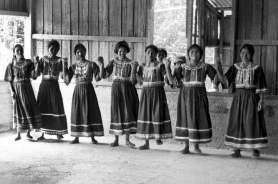
Would the Nobelist Elinor Ostrom have agreed that women are naturally more cooperative than men?

Bukidnon women of the Philippines island of Mindanao — Hans Brandeis
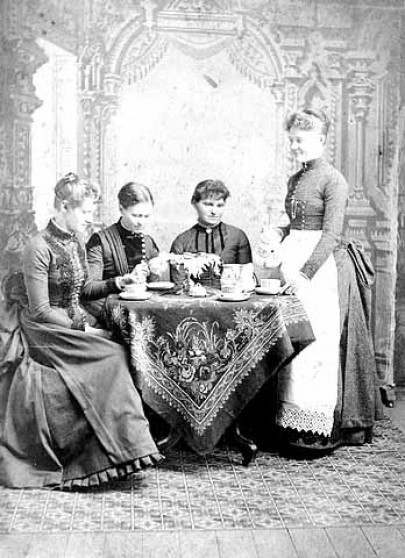
Norwegian women:
Minnesota Historical Society

Are women instinctively more cooperative than men?

Annoyingly, post-Gutenberg cannot seem to get off the fence, on that question.

There is no equivalent, for the other gender, of Woman’s Inhumanity to Woman — a blood-curdling, too often accurate, book about the scope of this category of unkindness by a respected psychologist, Phyllis Chesler. On the other hand, women have never fashioned whole careers from bludgeoning each other, the way legions of men did for most of human history — serving both noble causes and evil ones.

Nor has highly organised, male-dominated aggression disappeared. Our eyebrows went shooting ceilingward when we discovered, the other day, that in the country proud to think of itself as the land of Gandhi, elite business school students gather as rapturously as American hipster-cultists at Burning Man for a contest in strategic capitalist thinking called the Mahindra War Room. Om mane padme … oh dear, … we thought.

We would like to know whether there is any substance in the idea that women involved in running organisations tend naturally to a more consultative and collaborative style. Should women be encouraged to lead in promoting cooperative ownership as the fairest and most engaging way to organise people working together, wherever coops make sense?

We care about the answer because we have been obsessed by coops for some time. As we explained in a February post, the internet — used as both frame and engine for cooperative organisations — could vaporise many of the handicaps and inefficiencies that plagued failed coops of the recent past. More than once, we have linked to an outline of a scheme for making readers and commenters co-owners of media – a collection of ideas marinated in 2009, then lightly grilled and put on the table in January of 2010.

We could all be witnessing the start of capitalism’s evolution into an array of highly motivated, updated cooperative workplaces. It hardly matters that beady-eyed commenters spotted the questionable logic in one specific comparison in an otherwise accurate Guardian piece, last week, on the growing enthusiasm for cooperatives: ‘Co-operatives and mutuals keep outperforming the UK economy’. A reader, @johnjm, remarked acidly: ‘Comparing co-operatives, which are largely in retailing, with GDP is spurious and arguably financially illiterate.’

If @johnjm is honest, he will concede that some eminent economists find the concept of GDP itself unsatisfactory.  Scrolling down all the reader comments on that article by Greg Rosen does suggest that its premise — that a ‘cooperative renaissance’ is underway — is warranted. Growing numbers of us see coops — warts and all, without any expectation of being led to paradise on earth — as the shrewdest solution to the problem of the 1% that Occupy campaigners turned into high drama. Even if Rosen’s is a flawed comparison, it was intriguing to see these numbers side-by-side – and the next sentence rang deeply true:

While the real level of GDP in the UK in 2011 was 1.7% lower than in 2008, co-operative sector turnover has grown 19.5% over that period.

Some parts of the co-operative economy have been resilient for the past 40 years – but without public recognition.

That said, how are we to get more people to demand cooperative organisations? Could women hold the key to that galvanisation? If forced at gun point to guess either way, a few months ago, post-Gutenberg might have ventured, with cringing reluctance, that females are probably somewhat less adept at friction-free collaboration than men are (see Phyllis Chesler, above).

But lately, these scraps have come floating to the front of our mental screens — on eddies of serendipity:

• Elinor Ostrom, the first and only woman ever to win the Nobel prize for economics (2009), made her name as a specialist in ‘examining the use of collective action, trust, and cooperation in the management of common pool resources’ – such as irrigation networks and fishing grounds — working closely with her husband, Vincent Ostrom.

Our introduction to this radical but self-effacing thinker came from Howard Rheingold’s new book, Net Smart. Like Howard, a cyberspace pioneer and writer, she stood out for putting her ideas into practice in her own life. Shortly after her death in June, he kindly answered our question about their brief acquaintance by explaining that they met at a conference in Bali, through another woman academic interested in the same subject …

… Charlotte Hess, whose work I had been following. In my research on cooperation theory (compiled at http://cooperationcommons.com) I had become familiar with the foundational work of Elinor Ostrom. Hess had co-authored with Ostrom a key paper on information as a common pool resource. […]  Lin Ostrom, as everyone seems to call her, was gracious enough sit down with me and talk about our shared interest in informing policy decisions about common pool resources with real empirical research. Then, as she often did, Ostrom voiced her concern about all the decisions being made at the political level without a shred of knowledge of the significant body of scientific research about what worked and what didn’t work with commons governance issues. […] I came away […] understanding that I had met one of the few great people I had the good fortune to encounter in my lifetime.

• A paper by an economic historian, Beatrice Moring, ‘Female Networks and Cooperation in the Nordic Past’. She delivers an important reminder of how women once excelled at cooperative tasks – ‘[c]ommunal activity without payment, lasting one day or less, aimed at performing tasks needing many participants.’ She argues that after the industrial revolution, the specialisation and commercialisation of work destroyed strong and indispensable female networks which — in Finland, Norway and Sweden — had once milked cows, collaborated in weaving and making clothes, communal baking, and heavy-duty housecleaning.

Elinor Ostrom’s animating spirit, or what can be gleaned of it in an excellent obituary in The Economist, was in close sympathy with those toiling Nordic women:

[C]ollaboration was her watchword. Neighbours thrived if they worked together. The best-laid communal schemes would fall apart once people began to act only as individuals, or formed elites. Born poor herself, to a jobless film-set-maker in Los Angeles who soon left her mother alone, she despaired of people who wanted only a grand house or a fancy car. Her childhood world was coloured by digging a wartime “victory” vegetable garden, knitting scarves for the troops, buying her clothes in a charity store: mutual efforts to a mutual end.

• A light-hearted April 23 column by the science journalist Natalie Angier taking an extreme position also, incidentally, at the furthest extreme from Phyllis Chesler’s – and extended to include non-human females:

In animals as diverse as African elephants and barnyard mice, blue monkeys of Kenya and feral horses of New Zealand, affiliative, longlasting and mutually beneficial relationships between females turn out to be the basic unit of social life, the force that not only binds existing groups together but explains why the animals’ ancestors bothered going herd in the first place.

• A blog post about Elinor Ostrom by the president of the International Cooperative Alliance, founded in 1895 and representing 248 co-operative federations and organisations in 92 countries, according to the Wikipedia. And who did that turn out to be? Yet another woman – Pauline Green.

… Might these scraps amount to dots describing a larger, highly significant pattern – even if they do not quite add up to proving a greater female affinity and aptitude for working in cooperative organisations?

We have no idea. We would like to have asked Elinor Ostrom that question but, sadly, learnt of her existence too late.

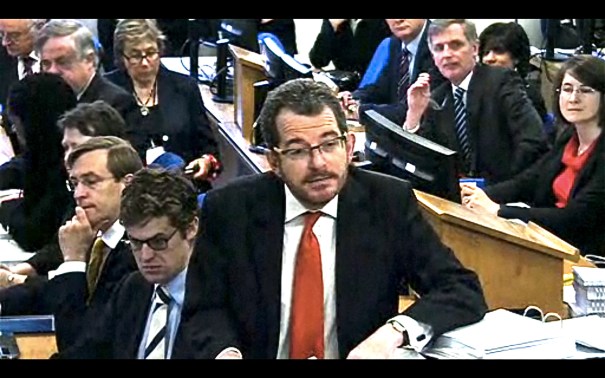
Summer, 2012

Photograph by MIL22

woolgathering

1553, “indulging in wandering fancies and purposeless thinking,” from the lit. meaning “gathering fragments of wool torn from sheep by bushes, etc.”

Online Etymology Dictionary, Douglas Harper

woolgathering

This week’s plan for post-Gutenberg.

Quiet levity at ♯Leveson, and some thoughts on the film version of the Inquiry for Robert Redford’s scriptwriter

Leveson’s subtle cerebral swordsman, Robert Jay QC:
is he Hollywood material?

Robert Redford in 1976, playing
the Watergate reporter-hero
Bob Woodward.
Photograph: collectorsshangri-la.com

Nowhere in the commentary about the winding down last week of Part 1 of the Leveson Inquiry into press practices have we seen the lines we expected some old print publication or other to throw in for leavening. Only in the blogosphere have we found mentions, in this context, of …

You cannot hope to bribe or twist

The honest British journalist

But seeing what the man will do

Unbribed, there’s no occasion to.

There are minor variations of those four lines in circulation. They are the wittiest and best-loved summing-up in verse of the British tradition of journalism – at its best, still the world’s finest, in our opinion, which might have been influenced by sprinkling with  baptismal water in this branch of the craft. Long before then, the poem was on a page of a school poetry textbook to which some of us, at post-Gutenberg, often turned for relief from galumphing deconstructions of poems unfortunate enough to have been put on the syllabus.

Will Robert Redford find a way to include Humbert Wolfe’s 1920s quatrain in his script — if there is any substance in the speculation about him giving Leveson and the phone hacking scandal the Hollywood treatment? A Redford film about the Inquiry — showing us what an outsider makes of the Icelandic saga it has become — could be a treat. A clip from a BBC interview with the actor-director in April is irresistible. His tone becomes wondering, almost awed, answering a question about his impressions on a first visit to London for 30 years:

I come here and I watch the Leveson Inquiry. And whatever’s going on — I’m sure there’s some savage stuff going on — but it’s done in such a dignified, calm, graceful way that I think, gee! this is really fascinating. Somebody’s killing somebody, here, but you’d never know it.

Italian-born Humbert Wolfe
wrote the most famous poem
about British journalism.
Photograph: National Portrait Gallery

The poet Humbert Wolfe also had a stranger’s acute powers of observation. He was born in Milan. His mother started life as Consuela Terraccini. His pen strokes captured the journalism and journalists of his adopted country while he worked at a day job in its civil service.

But even if one of Redford’s most famous roles was in All the President’s Men (1976) — playing the Woodward half of Watergate’s heroic ‘Woodstein’ partnership at The Washington Post — it is not the British press but the lawyers and gracious conventions of British law in action that captivated him. At a press conference on the same trip, a reporter asked if he was watching the proceedings and ‘hoping for the return of proper investigative journalism’ – following his complaints elsewhere about the increasing ‘triviality of media’. He replied:

I’ve been very impressed with the dignity and elegance with which the process has gone forward. People take their time speaking. And in my country, things have become so accelerated and … so hyped up. … It’s sad for me to see because it blurs this more important part, which is, where are we going to find the truth? The democratisation of the internet has actually made truth harder to find — along with its positives.

Somehow, that vital qualification of his disappointment with democracy on the net was dropped from the Independent’s report of his remarks, with no indication of any omission. That paper, like the other broadsheets, never stops copying King Canute straining to command the sea to roll backwards – in its case, the evil digital sea of change obliging the 4th Estate to share its megaphone with new rivals.

Actually, Lord Justice Leveson and his chief counsel for the hearings, Robert Jay, have often struck post-Gutenberg as a brilliant pairing. In their uncannily well-coordinated forensic interrogation, they function like a legal Woodstein – even if not technically working as partners but in their distinct and separate roles. The background to their bravura performance could be an engaging part of the story, whenever Redford or someone else digs into it.

Admittedly, that is most likely to be a someone else – since the cinema only rarely conveys intellectual, as opposed to emotional, subtlety and complexity. Just as nearly every film ever made about the lives of artists and writers has failed to illuminate the mechanisms of their creativity, let alone uncover its secrets, there seems little chance of the cinema tackling judicial tactics and strategising of the highest sophistication.

Unless the presiding judge or some other senior member of the Inquiry’s legal team writes a completely frank account of its hidden dramas, there is just as little hope of our learning any details of the hearings’ behind-the-scenes manoeuvring – the pressure from vengeful old 4th Estate tigers distraught about the prospect of their de-clawing; the wily manipulations of politicians. We can only discern their effects – in, for instance, the ever more drawn and tired face and hoarse voice of Leveson LJ, in the concluding weeks of Part 1.

Would a Redford film explain the sort of thing keeping us hugely amused at post-Gutenberg? – the private joke we read into the judge thanking ‘the press who have reported on the inquiry, for keeping everybody informed,’ which made broadsheet headlines. Taking what he said strictly at face value (Lord Justice Leveson ends Inquiry by thanking journalists), those news reports missed his point entirely. To grasp what Leveson LJ was actually saying, you would have to know about this exchange between him and the admirably non-partisan Peter Oborne, chief political commentator at The Telegraph — and by far the most enlightening and accurate senior journalist testifying at the Inquiry:

P.O. : … [T]he reason why rival newspaper groups were unwilling to report phone hacking […] It’s only my views as an informed spectator, that … there was a reluctance of one newspaper group to embarrass another.

LJL : … If that is so, is that inevitable?

P.O. : I don’t know if it’s inevitable or not, but it has been a very, very — it has been a feature … [A]nd I think it’s been weakened a little bit, or even quite a lot, by blogs, and Private Eye has played a fantastically important cleansing function in the last 30 or 40 years. […M]aterial which has not found its way into mainstream publications has found its way into Private Eye.

LJL : Private Eye has also been publishing during the course of this Inquiry what the newspapers don’t publish. In other words, they’ve gone through a number of stories and said, “Actually, it’s rather interesting that this story appeared in this paper but it didn’t cover another aspect.”

Had the judge not been teasing huffy 4th-Estaters for their selective and misleading reporting on his hearings, he would have thanked all reporters and commenters – including bloggers, whose legitimacy and importance he has scrupulously underlined.

On that subject, we have a message for Robert Redford.  It is only because of the internet’s democratisation of the media that post-Gutenberg learnt that he acknowledged the constructive aspects of the rise of the net, even as he blamed it for the growing scarcity of good traditional journalism. As we have already noted in this entry, The Independent only printed the portion of his remarks that suits its agenda. But, thanks not only to a BBC video but a YouTube clip from his London press conference, we could all watch him speak his unedited thoughts and interpret them for ourselves.

And that is just one more tiny scrap confirming that expand and include; don’t compress and exclude should be the principle directing anyone powerful who has a say in shaping the media’s future – for reasons we recently explained here.

A poetic boatload of words and a foretaste of e-publishing as bringer of light and joy

Cover drawing by Sascha Juritz
What matters most is what you make
Roy Eales
Blackbird Editions, Pawel Pan Presse, 2004

Sit up and pay attention, all you change-resistant bookworms who see no good in e-publishing; nothing but the prospect of avaricious conventional publishers charging readers more than once for the same text repackaged in different media – and witless self-publishing writers drowning us in e-drivel.

This week, post-Gutenberg offers word nerds everywhere an example of the littérature-sans-frontières that the net could – will – soon give us as a matter of course. Undeniably, no e-book could replicate the pleasure of handling the slender volume printed on luscious, textured paper from which our extract comes. Never mind, read on. See proof in many dimensions of how the net could – conceivably — help to save literary culture.

These poetic, fanciful lines with something critical to tell us about real life are introduced by their writer, Roy Eales. In his book What matters most is what you make (2004), they appear translated into Breton – the language of the French province of Brittany – as well as in French and German, alongside the English original. (Only the second translation is reproduced here, but we hope to find time to transcribe the other two.)

Roy is a fine, original, unpredictable and unclassifiable English writer and poet living in Brittany who was made a Chevalier des Arts et des Lettres by official France in 2004. He is that rare scribe not born a ‘digital native’ who has leapt from print-only to blending literature with other art in readings of his work interwoven with musical performances by members of his group. A selection of his poems in five languages has been recorded on a CD, ‘Just in Case’ by Roy Eales and his friends (2010), with original music by artists in Brittany and Wales.

Beneath Boatload, on this page, is another excerpt from the same book– the first verse of a wicked, delicious, posthumous tribute to Sascha Juritz, the artist and friend whose drawings accompany Roy’s poems, prose meditations and vignettes.


.

.

A note from Roy Eales:

.

A boatload of words came to me in the middle of a night sometime in late 2003. Legend, mythology, mystery abound in Brittany, Bretons and their literature, and I searched for something satirical in which I could use these elements to castigate the French, heavily, for their stern, backward attitude towards other languages in their national space, and to challenge the Bretons, lightly, for not fighting back enough.

[ from the book’s introduction: ]

Boatload and the other poems in this book were dedicated to Sascha Juritz, brilliant artist, my friend and publisher of this and other books over the years. He died in 2003 as this book with his exquisite drawings was being published. He saw Brittany as a twin for Lausitz, his own Slav country locked into the Czech and Polish borders and colonized by Germany some centuries ago as independent Brittany was by the French. Like the Bretons, the people of Lausitz have sought to protect their culture and language despite the inevitable forces to conform to the ‘master’ French and German cultures and languages. 

.

[ If you are reading this on the blog’s ‘front page,’ please click on the title of this post to be taken to its own separate part of the site to read the following words set out as they are meant to be. WordPress’s automated layout software tends to destroy certain types of special formatting, such as spacing for poetry. ]

.

A boatload of words: a fable for Brittany

.

At an old port in Brittany a man wearing a peaked black cap was

leaning on his right leg staring capital in the face.

.

He turned his head and swivelled on his left leg to an alternative

position, and rested there on his right leg again.

.

He lit his pipe and told a tale. This is what happened.

.

One cold winter morning at the same port a black seabird

perched on his shoulder and told him in Breton that a huge boat

heaving off Brittany on a strong Atlantic sea had been wrecked

by a mutiny – of its cargo – a boatload of words, in fact, the entire

vocabulary.

.

The black bird twittered, in revealing that the words were to be

dumped at sea, three miles out, in black stranglehold sacks stamped in

red: SUPERFLUOUS, by order of the Ministry of Absolute Control.

.

Naturally, the words didn’t like this. They had been beaten before,

but never, so overtly, threatened with extinction.

.

In a mighty speech, Gwendal, their leader calls for a rebellion, and

draws up a plan. The cleverest words would free everyone, and the

heaviest words would sink the boat. Then all the words would float

back to their homeland.

.

Seabirds flying over the boat learnt secretly of the plan from the words,

who asked them to speed messages in Breton back to the people.

.

So the news spread quickly across Brittany, and soon all the shoreland

bristled full of music and people, dancing and singing, facing the sea

and the sinking ship on the horizon.

.

And coming towards them a sheet of white foam on the sea, a foam of

words, as the entire language was carried proudly ashore by the waves

like a hero.

.

From that day on the people vowed never again would they leave their

language alone to save itself from any perils at sea, or wherever they

may be.

.

Roy Eales, 2003 

.

. 

Une cargaison de mots: fable pour la Bretagne


Sur un vieux port breton, un homme portant une casquette de marin

noire s’appuyait sur sa jambe droite, fixant du regard un point d’une

importance capitale.

.

It tourna la tête et pivota sa jambe gauche pour changer de position

et se tint là de nouveau sur sa jambe droite. It alluma sa pipe et raconta

une histoire. Voici ce qui s’était passé.

.

Un froid matin d’hiver sur ce même port un oiseau marin se percha

sur son épaule et lui raconta en Breton qu’un énorme navire se soulevant

au large de la Bretagne sur une forte mer atlantique avait fait naufrage à

cause d’une mutinerie – de sa cargaison – une cargaison de mots, en

fait tout le vocabulaire de la langue du pays.

.

L’oiseau noir gazouillait, alors qu’il révélait que les mots devaient être

jetés à la mer à trois miles au large, étranglés dans les sacs noirs sur

lesquels était tamponné en rouge: SUPERFLU, sur ordre du Ministère

du Contrôle Absolu.

.

Naturellement, les mots ne furent pas contents. Ils avaient déjà été

battus, mais jamais, si ouvertement, menacés d’extinction.

.

Dans un vibrant discours, Gwendal, leur chef appelle à la rébellion

et établit un plan. Les mots les plus habiles libéreraient tout le monde,

et les plus lourds couleraient le navire. Puis tous reviendraient en

flottant jusqu’à leur terre.

.

Des oiseaux marins volant au-dessus du navire furent en secret mis au

courant du plan des mots, qui leur demandèrent de faire rapidement

passer un message en breton au peuple.

.

Ainsi les nouvelles se répandirent vite à travers le pays, et bientôt

tout le littoral grouillait, repli de musique et de gens qui dansaient

et chantaient, face à la mer et un bateau coulant à l’horizon.

.

Et venant vers eux, drap d’écume blanche sur la mer, une écume de

mots, toute la langue du pays, était portée fièrement au rivage par les

vagues, comme un héros.

.

Depuis ce jour le peuple fit serment de ne jamais plus laisser sa langue

toute seule faire face aux périls en mer, ou n’importe où ailleurs.

.

Roy Eales, 2003

Translated into French by Nanda Troadeg and Susan Eales ]

.

And here is a snippet of Roy’s tribute to Sascha Juritz, ‘Don’t Overdrive, my dear‘ … you can read the rest in your own copy of What matters most is what you make:

.

This time

Is there only the reality?

.  So don’t overdrive, my dear.

Where this genius is concerned

reality is irrationality.

The black lines

send off the normality

and poetry is just

.  a little shit

after which you feel better

and lose a bit of yourself.

.  It doesn’t matter, my dear.

.  They hear nothing

.  Say nothing

.  See nothing — scheisser — .

But every man is always

.  a Grand Poète,

has something to say,

. a small bird in the head.

.

[ … continues … ]

.

.