The Kickstarter-kicking has begun: don’t let crowd-funding of pigs-in-pokes ruin the promise of micropayments

Looking for an image of a pig in a poke led to this preliminary sketch by Victor Juhasz, on his site showing visitors how he makes decisions about directing his delectable line. http://www.drawger.com

This post-Gutenberg blog typically takes the giraffe-necked – that is, very long – view. It hardly expects instant gratification for recommendations about the future of publishing, or suggestions for its evolution. That made it both unsurprising and shocking to find the gist of these cautions about micropayments and crowd-funding prove justified in less than a month:

  • Could crowd-funding art with cash advances amassed from micropayments be less helpful than getting artists decent compensation from micropayments collected for finished work?
  • … [Artists] transferring the balance of cash-gathering sweat to work that has yet to be done is surely a bad idea …
  • There is some danger that disappointment with microfunding could lead to disenchantment with micropayments of every kind. That could delay the shift from conventional ways of selling art (through publishers, galleries and so on) to the liberating alternatives that new technological inventions have begun to bring us.

Only six months ago, Gizmodo, one of the most influential technology-watching sites on the web – it counted Steve Jobs among its avid readers – was raving about the prospects of online fundraising for new projects of every sort, from new-fangled gizmos like iPad stands to artistic schemes, inventions, and gigs. Its enthusiasm was concentrated on Kickstarter, the most prominent go-between for creators and the random collections of small-scale investors contributing to ‘crowd-funding’ creative toil:

10 November 2011

Kickstarter is full of awful, ill conceived, downright dumb ideas. So is the internet. So is the universe. But it’s also festooned with crazy-good thinking, ingenuity, and imagination. It’s fun and unfettered.

[…]

Kickstarter is the only viable place any average Jonny Internet can take a decent idea and stand a chance of making it real. No venture capital vampires, no hype …

The recommendations of old print media usually follow in Gizmodo’s wake, but in January, The Economist appeared to boast about leading the applause:

This newspaper has written about Kickstarter several times in the past two years, including an overview of how crowdfunding works after the firm had raised about $15m in its first year. At the time, it was unclear whether such crowdfunding (also called micropatronage) was a passing fad or a rising alternative to conventional starter financing for creative media.

Kickstarter’s performance in 2011 bolsters the latter case.

Though that ancient cosmopolite’s bible did mention the odd disappointment for both fund-seekers and micro-patrons, it has yet to regret its championship of crowd-funding. But for Gizmodo – far more closely in touch with thinking among the twentysomethings who dominate online innovation – it was time for sackcloth and ashes a fortnight ago. In a piece headed, ‘We’re done with Kickstarter,’ Gizmodo explained:

29 March 2012

We look at hundreds of products every week. Sometimes thousands. At first all of us were pretty stoked about Kickstarter, because it seemed like a genuine font of unfettered innovation—the hive mind coming up with products that we truly needed but had never even thought of before. And maybe it was. But it’s not anymore. It’s a sea of bad videos, bad renderings, and poorly made prototypes. Some might be good. Many are poorly made. And some are downright fraudulent, taking peoples’ money without delivering the promised rewards. This has happened to me.

[…]

Hopefully Kickstarter will evolve into something a little more trustworthy that we can feel comfortable sharing with you. Because in this game, a source you can’t trust is a source you can’t use.

In comments on its lamentation, readers railed at Gizmodo in posts like this one from @anamnet:

Giz introduced me to Kickstarter and now they are the first who’re sick of it. Makes them sound like a teenage girl who’s getting over a fad.

Actually, Gizmodo deserves to be congratulated for its forthright mea culpa. Next, it would be wonderful to find on that site a piece weighing all the reasons given here for preferring post-production micropayments – especially for artists and writers, starting with this one:

Seeking and accepting money in advance can constrain creativity. Anticipating prospective backers’ anxiety about squandering even small sums on inconsequential, pig-in-a-poke projects, artists are puffing up their planned works and divulging details of visions that have yet to meet the challenge of execution. How much room for creative manoeuvring and play – or simply changing their minds – will they have when, to reward their micro-investors’ trust, they feel that they must treat proposals as promises?

… Gizmodo’s helpful admission about reading the tea leaves incorrectly on crowd-funding is not just admirable in itself but made a salutary contrast, in my week’s reading, with an older publication’s delusion that it  comprehends what readers want in post-Gutenberg publishing. An extract from a mesmerising report in the latest Private Eye:

‘Last weekend we did something extraordinary.’ That was the verdict of Guardian editor Alan Rusbridger on his ‘Open Weekend’ … at which readers descended on the paper’s offices to gawp at [Guardian journalists].

Never mind that the newspaper is losing money galore. The bring-your-readers-to-work idea represented the way forward for ‘Open Journalism’ – apparently something to do with internet clouds, killer apps, crowd-sourcing and trouser-presses.

Many hacks in the building looked on the jamboree with jaundiced eyes […] but were assured that this is the way forward for Journalism 4.0 as the Guardian set off on its exciting transformation from newspaper to online events organiser.

Alas! The ‘new paradigm’ seems no more profitable than the old one. After totting up the figures, Grauniad beancounters have discovered that the self-styled ‘festival of readers and reasonableness’ – attended by 5,000 people paying between  £60 and £70 – made a net loss of £150,000.

Dear Grauniad, your ‘Open Weekend’ is surely the daftest idea anyone has heard for reshaping publishing. No, your sensible readers do not wish to crowd-fund your survival. Nor do they want to pay to peer at your writers, or throw peanuts through the bars of their cages. How about showing some glimmer of grasping what this post-Gutenberg revolution is really all about? See:

Wanted: a brave newspaper for an experiment in which readers become stakeholders … & … Why a keiretsu-cooperative is a gentle transition for old media — and how about saying, ‘an exaltation of bloggers’?

for 8. 4. 2012

‘It looks as if it could be a gorgeous day, except for a bit of wind,’ a voice said.

A reply framed itself but went unsaid: ‘What a baffling qualification. A bit of wind makes a merely lovely day perfect.’

Not a popular idea.

To the bookshelf, then, to commune with a long dead fellow-connoisseur of all the astonishing variations in the movement of air across a landscape – which can be entrancing in spring, every bit as pleasurable as the soft, caressing warmth and return of the light.

A philosopher Tsu Chi and his disciple Yen Cheng Tsu Yu converse:

‘In the mountain forest, deep and fearsome, there are huge trees a hundred arm spans around, with gaps and hollows like nostrils, mouths, and ears, like gouges, goblets, and mortars, and like muddy pools and dirty puddles. The sounds rush out like water, whistle like arrows, scold, suck, shout, wail, moan, and howl. The leading notes are hissing sounds followed by a roaring chorus. Gentle breezes make a small harmony, fierce winds a great one. When the violent gusts subside, all the hollows become quiet. Have you ever seen the shaking and trembling of branches and leaves?’

Tsu Yu said, ‘The earth’s music is the sound from those hollows. Man’s music comes from the hollow reed. May I ask about the music of heaven?’

Tsu Chi said, ‘When the wind blows through the ten thousand different hollows, they all make their own sounds. Why should there be anything that causes the sound?’

Chuang-Tzŭ (Zhuangzi), Inner Chapters, 4th century BCE

trans.: Gia-fu Feng and Jane English ]

Yes, cooperatives are idealistic … like marriage and parenting, and no, they do not have to be run like AA meetings

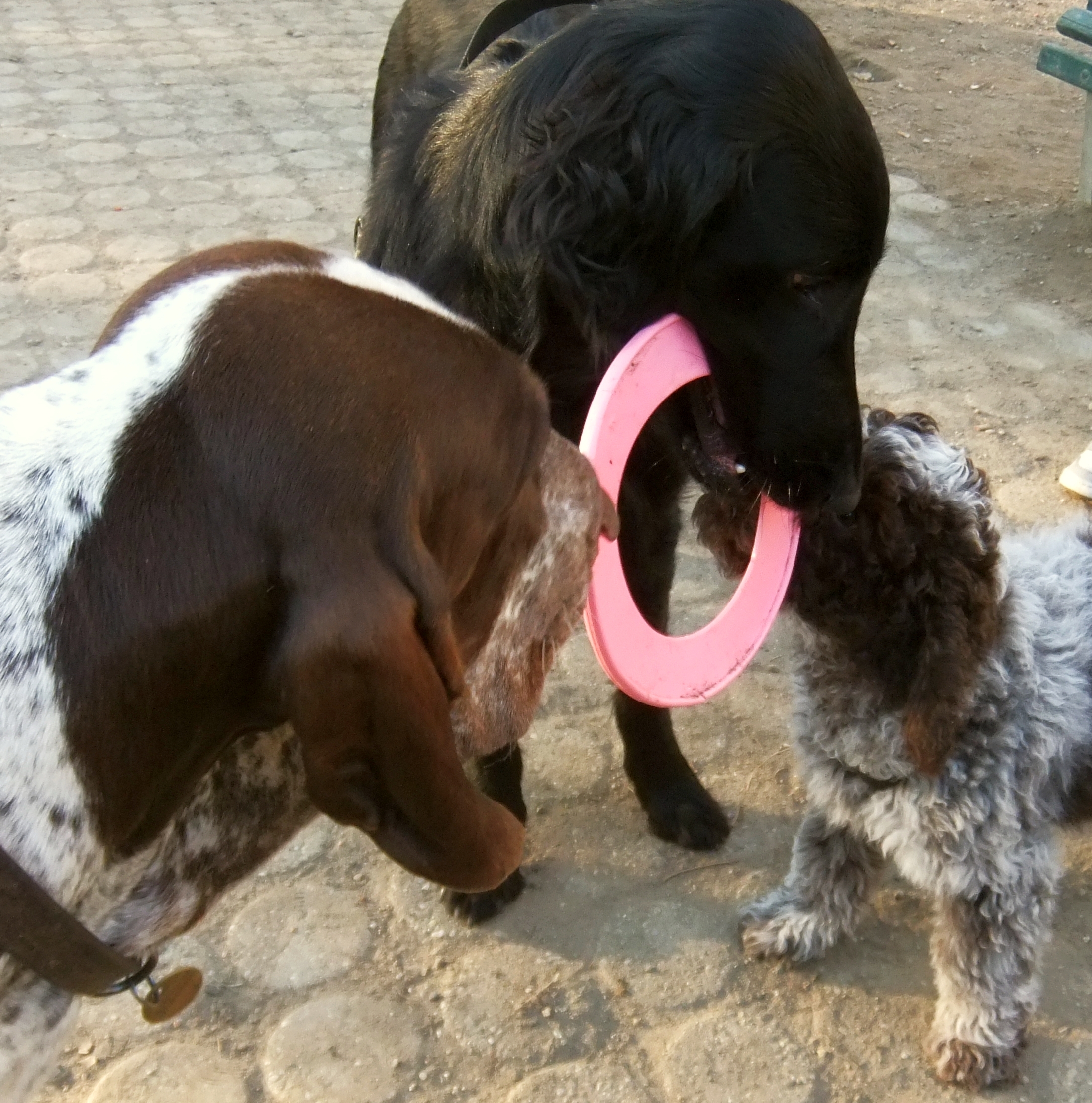
Cooperation or a Mexican standoff? Photograph and mise-en-scène by MIL22

When there is separation, there is coming together. When there is coming together, there is dissolution.

Chuang-Tzŭ (Zhuangzi), Inner Chapters,4th century BCE

[ trans.: Gia-fu Feng and Jane English ]

It is curious that anger about inequality is boiling over around the world precisely when we have new tools capable of taking us a long way towards a solution.

Yet disillusioned, battle-weary romantics who once joined some attempt to make democracy more democratic — or run a cooperative as an alternative to the Darwinian capitalism so adept at spawning plutocracies — have been telling us how they failed so gloomily that they could be competing for hopelessness with the Icelander Halldor Laxness and his Independent People.

Is it unreasonable to ask that, instead of justifying their pessimism, they collect and broadcast their thoughts about what they learnt from those failures and would do differently if they were to try again? And might they sit up and notice exactly what is possible with the new, democracy-friendly tools that could have helped them to avert disaster — if these had only been invented in time?

If paying attention, the nay-sayers might avoid the unfortunate misperception of cooperatives as cuddly, slow-moving, necessarily lovable ‘kumbaya’ institutions – as in a newspaper columnist’s suggestion last week that members of worker-owned coops might specialise in listening to each other as patiently and empathetically as people at meetings of Alcoholics Anonymous.

… er, please, … no! … ideal co-owners are far more likely to be reading at their own pace – in most cases, fast and online — than attending in the same room to statements of each other’s positions on any issue. Or they might be watching a short video clip on the subject – in the information-gathering and debating prelude to making a decision.

As this blog noted six weeks ago, technology has made it possible for everyone to consider the same information simultaneously, and to spell out goals and policies crisply. The deciding in a cooperative could be done at – well, why not say, warp speed, and that hardly seems an exaggeration when you consider the spread of ‘clickers‘ linked to polling software, and mentioned on the front page of the New York Times last week as

… hand-held wireless devices with just a few buttons.

[…] In recent years, college students have been bringing clickers to lecture halls, where professors require their use for attendance, instant polls and multiple-choice tests. Corporate executives sometimes distribute the devices at meetings, and then show survey responses immediately on Power Point slides. Just two of many companies that make clickers have sold nearly nine million units, which typically cost between $30 and $40 apiece, in under a decade. One of the companies, Turning Technologies, sold 1.5 million in 2011 alone.

But clickers can now be found in […] churches, fire departments, cruise ships and health care providers […] spreading the phenomenon of online crowdsourcing to off-line crowds. Fans of the devices say they are efficient, eco-friendly and techno-tickling, allowing audiences to mimic TV game-show contestants.

Do not, dear reader, mistake me for a neophile. I put off admitting digital innovations into my life until the penalties for resisting them are nipping at my heels – or a brother of mine has nagged me to distraction. I never forget that no matter how much more tools let us do today than we could yesterday, human nature remains the same at its core — fallible and perverse.

No technological wizardry has made it possible to hand over to robots the effort it takes to succeed at marriage, child-rearing, or working productively and in harmony with other people. All that calls for unceasing trial and error – and persistence, staring down disappointment and discouragement. I found a statement of this truth, twenty-five centuries old, browsing in my ravishing edition of the Chinese philosopher Chuang-Tsŭ’s Inner Chapters – for a reason to be explained in next week’s post.

‘When you wrack your brain trying to unify things,’ the passage begins,

… it is called ‘three in the morning’. What do I mean by ‘three in the morning’? A man who kept three monkeys said to them, ‘You get three acorns in the morning and four in the evening.’ This made them all very angry. So he said, ‘How about four in the morning and three in the evening?’ – and the monkeys were happy. The number of acorns was the same, but the different arrangement resulted in anger or pleasure. This is what I am talking about.

Empathetic listening could be a good guiding principle for some cooperatives, like the one the newspaper columnist has in mind. Other coops will want a different arrangement of acorns. It will all depend on the rules they make for running them.

I have yet to read Howard Rheingold’s latest book, Net Smart: How to Thrive Online — but look forward particularly to seeing what he has to say in it about cooperation and collaboration, having glimpsed in this section his introduction to the ideas of Elinor Ostrom, a political scientist who won the Nobel Prize for Economics in 2009.  He quotes her conclusion that

… ‘institutions of collective action’ were more likely to succeed when a small number of design principles were observed, and more likely to fail in the absence of these measures.

He lists her suggested principles, of which these struck me as most important:

  • Ÿ Rules governing the use of collective goods are well matched to local needs and conditions.
  • Ÿ Most individuals affected by these rules can participate in modifying the rules.
  • Ÿ The right of community members to devise their own rules is respected by external authorities.

… Discussing suggestions like hers is exactly where the conversation about cooperatives needs to go next.

A triumph for cooperatives: customer-owned Swiss banks are thriving while their shareholder-owned rivals lick their wounds in disgrace

Though the Swiss seem to have a special knack for running cooperatives, there is new interest in this form of organisation in communities all over the world. Photograph by Amita Chatterjee

Everyone writing off cooperatives as impractical — or as artefacts of misguided ‘hippie’ idealism — will please read the article below, re-published with the permission of Swissinfo.ch, a section of Switzerland’s equivalent of the BBC.

The Swiss see cooperatives as building blocks of democracy. They are rightly proud of their own ‘extreme’ or ‘direct’ democracy — the subject of an earlier post here – based on the rigorous implementation of proportional representation, and are apt to shake their heads despairingly about the ‘winner-takes-all’ version of the system of government in other western democracies.

The Economist — which has a habit of sniffily referring to cooperative banks as ‘dull but safe’ – has cited two authorities confirming the wisdom of coops:

A 2009 study by the Bundesbank, Germany’s central bank, into the connection between financial stability and bank ownership also found that co-operative banks were much less likely to fail than those owned by private shareholders. That fits with earlier work done by staff at the IMF in 2007, who argued in a working paper that co-operative banks were more stable than their commercial counterparts.

23 March 2012 

Crisis gives new life to cooperative banks

 by Armando Mombelli, swissinfo.ch 

——————————————————————————–

Sometimes seen as an old-fashioned business model, cooperative banks have succeeded in strengthening their position since the crisis in the financial sector.

The three main cooperative banks in Switzerland – the Raiffeisen, Migros and Coop banks – have been enjoying strong growth in the past few years. 

“Until recent times, the banks had a stabilising effect on the economy. But in the past few years they have turned out to be a destabilising factor,” said Florian Wettstein, who teaches business ethics at St Gallen University. 

“Growing international competition and pressure from shareholders have led to a logic of short-term profit with very negative consequences,” said Wettstein. 

“We no longer talk about growth. What we want is bigger growth than last year’s or last quarter’s. At a certain point, this attempt defeats itself and we get speculative bubbles which burst sooner or later.” 

The last such speculative bubble that burst in 2008 threw the financial sector into crisis and forced many countries to exert huge efforts to save banks in difficulty. 

Even Switzerland was not spared: UBS, the number one Swiss bank, just missed going under thanks to massive intervention by the federal government and the country’s central bank. 

“It is interesting to note that Swiss banks, in particular UBS, were not just caught up in this trend. They played a very active role on the international scene, throwing their traditional culture of caution to the winds,” noted Wettstein. 

New management models 

The crisis in the financial sector spread to the “real” economy and it is still negatively impacting on growth around the world. Governments have been studying new models of management and regulation of banking to avoid another major financial crisis. 

Forbidding high-risk speculative ventures, separating investment banking from deposit management, limiting bonuses and various other measures have been examined by the Swiss government as well as others. 

Government and parliament here have approved an increase in equity capital requirements for banks, higher than those enforced by other European countries. This measure has still been regarded as insufficient by many experts. 

On the other hand, a business model that is sustainable and crisis-proof has existed for quite some time: it is the model of cooperative banks securely anchored in the local economy. 

Since 2008, Raiffeisen, Migros and Coop bank have attracted thousands of customers and billions of francs away from the “big two”, UBS and Credit Suisse, whose credibility nosedived after the losses they took on the American market. 

Last January, Raiffeisen almost completely took over Wegelin Bank, which had to shut down its activities when it found itself under investigation in the United States along with ten other Swiss banks accused of having helped thousands of American customers to evade taxes. 

In February, Raiffeisen became the first bank to guarantee transparent financing of political parties and indicate it was in favour of the introduction of automatic exchange of information on bank deposits with European countries. 

Several advantages 

In difficult times for the financial services industry, this cooperative bank is showing itself particularly dynamic and willing to break with taboos like banking secrecy which no longer seem to have much of a future. 

In the International Year of Cooperatives proclaimed by the UN, this fact may serve to renew interest in a business model often dismissed as old-fashioned – almost all the big cooperatives were founded more than half a century ago. 

“Cooperative banks actually offer several advantages,” said the economist Hans Kissling. 

 “The main one is that they are not exposed to pressure from owners or shareholders, and so they do not go for big risks and excesses. Rather they pursue a long-term strategy in the interest of their members, who are also their customers.” 

“Once shares are not involved, there is no danger of things like insider trading. Nor is there a danger of public takeover bids at their expense: attempted takeovers by other companies have to be approved by the members,” added Kissling, who is a former board member of a cooperative. 

“And last but not least, capital does not drain from the company through payments of  exorbitant dividends or salaries. It stays in the cooperative and gets used for new investments or to strengthen its equity.” 

Democracy and solidarity 

Tending as they do to democracy and solidarity, cooperatives almost always come out on top of the rankings for companies that enjoy the trust of the ordinary public. 

This has not in itself been enough to stimulate growth in the sector: every year thousands of limited companies are founded in Switzerland, but only a handful of cooperatives are set up. 

“The government should introduce tax breaks or create a special fund to promote the conversion of family businesses into cooperatives, for example on the death of the owner. Another option might be to introduce share certificates without the right to vote, which would encourage the capitalisation of cooperatives,” said Kissling. 

In the Swiss banking sector, most of the potential for this kind of development would come from the cantonal banks, which several cantons hope to privatise eventually. Conversion of these into cooperatives instead of limited companies would help safeguard their original mandate. 

In this way, almost half of the 20 principal Swiss banks could one day become cooperatives. 

“Promotion of cooperatives should above all be anchored in the constitution, as it is in Italy,” maintained Kissling. 

“This would not only serve to acknowledge the economic and social importance of cooperatives, but also to emphasise the long Swiss tradition of solidarity, which goes right back to the country’s roots.” 

He recalls that the Swiss Confederation is called in German “Eidgenossenschaft”, which literally means “a cooperative of sworn allies”. 

Armando Mombelli, swissinfo.ch

(Translated from Italian by Terence MacNamee)

[ Of course cooperatives — being creations of imperfect human beings — also have their flaws, and these are considered in a swissinfo.ch briefing on the topic. ]