Gustave Flaubert’s multitasking score: 0 — and ‘flow,’ Mihaly Csikszentmihalyi’s secret of happiness

'Flow, don't freeze' postgutenberg@gmail.com

‘Flow, don’t freeze’
postgutenberg@gmail.com

Of all the anxieties related to the effects of digital culture on our brains – the way people reason, comprehend, do cerebral work, create and invent – the only one that we at post-Gutenberg truly share is the worry about attention. Especially, sustained attention. We have long found one facet of this – closer to immersion –  the most dependable font of happiness. It has been studied and named ‘flow’ by the Hungarian psychologist Mihaly Csikszentmihalyi, whose book on the subject was a birthday present to us from a vanished friend (Dessa, where are you?). Over to the Wikipedia:

In his seminal work, Flow: The Psychology of Optimal Experience, Csíkszentmihályi outlines his theory that people are happiest when they are in a state of flow— a state of concentration or complete absorption with the activity at hand and the situation. It is a state in which people are so involved in an activity that nothing else seems to matter. The idea of flow is identical to the feeling of being in the zone or in the groove.

Everyone accepts that our attention is being chronically, woefully, and hopelessly fractured by mobile telephones, email, tweeting, blogging, Googling, Binging (as opposed to bingeing) and so on – no matter how successful some of us are at glamorising the e-jitterbugging as ‘multitasking’.

How would a Gustave Flaubert write a novel of the depth and (depressing) intricacy of Madame Bovary? Whatever you think of the book – p-G sympathises with the critics who complain that the story lacks a single likeable or, we would say, engaging character – it probably deserves its renown, and its author his place among les immortels.

We have no answer to that question, but we do believe that no one has described the ‘flow’ state and its joys more gorgeously or entertainingly (definitively ‘over-the-top’) than Bovary’s inventor. The other day, opening our copy of The Letters of Gustave Flaubert 1830-1857 – only because we happened, for the first time for a decade and a half, to both look at and see it on its shelf, we entered a flow state ourselves, completely absorbed by the novelist’s words, beautifully translated and edited by Francis Steegmuller. The proof of the addictiveness of ‘flow’ is in these extracts, as is evidence that it is not always a picnic.

Highlights might be all most of us have time for, soon, the literary equivalent of what is well on its way to becoming the most popular convenience food, worldwide — sushi:

[ … to his friend — the lawyer-turned-dabbler/dilettante — Alfred LePoittevin; 13 May, 1845, Milan …]

You are wasting away with boredom, you say? Bursting with anger, dying of depression, stifling? Have patience, oh lion of the desert! I myself suffered a long period of suffocation, the walls of my room in the rue de l’Est still echo with the frightful curses, the foot-stampings, the cries of distress I gave vent to while I was alone there. How I roared in that room! And how I yawned! … Think, work, write, roll up your sleeves and cut your marble, like the good workman who refuses to be diverted from his task and keeps at it with sweat and good humour. … The only way not to be unhappy is to shut yourself up in Art and count all the rest as nothing. … I do not regret the absence of riches, or love, or the flesh, and everyone is astonished to see me behaving so sensibly. I have said an irrevocable farewell to the practical life. … From now until a day that is far distant I ask for no more than five or six quiet hours in my room, a good fire in winter, and a pair of candles to light me at night.

[ … to Louise Colet, a writer of recognised ability, also Flaubert’s mistress and – as most, though not all, authorities agree, the model for his tedious adulteress; 24 April 1852, Croisset … ]

… I have been in a great fit of work. The day before yesterday I went to bed at five in the morning and yesterday at three. Since last Monday I have put everything else aside and done nothing all week but sweat over my Bovary, disgruntled at making such slow progress. … You speak of your discouragement, if you could see mine! Sometimes I don’t understand why my arms don’t drop from my body with fatigue, why my brain doesn’t melt away. I am leading an austere life, stripped of all external pleasure, and am sustained only by a kind of permanent frenzy, which sometimes makes me weep tears of impotence but never abates. I love my work with a love that is frantic and perverted, as an ascetic loves the hair shirt that scratches his belly.

Sometimes, when I am empty, when the words don’t come, when I find I haven’t written a single sentence after scribbling whole pages, I collapse on my couch and lie there dazed, bogged in a swamp of despair, hating myself and blaming myself for this demented pride that makes me pant after a chimera. A quarter of an hour later, everything has changed; my heart is pounding with joy. Last Wednesday I had to get up and fetch my handkerchief; tears were streaming down my face. I had been moved by my own writing: the emotion I had conceived, the phrase that rendered it, and the satisfaction of having found the phrase – all were causing me the most exquisite pleasure. At least I think that all those elements were present in this emotion, which after all was predominantly a matter of nerves. There exist even higher emotions of this same kind: those which are devoid of the sensory element. These are superior, in moral beauty, to virtue – so independent are they of any personal factor, of any human implication. Occasionally (at great moments of illumination) I have had glimpses, in the glow of an enthusiasm that made me thrill from head to foot, of such a state of mind, superior to life itself, a state in which fame counts for nothing and even happiness is superfluous.
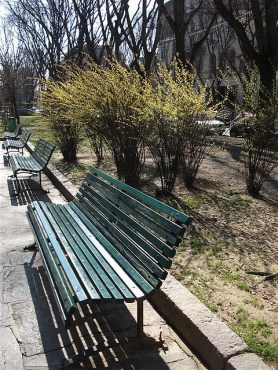
Of an orange pig, a wolf, and using literary clips to rescue literature from hyperinflated praise

'Ritorna il sole, ritornano i colori' photograph by MIL22

‘Ritorna il sole, ritornano i colori’
photograph by MIL22

When the currency of literary praise has been so debased as to be all but worthless, returning to a form of barter is long overdue.

What are we saying?

Before some wily genius invented money – which too often earns its reputation as the root of all evil — people traded in actual things other people wanted, not in symbolic representations of the value of those things. So many of us are fed up of being misled by book jacket hyperbole and dishonest reviews dressing up mediocre or shoddy work as ‘brilliant,’ ‘masterly,’ ‘luminous,’ and ‘stunning’ that it is time to melt down the defunct adjectival coinage, shelve it, and return to the actual substance of literature. We mean that we would love to see a trend for favouring clips of the writer’s own arrangements of words, in drawing attention to works of literature — over the encomiums of word-floggers and other tricksters.

Still making our slow – savouring — way through Storm DamageJohn A. A. Logan’s collection of short stories mentioned on this blog in January — we came across one accorded the rare distinction, in our reading over the years, of being read more than twice by us.

Like our photograph in honour of early spring – a gift of the eyes of generous MIL22 – this story, ‘The Orange Pig,’ is the work of an artist interested in satisfying nothing but exacting, deeply interior aesthetic standards. And if that sounds too serious – well, this is a tale that had us shaking with amusement as often as it left us rapt from the recognition of wisdom dextrously confected as a soufflé.

Without further ado we leave you, dear reader, to consider these extracts chosen to avoid giving away too much – and to let you marvel at a publishing revolution that makes it possible to acquire the thoughts that link them together on your e-reader almost instantaneously. All for no more than what it would take to put a frothing coffee into your hands.

‘I only want to walk to the top of the hill,’ said the orange pig.

‘No-one is stopping you,’ said the wolf. ‘But surely you can see that we can’t let incidents like these go unexamined or unreported. I assume you are from the farm.’

‘Where I am from is my own business.’

‘I understand,’ said the wolf, ‘but …’

The wolf waved a paw in the direction of the dead bird.

‘In circumstances like this,’ said the wolf, ‘we all must account for ourselves, our actions, our motives. It may be in the next world we will all be free to move where we wish like phantoms in the mist, but you are from a farm. You know the meaning of a fence, or a gate, a sty or a barn, a wall or a door. Do not pretend to be naïve. I find you here, and then I find this. What am I to think?’

‘The only time is now,’ said the wolf.

‘It is very late.’

‘Not so very,’ said the wolf.

They walked past the dogs like ghosted whispers and soon they were beyond the limits of the farm, their legs working hard against the steep hill’s power.

‘Under the moon there is no market day,’ said a deep, bass voice from further to the orange pig’s left than his thick neck could twist to let him see. ‘No lorry to take us away, no slaughterhouse, no scheduled death.’

‘For scheduled death is dishonour,’ said the black wolf.

‘Amen,’ said all the wolves in a clear chorus.

Somehow, though, the orange pig’s personality had not attracted fame, only a non-profitable cache of oddity. Good enough to bring a few of the farmer’s friends around the orange pig’s sty to stare at him awhile, but nothing solid to build a business on. The newspapers had come once, and taken photographs, but interest had not been ignited in the public.

‘To hell with farms and farmers,’ said a bitter voice the pig had not heard before.

Amen,’ said the wolves.

‘It is here in the moonlight things are shown truly,’ said a quiet voice from among the sea of silver heads. ‘With the sun in the morning comes all the illusions and divisions. Here in the silver shining, we are our truest selves, is it not so my brothers?’

‘Amen,’ said a strong chorus.

‘No farm could ever be thought of or established in the moonlight. It is an idea of the day, born of heat and dazzle.’

‘I told this pig I would take him another night to wash in the salt of the sea,’ said the long wolf.

‘The waters of the sea are great, its waves caress and cool us,’ said the quiet voice.

‘That pig’s legs are too short to run with you to the sea,’ said a voice.

‘We will all go,’ said the black wolf. ‘We will go to the sea another night and we will go at his pace. There are thoughts that come when we stand in the sea and feel the waves lap at our legs that can come in no other way. It is time we did go to the sea again.’

[ … continues …]

Writers, writing

yellow road postgutenberg@gmail.com

Once, long ago, before we we were old enough to vote, before we could have applied for a driver’s licence, we read Henry Miller for the first time with round, shocked eyes. Then — quite soon — he struck us as a bit of a bore. Now, it seems as if his oeuvre could define repetitiousness.

Still, we have never found a more amusing or accurate listing of the challenges to productivity, or to balancing life and work, than in these instructions Miller apparently wrote to himself — to make faster progress with the manuscript of Black Spring (1936). They have been reproduced in more than spot on the web and appear here to explain why post-Gutenberg will be taking a week’s break — which could become an absence of a fortnight if we find ourselves fighting more than the expected headwinds.

1. Work on one thing at a time until finished.

2. Start no more new books, add no more new material to Black Spring.

3. Don’t be nervous. Work calmly, joyously, recklessly on whatever is in hand.

4. Work according to Program and not according to mood. Stop at the appointed time!

5. When you can’t create you can work.

6. Cement a little every day, rather than add new fertilizers.

7. Keep human! See people, go places, drink if you feel like it.

8. Don’t be a draught-horse! Work with pleasure only.

9. Discard the Program when you feel like it–but go back to it the next day. Concentrate. Narrow down. Exclude.

10. Forget the books you want to write. Think only of the book you are writing.

11. Write first and always. Painting, music, friends, cinema, all these come afterwards.

Surfer, passing by: will you pause to list the three Beatles songs you like best, today?

‘Happy Birthday, MIL22!’Photograph by postgutenberg@gmail.com

‘Happy Birthday, MIL22’

Elderly intellectual Parisian piano teachers married to each other in the latest Michael Haneke film, Amour, are exercising their right to musical snobbery when they sniff disdainfully at the idea of someone playing a tape-recording of Yesterday’ at the funeral of a member of their elevated social set. It takes less than two seconds to realise that this exchange could easily have been stolen from real life — the Beatles having been, arguably, the 20th century’s most irresistible agents of cultural democracy before the internet took off.

The letters of Samuel Beckett starred in last winter’s reading at post-Gutenberg — and made our blog’s most popular entry. This winter, the essays of a fastidious, spinsterly Cambridge don psychologically married to his mother for much of his life (or so it always seemed to us) have been our special delight. It hardly matters how E. M. Forster came by his understanding when, in 1940, he answered his own question, ‘Does Culture Matter?’:

Culture is a forbidding word. I have to use it, knowing of none better to describe the various beautiful and interesting objects which men have made in the past … Many people despise them.

[…]

I know a few working-class people who enjoy culture, but as a rule I am afraid to bore them with it lest I Iose the pleasure of their acquaintance. So what is to be done?

It is tempting to do nothing. Don’t recommend culture. Assume that the future will have none, or will work out some form of it that we cannot expect to understand. … The difficulty here is that the higher pleasures … rather resemble religion, and it is impossible to enjoy them without trying to hand them on. The appreciator of an aesthetic becomes in his minor way an artist; he cannot rest without communicating what has been communicated to him … It is therefore impossible to sit alone with one’s books and prints, or to sit only with friends like oneself, and never to testify outside.

… So, reader surfing by, this month, this year, or as long as this blog is alive … are you moved to testify on behalf of the Beatles oeuvre – put your three most beloved songs from it into a comments box below, with or without an explanation or any expectation of a reaction? … A message in a bottle cast out to sea?