A better Facebook — or why cooperatives run on the web should work better than the old hippie kind (republished)

‘Sometimes it lasts in love, but sometimes it hurts instead.’ When the music suddenly breaks from its expected pattern, our sympathetic nervous system goes on high alert; our hearts race and we start to sweat … [E]motionally intense music releases dopamine in the pleasure and reward centres of the brain, similar to the effects of food, sex and drugs.’

Anatomy of a Tear-Jerker,’

Michaeleen Doucleff,  The Wall Street Journal, 11 February 2012

Digesting a grisly dissection of the bio-chemical effects of romance set to music in a financial newspaper told me that February the 14th can only become a more diabolical conspiracy between commercial and scientific calculation.

No sooner had I slogged through the neuroscientific perspective on l’amour than I found an email message from Hewlett-Packard offering me a 50 per cent discount on printer ink with the coupon code ‘HPLOVE20’. The promotion was not stingy with fake sentiment: ‘Our adoration for you is lasting – this offer is not.’

And there you have the reasons why post-gutenberg.com would rather dedicate today not to courtship or its consequences but to the perfect potential marriage of means and ends that we have in the World Wide Web — for redesigning the way companies make money from social networking.

The plan for this Alternative Valentine’s Day was inspired by reading Deborah Orr’s thoughtful anti-Facebook protest in The Guardian last week:

“While the US was extolling the virtues of neoliberal corporatism […] Tim Berners-Lee was inventing the world wide web, and gifting it to the planet, for people like Mark Zuckerberg to exploit.”

And to make sure no one had missed the significance of what she said, commenters on her piece underlined its essence:

Not sure how many will realise that what Deborah is saying amounts to this:

(i) Tim Berners-Lee, while working as a research scientist in Geneva, gave us all the World Wide Web for nothing

(ii) Facebook users are giving the world information about themselves for nothing

(iii) Mark Zuckerberg came along and used Tim’s and everyone else’s generosity to everyone else to make a pile for himself.

1 extremely remarkable member of the 1% indeed.

When will the average Facebook user catch on?

That users are beginning to grasp the dimensions of the Facebook heist – in plain sight and with the full cooperation of its victims – is clear from  newspaper articles elsewhere:

Facebook Users Ask, ‘Where’s Our Cut?

Nick Bilton

The New York Times

February 5, 2012, 11:00 am

SAN FRANCISCO — By my calculation, Mark Zuckerberg, Facebook’s founder and chief executive, owes me about $50.

Without me, and the other 844,999,999 people poking, liking and sharing on the site, Facebook would look like a scene from the postapocalyptic movie “The Day After Tomorrow”: bleak, desolate and really quite sad. (Or MySpace, if that is easier to imagine.) Facebook surely would never be valued at anything close to $100 billion, which it very well could be in its coming initial public offering.

So all this leaves me with a question: Where’s my cut? I helped build this thing, too. Facebook laid the foundation of the house and put in the plumbing, but we put up the walls, picked out the furniture, painted and hung photos, and invited everyone over for dinner parties.

Some of Deborah Orr’s commenters – or at least one – thought the remedy for this injustice obvious:

[ lightly edited for repetition ]

[W]e need to start a movement to turn Facebook into a giant cooperative — in which the users make up the rules, and personal information is not sold to anyone.

[…]

Alternatively, …I have heard that a new, improved Mark Zuckerberg wants to be perceived as a force for good in society — and that he is clashing with the strictly business-oriented senior executives in his company over this…. If he’s serious, why not acknowledge that Facebook’s users supply the personal information about themselves that he has exploited to get rich — as Deborah Orr says — and that this is deeply wrong, …and flip ownership of his company over to Facebook’s members?

Lots of us had our first encounters with cooperatives in the 1970s — as places owned and run by early evangelists for whole-grain and organic foods that were hard to find anywhere else. Sometimes, those hairy hippies operated cafés where you could eat earnest, do-gooder sandwiches fringed with medicinal bean sprouts and tasting like specially aged damp sawdust.

Many such organisations disintegrated because of warring and secretive factions that did not always share what they knew; slow communication between members; the logistical difficulties that meeting in person often entailed, and confusion about aims and aspirations.

For cooperatives using these digital thingies we all have now, many of those problems would never arise.  The new tools make it easy for everyone to see the same information, and to spell out goals and policies crisply. And, as the same commenter said.

To run an organisation designed as a cooperative, everyone involved could study complex new information together online, and decide questions at the blinding speed that, … for instance, … The Guardian’s opinion polls work on this very site.

Consider, please:

‘the scheme of social organisation which places the means of production of wealth and the distribution of that wealth into the hands of the community.’

That is a dictionary definition (Chambers) of what became a dirty word for many of us, because the idea was so corrupted in its execution. Yes, I mean, socialism.

But that was before this means of communicating and transparent  decision-making was invented.

A hybrid between socialism and capitalism is what we need as a transitional scheme, and you can download a no-holds-barred exchange on that subject here (a free download: see the comments and response to them at the end, if in a hurry): The Keiretsu-Cooperative: a Model for Post-Gutenberg Publishing http://papers.ssrn.com/sol3/papers.cfm?abstract_id=1532173

Well alright, I’ll admit that those comments closely echo sentiments expressed on this blog. They might even have been made by the same tiresome blogger.

Cooperatives sound embarrassingly utopian. But they are the finest examples of socialism in action that we have. An earlier entry in this spot quoted an authority on the subject saying that in the U.S., capitalism’s Mecca, 13 million American already work for these organisations.

Some people react to philosophical nudges in that direction with a silence in which you can almost hear them thinking, ‘But who are you to propose evolutionary possibilities for business?

Actually, nobody. But Albert Einstein anticipated this little difficulty. In a 1949 essay, ‘Why Socialism?’,  he reached far back into history to analyse people’s reluctance to break out of well-established patterns, noting:

The priests, in control of education, made the class division of society into a permanent institution and created a system of values by which the people were thenceforth, to a large extent unconsciously, guided in their social behavior.

But, as he said in his conclusion,

[W]e should not assume that experts are the only ones who have a right to express themselves on questions affecting the organization of society.

Where is it engraved in stone that Facebook has to be owned by a wealthy 1 per cent enriched by the 99 per cent sharing their private information as unquestioningly as feudal serfs?
Leveson hearings: can a ‘blind and unreasoning’ or partisan press censoring citizen-journalists be good for democracy?

obscurity - postgutenberg@gmail.com

[ Addendum, 23 February:

Although The Guardian has unquestionably deleted courteous posts about proposals for press reform and media evolution from the Comment-is-free section of its site, as recorded on this blog on 7 November and 15 November, I might owe that newspaper an apology for suggesting in the entry below that its moderators broke links to post-gutenberg.com posted on its site in January. Please see the footnote** for details.  ]

A remarkable statement went unnoticed by the few commentators on a morning of superb theatre at the Leveson hearings on press practices, culture and ethics in Britain on 31 January.

As noted earlier on this blog, press coverage of the Leveson Inquiry has been scant. It has focused on tabloid phone-hacking and emphasised paeans to press freedom by well-known witnesses, but under-reported criticism of the media (for instance, the excoriating but mostly well-founded testimony of the former journalist and prime ministerial communications adviser Alastair Campbell.)

Giving evidence last week, Christopher Meyer, the former chairman of the Press Complaints Commission – a body roundly criticised for being too close to newspaper editors to handle accusations against them objectively — said in a fleeting aside that the press is free to be partisan in a democracy. He said that as if stating a self-evident truth, accepted as such. I could not find any record of his remark in the transcript of the proceedings, but there was this exchange between the ex-chairman and his surgically incisive interrogator, Robert Jay QC.

Q: … I think the point you’re making there is that the press is free to comment and be partisan and it’s not the role of the PCC in a democracy to seek to curb that democratic activity?

A:  Yeah, that’s fair enough.

That could stand as a marker for the extent of the shift from the last century’s ideal of a neutral press to one in which the media openly take sides – or, as The Economist put it last July, are becoming ‘more opinionated, polarised and partisan’.  Not the faintest note of doubt intruded on the former PCC chairman’s declaration or confirmation of his position on partisanship, even though media bias is not what the public wants, if we can take as representative the 73 per cent of 2,700-odd Economist readers who have so far voted ‘yes’ in answer to the question, ‘Should news organisations always remain impartial?’. Bias has rightly been worrying experts like this political scientist, who asked in 2010 on ‘a plain blog about politics‘:

Will we have a robust, vigorous, and almost completely partisan press?  Will there still be a place for neutrality?  How will this play out for state and local politics?  What kinds of norms will the partisan press develop?

Some of us who have noticed the British and American press grow more aggressively one-sided in recent years cannot help wondering whether that has meant getting fewer of the objective reports and facts that a democracy needs to make good decisions about policies and politicians.

Partisanship is disturbing in itself, when you consider the dictionary definition of ‘partisan’ as ‘adherent, esp. a blind or unreasoning adherent’ (Chambers, 2006).  How can it be consistent with this classic list of guidelines for journalists doing their ‘duty of providing the people with the information they need to be free and self-governing’ – from Bill Kovach and Tom Rosenstiel in The Elements of Journalism:

1. Journalism’s first obligation is to the truth.

2. Its first loyalty is to the citizens.

3. Its essence is discipline of verification.

4. Its practitioners must maintain an independence from those they cover.

5. It must serve as an independent monitor of power.

6. It must provide a forum for public criticism and compromise.

7. It must strive to make the significant interesting, and relevant.

8. It must keep the news comprehensive and proportional.

9. Its practitioners must be allowed to exercise their personal conscience.

Some of us have noticed ways in which partisan has begun to mean punitive – as in censoring healthy disagreement and opposition.

If we accept that a newspaper has the right to push a particular agenda at us, does that give it the right to stifle dissent about that agenda – from, for instance, citizen journalists, which all of us become when we react to articles in the comments sections of the online press? Moderators at online sites attached to famously liberal and left-wing mastheads unhesitatingly delete comments that challenge the biases of those newspapers, even when phrased cautiously and politely. (See ‘Why is The Guardian censoring debate about press reform and ignoring the Lord Chief Justice’s endorsement of citizen journalism?’)

There is proof that I am not alone in wondering about this in the Wikipedia entry for ‘Media democracy’ – a concept that elicited a curious response from an editor at the New York Times, mentioned in this spot last month.

The concept of “democratizing the media” has no real meaning within the terms of political discourse in Western society. In fact, the phrase has a paradoxical or even vaguely subversive ring to it. Citizen participation would be considered an infringement on freedom of the press, a blow struck against the independence of the media that would distort the mission they have undertaken to inform the public without fear or favor… this is because the general public must be reduced to its traditional apathy and obedience, and frightened away from the arena of political debate and action.

Addressing the Alpach Technology Forum in Germany last August, William Dutton, the outgoing director of the Oxford Internet Institute, identified ‘Journalists and the Mass Media – imitating, co-opting, competing,’ as one collective enemy of  the 5th Estate, which includes citizen-journalists. (See ‘The Future of the Internet for Networked Individuals of the Fifth Estate’.)

If not for Justice Leveson and his supremely necessary investigation, I might have been depressed by the results that came up when I typed into search boxes the once-hallowed phrase, ‘Without fear or favour’. It encapsulated a consensus among the most admirable practitioners of journalism about the importance of rising above partisanship.  When I used the English spelling of the word ‘favour’, the first Google results page brought up scarcely any links to sites unconnected with Africa, New Zealand, Australia or Malaysia. With American spelling, dropping the ‘u’, the first page of findings did supply links to sites related to the U. S., but too few of them led to anyone expressing the outrage about the increasingly hollow sound of those words that I had hoped to see.

A press that no longer sees neutrality as essential to democracy in the west would explain why some of us have been given our first visceral impressions of what samizdat resistance under the old Soviet Union felt like, as commenters repeatedly censored – improbably enough – by The Guardian, a standard-bearer for liberalism.

Since I published these posts deleted by that paper on this blog on 7 November and 15 November, interference with my comments appears to have turned covert.

In the last two weeks, every link to this site posted in comments there has been broken either by Guardian moderators or by some profoundly mysterious line of rogue code in the newspaper’s software. (Anyone curious enough to run a paranoia test can search on  ‘CheryllBarron’ beneath Peter Guillam’s contribution, ‘The capitalism debate is anaemic – it must dig deeper‘.  Compare the results from pasting the URLs I have posted there into your own browser with clicking on the same URLs on the Guardian page – which only leads to variations of ‘Oops! Page not  found’.)

‘Censor’ is a word that came to us from the Roman Empire – although it mainly alluded to a lofty being entrusted with conducting the census and guarding public morality. ‘Censorship’ was a novelty that the Gutenberg press spawned. As the historian John Hale has explained,

It was in Germany, where printing was pioneered, that censorship was first introduced. In 1475 the University of Cologne, jealous of the freelance expression of ideas, obtained from the Pope the right to grant licences for the publication of books and to punish those who published or read unauthorized ones.

[…]

By [1515] the flood of books and the realization that a new, less instructed and more excitable audience for them was being reached, moved a number of European secular authorities to insist on manuscripts being submitted to them before printing.

Who could have predicted a punitive partisan press being allowed – so far – to get away with silencing democratic opposition in our own media revolution, five centuries later?

______________________

** Links to post-gutenberg.com yielding a ‘not found’ notice

Since I reported on what appeared to be a novel form of censorship, I have discovered the identical problem on this WordPress site. Something has been – inconsistently – inserting an extra ‘http’into texts of mine where there should be only one in each URL, with results like this (the unwanted duplicate is highlighted in bold):

This curious repetition disables the link. A technical support specialist at WordPress has so far been unable to trace the trouble to its source – or explain it.

Until the investigation is concluded, I feel I owe The Guardian the benefit of the doubt – and an apology for an unjust accusation.

I hope to know more soon.

Approaching the keiretsu-cooperative: Nick Clegg, Jaron Lanier, and a bold move at Ladies’ Home Journal

… Now and then, as in this week’s entry, post-gutenberg.com will spotlight signs that the keiretsu-cooperative — a structure for co-owning media — is an idea whose time has come …

Ladies' Home Journal: Art Deco cover, 1922

Media maidens venturing boldly into the future

That the Ladies’ Home Journal – an American magazine founded in 1883 – was still being published at all came as a bigger shock than reading about its plan for avoiding extinction. It is a title I have only ever seen mentioned in biographies of writers and political history, but it apparently has a circulation of over three million. A headline caught my eye:  ‘A New Ladies’ Home Journal Written Mostly by Readers’.

Aha! I thought, could that signal an evolutionary leap in the treatment of  ‘user-generated content’? Had I stumbled on the experiment in co-owned media that is long overdue, for some of us – as a first stage of true media reform?

No it is not, but that could conceivably be the next stage of the LHJ  plan. From its March issue onwards, the magazine is to be filled with articles by amateurs paid at professional rates, whose facts will be checked by the editors. The publisher, Diane Malloy, explained that

research showed the magazine’s readers wanted more of their voices reflected in the content and to feel as if they belonged to a community.

If the LHJ  were to go on to give readers a stake in the magazine, that would ensure far more passionate commitment and loyalty to their community.

Nick Clegg

A speech for the ages by Nick Clegg

Co-owned media got an indirect vote of confidence from Nick Clegg, Britain’s deputy prime minister,  in a 16 January speech more thoughtful than any set of utterances by a politician I have seen for a long time. What he proposed, addressing business leaders in the City of London– no less – is the most intelligent solution to the widening social inequality on which the Occupy movement has focused our attention. Somehow, that clear implication of what he said went largely unreported in media coverage of the event.

[W]e … need a better distribution of power within our economy.

… [I]t’s not just shareholder power that matters. Ultimately investors seek profits … Some enlightened shareholders might see the benefits of a well-rewarded workforce, but the people best placed to look after the interests of staff are staff. And that is what, so far, has been missing from this debate: ordinary people.

[W]e don’t believe our problem is too much capitalism: we think it’s that too few people have capital. We need more individuals to have a real stake in their firms. 

Readers of this blog will know how closely aligned his conclusions are with ideas expressed here – in ‘Wanted: a brave newspaper for an experiment in which readers become stakeholders’, and ‘Co-owning media is on the horizon, and press coverage of the Leveson enquiry shows why we need this.’

In a speech last July,  the P. M.’ s deputy took a stand against the unhealthy concentration of power in the media:

[D]iversity of ownership is an indelible liberal principle because a corporate media monopoly threatens a free press almost as much as a state monopoly does.

Jaron Lanier

Jaron Lanier comes to the right conclusion about paying for content — or rather, paying whom

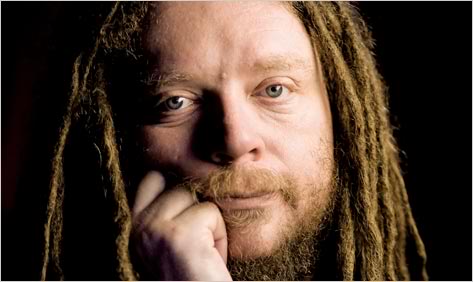
A super-geek he may be, down to his last dreadlock, but Jaron Lanier inspects the classic positions and tenets of the geekocracy with a coolly objective eye. He advocates compensating the ‘ordinary people’ Nick Clegg mentioned, not — so far — as stakeholders, but as suppliers of ‘content’ that media moguls and their giant corporations, like Facebook, are exploiting shamelessly. He asked in the New York Times last week:

What if ordinary users routinely earned micropayments for their contributions? If all content were valued instead of only mogul content, perhaps an information economy would elevate success for all. But under the current terms of debate that idea can barely be whispered.

Obviously, the editors at the Ladies’ Home Journal – paying their readers the same fees for content as professionals – are shouting, not  whispering, their understanding of the way media reform will now proceed.

Oxford Street branch of the John Lewis Partnership, 1936

An instructive poll for the Guardian

It was astonishing to see the results of a poll on the Guardian site related to the Clegg co-ownership proposal. Eighty-seven per cent of the poll-takers voted ‘yes’ in answer to a question referring to Britain’s most famous employee-owned company: ‘Would you like to live in a John Lewis style economy?’ That surely added up to endorsing a recommendation of  such a structure for ownership of the Guardian itself, or some part of it — even if proposals made in the online paper’s comments section for experimentally co-owning bits of it with readers  were censored more than once last year.  Ahem.

Nick Clegg and his personal think tank appeared to have anticipated precisely such — erm, discouragement, when he suggested in the same speech,

… giving employees a new, universal “Right to Request” shares. Imagine: an automatic opportunity for every employee to seek to enter into a share scheme, enjoying the tax benefits that come with it, taking what for many people might seem out of their reach, and turning it into a routine decision …

In other words, no one would be censored or punished simply for asking an employer for a stake in a company… Still, well done, Gruan, for conducting that poll.  Soon, you might almost be as brave as the Ladies’ Home Journal.

Google, bowing to social media, is letting down tomorrow’s Samuel Becketts

Before Google redesigned its search system, good but obscure blog posts often made happy landings. -- Bottle, message and photograph by Jay Little, scuttlefish.com

 [ part II:  part I is here ]

At a celebration in 2010 of the life of the late Norman Macrae, a notoriously wild visionary and deputy editor of The Economist, I learnt that he once tried to promote a nasal spray as a ‘cure’ for homosexuality. I was reminded of his quixotic mission when a flurry of offers to turn introverts into extroverts for the age of networking came up in search results for the title of last week’s post in this spot — about shy people and social media. These services would have seemed pointless before a Google announcement on the 10th. No longer. It is clear that the all-powerful search engine cannot now serve as the greatest boon and crutch, ever, for the socially averse.

Let me illustrate what Google was able to do for introverted writers – before it made its big mistake – by looking at problems in the career of Samuel Beckett. As I mentioned last week, I have been reading his letters , so addictive that they outrank all my other choices for entertainment, even with a wireless broadband link to the net. Having his words and defiant wit for company has helped to blunt the edge of my dismay about the reshaping of the online experience.

Gatekeepers at the pinnacle of publishing would have punched the ‘dislike’ button on Samuel Beckett’s submissions of his early work incessantly — had some version of today’s read-and-react tools existed in the late 1920s and ‘30s. Most improbable about those rejection slip years is that he was supremely well-connected at the time, serving for a while as the research assistant of his good friend, James Joyce. Among his rejectors were Leonard and Virginia Wolf, publishing under their imprint, the Hogarth Press. On 18 August 1932,  Beckett complained,

This month of creeping and crawling and solicitation has yielded nothing but glib Cockney regrets. The book came back from the Hogarth Press, and the poems, with merely the formal rejection slip. Nothing from L. W. He was out of London… I have good reason to believe that the MS never left London and that in all probability he never saw it. But he must have got my letter. Or perhaps it is his turn for the asylum. Anyhow tant piss. I then brought it to Grayson and Cape. It came back yesterday from Cape. Their readers’ report did not encourage them to make me an offer for publication rights. … So far no reply from Grayson. I saw Rupert Grayson when I went round, the ‘author son of Sir Henry’. And a  proper pudding he appeared.

You can sense him fending off despair with exalted rage and nastiness to entertain his friend Thomas McGreevy. I have quoted a mere fraction of the rejections he endured in that particular month. Because his years out in the cold did not go on forever, his anger reads like high comedy. That would be impossible for the epistolary record of, say, Vincent van Gogh’s failure, which had no end in his lifetime.

‘[W]hat is striking about Beckett before the years of “fame,” is how wary he was of the public dimension of the arts, even as he was attempting to gain this dimension for himself and his work,’ notes the introduction to Volume I of the Cambridge University Press edition of his correspondence. In his dealings with publishers, ‘his wariness turns into a disdain or hostility which is all the more notable in that his principal interlocutors at publishing houses tend to be intelligent, patient, learned, supportive, and gentlemanly.’

Yes, yes, …  and as the editors of these letters point out, those gatekeepers were ‘almost unimaginable in the cut and thrust of today’s trade publishing world.’ But they were useless as advisors. On 18 October 1932, Beckett reported, as usual, in prose abounding in impish linguistic play:

The Grayson Bros. were stimulated by my multicuspid stinker to return my MS, ‘circumscribed appeal … Gratuitous “strength”’ What is that? I replied soliciting favour of readers’ reports. Reply to the effect that there was no written record of condemnation, that … my book had been read by 3 most distinguished readers and discussed verbally with the Fratellaci [a play in Italian on the name of the publisher, Grayson]; that their advice to me frankly and without the least desire to wound was to lay aside A Dream of Fair to Middling Women altogether, forget it ever happened, be a good boy in future and compose what I was well-fitted to compose – a best-seller.

Just think of all the wasted time and emotional energy in his struggle. The predictability with which tickets for Beckett’s plays sell out around the globe today – even when the actors are not especially well-known – has proved that the young Samuel did contain the seeds of a Nobel prize winner whose work would indeed find the huge audiences equivalent to those of a bestselling book. But for that, no thanks are owed to the gentlemanly early judges.

They were rejecting writing in which the voice – or voices, themes, perspective and preoccupations – were original; far ahead of their time. It did not conform to the prevailing standards of literary merit. The range of taste on which those standards were founded was constrained by the smallness of the circle of  tastemakers — publishers, editors and other assessors of manuscripts who were mostly men of strikingly similar social backgrounds and education. So when they concurred in judging his work as having ‘circumscribed appeal,’ they were a bit like spaniels chasing their own tails.

And there you have a metaphor for the way print publishing has worked – with rare exceptions – for hundreds of years, until the coming of … search engines!  Suddenly, we could all revel in being able to read opinions and reviews of, and reactions to, texts and works of art from continents away, and from readers as different as possible from people we know well – thanks to the unprecedentedly objective and dispassionate sifting of texts by the information-seeking software we call search technology.

This detachment from the sources of information has been a surpassing agent of democracy – for all art and all knowledge.  ‘The internet enables far wider participation in front-line science,’ observes the astrophysicist Martin Rees, until recently, president of Britain’s most illustrious scientists’ club, the Royal Society, in a new book  about the net’s effects. ‘It levels the playing field between researchers in major centres and those in relative isolation, hitherto handicapped by inefficient communication.’

We got used to postings on blogs like this one — virtually undiscoverable before Google’s refinements of search technology — becoming like messages in bottles finding their way to surprising numbers of welcoming and sympathetic shores. For many of us, unbiased search engines have been so vital to our ability to do our work and reach others with similar interests and obsessions that the internet might almost be Google, as far as we are concerned.

I never met a more ardent fan of the old Google than myself.

But that has gone the way of most passionate love affairs. Last week, the New York Times described how Google has begun to link search results to social networking on services like Facebook and Twitter:

For instance, for most users, a search for “chikoo” would show links about and photos of an Indian fruit. But for friends of Mr. Singhal, it would also show photos and posts about his dog, Chikoo. A search for a sports team would show, in addition to the usual links, conversations about the team among a user’s friends on Google Plus.

When people search for a name, Google will highlight people who are friends with the searcher on Google Plus, or prominent people. And in searches for general topics, like “cooking,” Google will show Google Plus profiles of celebrity chefs on the right side of search results.

One dire effect of Google’s reliance on social media for search results will be to replicate and magnify the old gatekeepers’ spaniel silliness – which works much like the ‘confirmation bias,’ or people’s tendency to prefer and emphasise facts that support their beliefs and prejudices, spurning alternatives that might be closer to the truth.

Before Google tweaked its search system to elevate the conventional and familiar – and socially conformist – above the new, challenging and foreign, a web site’s obscurity or relative isolation would not necessarily bar it from appearing near the top of search results. That was because Google’s search system was designed to favour intellectual substance, and dependable statements of fact – based on the quality of a site’s links to other repositories of knowledge, opinions, and records of fact or effort.  Of course search technology could hardly rank or anticipate literary merit, but anything a contemporary Sam Beckett posted on the web would have had a decent chance of appearing with, at least,  some noteworthy answers to the huge range of possible search enquiries. There was hope for their reaching a far wider variety of judges than members of the old spaniel club.

Now, we must conclude from what we are told about the change in Google’s search techniques that an obscure Beckett of the wilderness years would have to dedicate a large and ever-growing portion of each day to chasing celebrity-status, and to building purely social connections – with the numbers of these mattering more than their quality – to be noticed and read at all.

As noted on this blog last week, relentless self-promotion and hobnobbing are unreasonable requirements of people temperamentally disinclined to socialising – the ones we call introverts. If they do not act against their instincts, the coordinates for their work – no matter how useful or admirable it might be – are condemned to fall steadily from public view. Just as in the bad old days, to them that already hath a lot – fame, attention, praise – more shall be given.

I am not sure what is more distressing about Google’s move – its coerciveness (Get busy on social media, or else!) or the narrowing of everyone’s frame of reference that it implies.

How can it be anything other than a colossal misuse of the world wide web, the supreme tool for broadening intellectual horizons – to make everyone more parochial, narrow, tribal, and inclined to pander to the lowest common denominator?

That strikes me as something like using a jumbo jet to pop in at the grocer’s and buy a bag of apples exactly like the ones you already have growing on the tree in your own back yard , then boiling them to pulp — but with a celebrity endorsement.