Private Eye on the death of literary culture

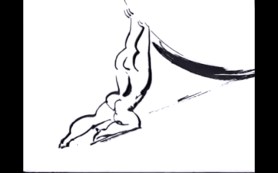
How long before literature in print begins to seem as mysterious as cave paintings – its preoccupations and the culture around it approachable only by conjecture?

Readers who do not drop in here regularly – and some that do – might have read the last two entries on this blog with exasperated harrumphing and disbelief.

Professional book reviewers deserve to be going the way of the dodoGet away with you! Publishing houses have been declining to publish manuscripts lauded by their own editors, that have even excited film consultants with a proven instinct for spotting bestselling and screen-friendly material? Codswallop! (That would be bull dookey, for Texans.)

O sceptics, here is substantiation from a source whose remorseless objectivity about its own world of print publishing and journalism has been praised by no less than Lord Justice Leveson, of the Inquiry – and which is not notably a lover of online publishing, even though it is organised and run in ways we think the best digital publishers will approximate closely in the future .

The extract is from a review of the memoir of a London book editor, Miriam Gross, An Almost English Life, Literary and not so Literary Recollections, in a late September issue of Private Eye (no. 1323) that we have only just seen, owing to one thing and another.

At any time over the past half-century it has been possible to earn a few pounds by writing an article on ‘the death of the novel’.

Just lately, what with the rise of the internet reviewers, E. L. James and celebrity memoirs, more alert commentators have been able to expand this topic to accommodate the death of literary culture per se.

[…]

The really surprising thing, in these circumstances, is the torrent of books about literary culture that continues to spring from the nation’s printing presses. Publishers from Tom Maschler down pop up to regale us with memories of their time in the trade.

[…]

Ms Gross, it has to be said, is the grande dame of her profession: a Jerusalem-born bluestocking, who arrived in England in 1947, married the late and very much lamented John Gross first time around, […] and was successively arts editor of the Torygraph [Texan trans.: The Daily Telegraph, traditionally the upmarket Tory paper] and books editor of its Sunday sister. […] On the other hand, to call this elfin volume – bulked out to 200 pages by the inclusion of some old Observer interviews – ‘the remarkable story of one of the great observers of our time’, as Alain de Botton does on the cover, is ever so slightly pushing it.

[…]

[O]f what, on this admittedly partial evidence, does ‘literary culture’ actually consist? Dare one say that the whole thing eventually betrays itself as a delightful private club, where all the members are simply wonderful and incompetence is habitually excused on the grounds that the defaulter is one of us: sad to contemplate here on its downward spiral … but, really, impossible to mourn.


Testimonial to the curious state of commercial publishing: literary young Lochinvars locked out despite high praise from gatekeepers

John A. A. Logan poised to evoke the touch of evil in The Survival of Thomas Ford – and below, less alarmingly, with his mother, Agnes Logan
Photographs by Alasdair Allen (above) and northern-times.co.uk

‘We sly women are the world’s only hope,’ said Jan, ‘And not just any old sly women either. You can forget about yer Jews and Protestants for starters. And of course any woman who dabbles in atheism.’

‘You get them, man,’ said Bathsheba. ‘It happens.’

[…]

‘Still in deep denial about the Counter-Reformation, yer Prods.’ Bathsheba beeped the horn again. ‘The most comically perplexed souls of all time, poor things.’ Beebeep. ‘The ne plus ultra of human… Of human whit? Thingummibob. Whit’s the word? Cartoonishness? Am I toasty warm? Get us the thesaurus.’

Jan found it in the glove compartment and gave it over.

The Adorata, Sean Murray

What is the point of thrillers – the noir kind, especially?

Er, … entertainment, do you suppose? you suggest drily, stifling a sardonic ‘D’oh!

To which post-Gutenberg’s answer would be, but what is the point of this sub-genre of entertainment?

Yes, yes … we know, an absurdly ambitious question for a funny little blog.

But this hardly rules out suggesting a line of enquiry for an answer: might the point of blood-and-gore electrified by crackling suspense be to fight horror with horror? That is, neutralise real-life horror, shock and sadness, with the imagined and invented kind? Nothing supplies temporary relief for the agony of witnessing the suffering of someone beloved in extremis – helpless to do much to relieve it – as well as a story so powerful that it takes control of your brain and entire nervous system, whether read in snatches or all the way through.

Events of recent weeks have shown us that a well-written thriller violent and gripping in direct proportion to the unbearable, in actual life, works better than any other literary form – particularly for a reader who loathes violent films and literature, and often resents the manipulations of narrative suspense.

The book is set aside, and the reader feels inexplicably stronger and ready to face down the monsters again. Some process less akin to catharsis than to Freud’s idea of displacement is surely at work – which, in a Wikipedia definition,

operates in the mind unconsciously and involves emotions, ideas or wishes being transferred from their original object to a more acceptable substitute. It is most often used to allay anxiety …

The book – or rather, e-book — that worked this strange magic for us is The Survival of Thomas Ford, about which we learnt from a Twitter link by its author, John A. A. Logan, to a detailed history of the manuscript’s long string of rejections that we would call staggeringly unbelievable and absurd if we did not know it to be an impeccably accurate record of the state of conventional publishing in 2012. We began to watch John’s tweet stream after we found ourselves on the same side in an online debate about copyright in the age of the net; among the not-terribly-popular lobbyists for paying artists and writers for work in the age of e-pirating.

Soon, we were reading arresting sentences and sequences like these:

 Jimmy sipped Coke and watched Robert out of an eye’s sly edge.

 Robert believed that it was sometimes possible for the universe to overlook certain misdeeds, even serious ones. He had believed from an early age that the universe made errors, usually errors of omission. He believed, in fact, that Jimmy’s very existence was evidence of such an error.

  If Jimmy was a vacuum, then Robert had been sucked in.

We registered something indefinably Scottish in the observations, the styles of expression, and marvelled at the absence of the too-familiar props in mass-market thriller-writing – glamourising brand names and settings – and clichéd ‘middle-class’ attitudes to people on less fortunate social rungs, or the reverse. A hospital cleaner, finding herself for the first time in an urban garden thinks,

This garden was like a machine for escaping the city.

After weeks of reading in tiny sips, for a lack of time, we reached a scene in which a father punishes his adult son for mistreating immigrant Polish bricklayers by flinging him into the mud with a feral twist that all but breaks his neck. Soon, there are characters bleeding from kitchen knives stuck in their sides and … For fear of the spoiler effect, we’ll stop there and say that we usually go to extremes to avoid sustained violence in any form, and were able to endure no more than a half-hour of The Silence of the Lambs. But we could not stop reading Survival.

John Logan is certainly not trying to be Muriel Spark, the grand priestess of modern Scottish literature, but as real life trouble intensified and spun out of control for us, we grew increasingly impatient with audio recordings of still gritty but tired recent books by Ian Rankin to which we had turned – because they were sitting on our library re-shelving cart – to make sure that we stayed fully alert on long driving expeditions on featureless roads. We longed to listen instead to the fresher writing voice and inspiration of the next chapter of the Logan thriller with its endlessly surprising perspectives and frequently excellent prose.

That last attribute is something John’s work has in common with other young Scots writers, too many of them unpublished, or self-published and unnoticed because of hair-raisingly nonsensical sagas of rejection – like his. The extract from a modernist — Barthian, Bellowish, (William) Burroughsian – novel by Sean Murray in the epigraph for this post came from a discussion of misogyny in the work of male novelists on Donkeyshott and Xuitlacoche, the domain of a blogger, Philip Hall, who has a head crammed with stimulating, cosmopolitan ideas. The guest-post on his blog spotlighting the Adorata remarked, ‘If your life depended on it, could you imagine Mailer creating a female character with a thesaurus stored in her car?’

In disembodied cyberspace, post-Gutenberg has had more than one encounter with these Scottish scribes — whose energy and dauntlessness recall ‘O, young Lochinvar is come out of the west/Through all the wide Border his steed was the best …’. We have been honoured by bracing and uplifting encouragement from them – which might make our motives for writing this post suspect. Fear not. We have … ahem … credibility to protect, as obscure as we are, in this patch of the net.

Before we leave you to read a clip from John’s account of his well-deserved — but hard-won — success with publishing Survival as an e-book, we have a question. Can we — those of us who care about the absurdity of neither John nor Sean Murray finding a conventional publisher with conventional marketing muscle — do something to finance the efforts of writers suffering from the disappearance of editors capable of nurturing unpublished writers? Or sustaining the efforts of those who already have stellar publishing credits, but have run afoul of the salespeople promoted to über-gatekeepers at some of the most famous literary imprints?

We have made suggestions before, about how this might be done – using micropayments, something better than Kickstarter and a new way of organising publishing as a massively inclusive, subscriber-based ‘co-owned’ medium.

That post-Gutenberg — thousands of miles from Scotland, with no real-life acquaintance with any of these scarcely-known Scottish scribblers — should care so much about helping them find support surely means that something can be done, and soon.

Over, now, to John himself – although you will want to read his entire record of the death of common sense. The last page of Survival says that John has been published by Picador, Vintage and Chapman – all in the loftiest tier of the serious end of the book business.

… In December 2010, the literary agent phoned me for 90 minutes, to tell me he was sure a major publishing house’s editors had wanted to take my book, but then at the meeting with the sales dept the sales folk for this publishing house had said that I “reminded them of someone they had had high hopes for two years earlier but then had lost money on”. And that ended that house’s interest in the book.

A little later, the senior commissioning editor at another major UK publishing house wrote to say “I think John Logan is a hugely talented writer. I love books like this that have the pace and excitement of a thriller but the voice and emotional depth of a literary novel”. But again when it came right down to it, no sale!

Then my agent passed the book to a film consultant who worked with him. She told him my novel, The Survival of Thomas Ford, was the best book she had read in that literary agency in the last 4 years. This was taken very seriously, as this film consultant had discovered Slumdog Millionaire as an unpublished manuscript and was responsible for it getting developed into a film …
Why attack ♯Leveson, our best chance to save real journalism?

The coercion which the police state exercises on thought and art is indeed appalling. Yet the damage done may, in the final analysis, be no greater than that caused by the absolutism of the mass market. … The censorship which profit imposes on the media is as destructive, perhaps more so than that of political despotism.

George Steiner, My Unwritten Books, 2008

That Fleet Street editors are once again ganging up to attack the Leveson Inquiry into press ethics and practices — concentrating their salvos, this time, on its as-yet-unpublished first report and recommendations – could turn out to be a great good thing.

Their aggression is inviting attention. It is giving everyone who cares about getting reliable news and facts undistorted by hidden agendas and special interests — for instance, the International Forum for Responsible Media (INFORRM) — a chance to remind the 4th Estate that public opinion is firmly on the Inquiry’s side.

But, …

as the INFORRM blog warned, last week,

… there is an important case to be fought in the court of public opinion over the next couple of months. A careful eye needs to be kept on press attempts to distort and manipulate the arguments to support the self-interest of its proprietors.

The self-interest to which it refers is, of course, the profit motive. That is true despite the longstanding tradition in which most of those proprietors have supported newspapers losing money decade after decade, as if red ink were simply natural for them, as intrinsic as spots for leopards or nuclear scent for polecats. Hardly anyone needs to be told, any more, that the reason why these proprietors have long competed ferociously for the privilege of owning papers is because of the fantastic levers they are for piling up profits in other spheres, and buying political influence.

We have quoted those words of George Steiner in this post’s epigraph before and we will quote them again – as often as necessary. That is, until it becomes common-or-garden wisdom that, just as the Wikipedia has brought us closer to the ideal of what an encyclopaedia can be, we need to refine forms of collaborative journalism. It has to be universally understood that journalism at its best has to be divorced from the profit motive. Just as the excellence of the Wikipedia has no connection whatsoever to improving any corporate ‘bottom line,’ there is no reason why journalism has to be directly or indirectly wedded to it any more.

The reason why no leader at the head of any prominent newspaper has risen to post-Gutenberg’s challenge – ‘Wanted: a brave newspaper, for an experiment in which readers become stakeholders‘ – is because they are  beholden to the old system of organising the dissemination of facts. They are well-paid indentured servants of the profit motive, enshrined as the ‘advertising-based business model’ for running papers.

The best possible outcome of the Leveson Inquiry is not in the least complicated. It would be an evolutionary restructuring of journalism to restore as its fundamental and only raisons d’être:

the quest for truth

and

forcing transparency in the exercise of political power.

It is this parallel with the Wikipedia that matters. The co-ownership of media and various forms of collaborative operation, in the practice of journalism, are simply the most logical means to that end.

Until we reach it, passages like this — from The Sonderberg Case, an Elie Wiesel novella about the harm that Nazism inflicted on the Nazis’ own descendants – will seem depressingly unattainable:

Actually, I had discovered journalism well before working in the field. My uncle Meir, early on, considered it the finest profession … He ranked the committed journalist as the equal of writers and philosophers.

Audience jealousy of artists, part 2; & what this has to do with Sisyphus and rock ‘n’ roll


Stills from Jankovics Marcell’s ‘Sisyphus’ (1974)

[ part 1 is: here ]

And what about the collective memory of artistic creation? For every Prometheus and Sisyphus haunting scholars, how many of their former equals are barely stirring and covered in dust?

The Sonderberg Case, Elie Wiesel (2010)

Our screen shots from a short Jankovics Marcell animation, Sisyphus (1974) — a work of genius in nearly every frame — could be depicting the struggle to change the monetary terms on which artists make art. We would like, in this lifetime, to see that accursed rock stop and stay still, where it ought to. By that, we mean that some self-sustaining way of letting artists and writers keep up with plumbers must somehow be put into practice.

Presumably Marcell, a Hungarian, earned enough from licensing a giant US multinational to adapt his haiku-like video for a (comparatively crude and clod-hopping) tv advertisement to make the world a gift of his original, so that anyone can watch it, free. But only a sub-microscopic fraction of creators can afford such generosity.

We still shudder, remembering the relentless succession of hostile posts in the discussion on a newspaper site we quoted extensively the last time we wrote on this subject, last month. Artists have starved and suffered throughout history, ran the argument – if we have to dignify rants with that word. So what? … the ranters raged.

It is asking for nearly inhuman self-control, to suppress the vituperative and scatological reply that comes immediately to mind, on hearing that question. People all over the world were actual serfs for aeons, but then became merely virtual serfs – wage-slaves – a few centuries ago. Being a baby-making machine, year after year, and – as someone once put it, ‘tied by their tits’ to their broods – was seen, for most of humanity’s time on earth, as the unavoidable fate of women. If injustice could be defended merely by precedent, and by precedence extending to pre-history, how odd that we no longer accept chaining and whipping our fellow-beings like defenceless animals.

Poverty was once universally accepted as the inevitable lot of most scholars. The great 17th century Dutch rationalist-philosopher Spinoza – whose idea of God, Albert Einstein said, was closest to his own — is known to have lived on porridge, groats and milk, or was certainly obliged to eat that diet more often than most of us would think endurable. Then someone invented tenure, and certainly in rich countries – even after years of budget cuts – few contemporary academics share the abject insecurity, at the level of penury, that too many artists among their fellow-citizens do.

We have returned to the subject not to say anything new as much as underline the importance of change – and because we forgot to mention, earlier, that thoughtful interpreters of Greek mythology consider the fates of Prometheus and Sisyphus to be allegories for the life of inventors and creators. What most of these theorisers have in mind, in drawing their parallels, is not money and financial survival but the interior, psychological struggles of creative people — and the punishment for extraordinary talent, in both stories.

This post ends with a semi-non-sequitur, an extract from an essay by Rollo May (1909-1994) – a disconcertingly perceptive, often poetic, writer on the psychology of workers at creativity’s coalface – for which our excuse is simply that we have been admiring the passage for a very long time.

It earns its hopefulness; is as far as possible from Pollyanna optimism. As May explains to the uninitiated in a terse footnote, ‘Sisyphus was a king of Corinth condemned by Zeus to roll a large stone ceaselessly up a hill.’ (Alternatively, as Nick Pontikis claims in an irresistible, fleshed-out version of the legend on his Thanasis blog — we are indebted to the stoical monarch for the birth of rock ‘n’ roll.)

… Are we doomed to live in a world no one can make sense of? …

… Out of that … despair is born this myth which is new but eternally old, the only myth that fits this seemingly hopeless situation. This is the myth of Sisyphus. The one myth which … goes no place at all, seems to be a repetition, every day and every act being forever the same in perpetual monotonous toil and sweat.

But that is to omit its crucial meaning. One thing Sisyphus can do: he can be aware of each moment in this drama between himself and Zeus, between himself and fate. This – because it is most human – makes his reaction completely different from that of the dark night of the mountain up which he rolls his rock …

… The myth of Sisyphus is sometimes interpreted as the sun climbing to its apex every day and then curving down again. Nothing could be more important for human life than these circular journeys of the sun. …

… [W]e face monotony in all we do; we draw in and exhale breath after breath in ceaseless succession through every moment of our lives, which is monotony par excellence. But out of this repetitiveness of breathing the Buddhists and Yoga have formed their religious meditation and a way of achieving the heights of ecstasy.

For Sisyphus is a creative person who even tried to erase death. He never gives up but always is devoted to creating a better kind of life; he is a model of a hero who presses on in spite of his or her despair. Without such capacity to confront despair we would not have Beethoven or Rembrandt or Michelangelo or Dante or Goethe of any others of the great figures in the development of culture …

Sisyphus’ consciousness is the hallmark of being human. Sisyphus is the thinking reed with a mind which can construct purposes, know ecstasy and pain, distinguish monotony from despair, and place the monotony – the rolling of the stone – in the scheme of his rebellion, the act for which he is condemned. …

Sisyphus … must have noticed in his trips some wisp of pink cloud that heralds the dawn, or felt some pleasure in the wind against his breast as he strode down the hill after his rock, or remembered some line of poetry to muse upon …

… [In t]he myth of Sisyphus … [w]e are required … to recognise our human state of consciousness in progress or without it, … with the disintegration of the world or without it. It is this that saves us from destruction when our little rules prove unavailing.

This is what led Albert Camus to conclude his essay on Sisyphus, ‘We must consider Sisyphus happy.’

… Rollo May does mention money in a passage before that extract, not in connection with artists who have too little of it, but showing us why their poverty so often elicits self-righteous scorn. He says, in a profoundly intelligent dissection of greed, focused on America, but applying widely on every continent:

There has been in America no clear-cut differentiation between right and wrong ways to get rich. Playing the stock market? Finding oil under your shack in Texas? Deforesting vast tracts of Douglas fir in the state of Washington? Amassing piles of money for lectures after getting out of prison as a Watergate crook? The important thing in the American dream has been to get rich, and then those very riches give sanction to your situation. The fact of your being successful is proof that God smiles on you and that you are among the saved. It is not hard to see how this, in true Calvinistic tradition, drifted into getting rich as the eleventh commandment.

[ part 1 is: here ]