David Talbot drops serious clangers in his appeal for the resurrection of Salon.com, an e-publishing pioneer

'The Great Grievance', an etching associated with the French Revolution, by an unknown artist

Salon.com is not actually extinct. It is just that its readership has declined precipitously, and no one talks about it any more – even though it is still capable of running first-rate pieces, like a report on Sunday about the indispensable Google Translate’s implications for multilingualism.

David Talbot is clever, likeable and tremendously enterprising. He deserved the towering pile of laurels that all but suffocated him and his fellow-Salonniers when they co-pioneered online journalism in the mid-1990s. I myself wrote a piece or two for him, at his invitation, in those early years. I enjoyed the typhoons they whipped up in reader reactions enough to sign on as a subscriber when the magazine slipped behind a pay wall a few years ago. It virtually disappeared behind it.

Not long after that, the e-zine lost David and its groove.  I let my subscription lapse and forgot all about it. But into my email box, a few days ago, dropped a surprise announcement – at least, for me – that he was trying to revive the magazine. The message said that he was back as its über-manager, after stepping down as editor-in-chief around 2005.

Unfortunately, what I could glean of his strategy ignores – or gives only the faintest nod to — the rise of the 5th Estate, the new media voices on the verge of eclipsing the once supremely authoritative 4th Estate with which Salon.com evidently still identifies. A more realistic plan would at least experiment with giving readers a chance to share ownership of the publishing sites that they sustain with their eyeballs and clicks – as in, for instance, this proposal recognising that the philosophical DNA encoded in the term ‘4th Estate’ belongs to the run-up to the French Revolution.

Instead, here is the gist of David’s email circular:

Dear Salon reader and Premium supporter:

I founded Salon 16 years ago […] For the first time in my life as a journalist, we — editors, reporters and critics — were in sole control of our work, not managers and corporate sponsors. […]

Now, six years after leaving Salon, I’ve decided to return as CEO, because I think the country needs a fighting, independent media more than ever. […]

I wanted you to know first because your previous support for Salon has meant a great deal to us — not just the money, but the sense of solidarity from your choice to become a Salon Premium member. […W]e are revamping and renaming Salon Premium. [ …]

We are adding many new benefits, amongst which are: opportunities to engage with writers and editors, magazine subscriptions, and if you choose, benefits from select marketers. […]

With the American people struggling to stay afloat in the Great Recession, and their hopes and well-being largely ignored by our political system, a free press is more vital than ever. We need an independent media to […] fight for the people. […]

I could be mistaken, but honestly do not see that getting many takers. What’s wrong with his appeal?

  • It’s the same old model. Reporters and editors perform on a stage. Readers pay to watch and listen. It ignores the new reality, which is that readers expect to have a chance to do star turns themselves. When I first visited the site a day or so ago, I found that a section of it, Open Salon, has since 2008 been dedicated to featuring readers’ blogs. I have been back twice. That might not be enough, but I have so far found no arresting or startlingly good – or simply startling – contribution, even though I remember that there were hundreds of readers with the requisite talent among the 100,000 paid subscribers the magazine once had.
  • Without a serious financial incentive – or at least, stake – in Salon’s revival and, ideally, voting rights in at least part of its running, why should anyone outside David’s small circle bother to post their best efforts on Open Salon? Its part of the site looks so strictly functional and dull that it could almost have a sign saying, ‘Makeshift Kiddie Corner’. Joan Walsh, the last editor-in-chief, said that OS would make the magazine’s ‘smart, creative audience full partners in Salon’s publishing future’. Her replacement, Kerry Lauerman, has promised, ‘We’ll also be unveiling ways for you to earn money for your great work on Open.I hope to find my pessimism unjustified, when that veil drops, but from his tone, it does not sound as if the Salonniers plan anything more enticing than some equivalent of the old 4th Estate offers of small cash prizes for ‘tastiest reader recipe’ or ‘best holiday snapshot’.
  • David’s appeal is addressed to ‘the American people’. Big mistake. Online readers are best addressed, for the most part, as citizens of the world. This part of his pitch sounds like the blinkered parochialism of George W. Bush. What do we expect now? The phrase ‘accelerated global conversation’ says it all. I found it here, in a piece reporting that,

    […[Pete] Cashmore, the soft-spoken chief executive of Mashable, the one-man blog he turned into a popular news site … appeared totally at ease [in his video interview.] … [W]ithin half an hour, an important measure of success was achieved. [Elie] Wiesel, who wondered aloud during the talk what might have happened if Moses — and also Hitler — had used social media tools to get their messages across, was trending worldwide on Twitter.
    “It just shows the acceleration of the global conversation and that Mashable is a force online,” said Mr. Cashmore, whose company worked with the United Nations Foundation ….”

Worldwide. Global. United. Online. Surely those are the essential thoughts, not just for me but all of us – and the hour.

Why, I wonder, is David ignoring them?

Howard Rheingold, the ‘smart mob’ and ‘virtual community’ man, hardly needs a gatekeeper

Conventional publishers do not know enough to act as omniscient filters for manuscripts. The 70 per cent royalty Amazon.com is paying to indie writers publishing their own e-books brings hope of fair compensation — at last — for the struggles of brilliant authors like Howard Rheingold.

Prescience and vision are not easily transmitted between minds – any more than an ear for music is, or a gifted wine-taster’s palate. This makes the tradition of gatekeepers deciding which texts are published absurd, and increasingly so. Once, big publishers and book agents were often literature-loving animals with weaker or stronger business instincts. Now, they are almost exclusively – proudly – spread sheet-driven beasts. The most successful of them, in their terms, are pragmatists too narrowly educated to know or care about ideas. It is hardly surprising that they are incapable of vetting them for either soundness or significance.

Consider Howard Rheingold and his thoughts about the technological future. He foresaw the lightning coordination – owed to what a time traveller from the ‘70s would perceive as plastic matchboxes – of the protests in the Arab spring, and the British riots. His term for the phenomenon has its own entry in the Wikipedia. It was the title for the book he published about it in 2002: Smart Mobs: The Next Social Revolution.

Howard Rheingold in his garden

Howard's garden Ganesh, the 'remover of obstacles' -- for instance, gatekeepers

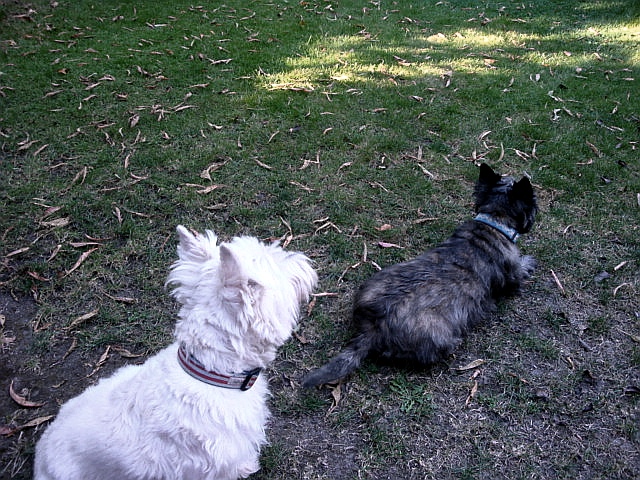
Pearl and Lulu, ready for their walk

In recent weeks, Howard has been putting the finishing touches to Net Smart – his book about ‘everything you need to know to thrive on the internet’ – downloadable to e-book readers next spring. I expect him to have a lot to tell us that we do not already know, as he has a startling record for accurate guessing about how technology is about to transform our lives, yet again. He predicted, for instance, the online fellowship we are nearly all part of, now, in his 1993 book, The Virtual Community: Homesteading on the Electronic Frontier (downloadable here, on one of his sites, for payment by the honour system.)

The famous names in trade publishing dithered about how much support they were willing to commit to the writing of Net Smart, in spite of the monumental proof of Howard’s wizardly foresight.

‘I’m five, ten, years ahead of what they can see or understand,’ he mumbled in an embarrassed aside, when I joined him on his hour-long daily constitutional last week. He flapped an exasperated hand in the air as he said that, marching at a cracking pace around a tree stump, and through California coastal scrub and brush near his house in the peaceful, ex-hippie town of Mill Valley, where Jack Kerouac once perched for a while.

Instead of a mainstream publisher, for a book about technological survival for us ordinary people, Howard is working with the MIT Press – associated with the great Massachusetts Institute of Technology. I have been considering, for a parallel, an author with a string of successful books anticipating how aeroplanes would globalise food, clothes and the sexual revolution, who must now rely, for a green light, on a gatekeeper specialised in vetting texts on aeronautical engineering. This seems ridiculous, even if the gatekeeper — in this case — enjoys prestigious straying outside strict academic bounds.

Who do I think Net Smart’s publisher ought to be? Howard himself.

Yesterday, there was yet another sign that indie publishing in taking off at top speed. In New York, the Perseus Books Group launched a distribution and marketing arm for authors publishing their own books – following Amazon.com (in which I am a sub-microscopic shareholder) in giving authors of e-books who use the service a royalty rate of 70 per cent, as opposed to the traditional 10-15 per cent that has long been standard in print publishing. This percentage is a more honest reflection of what publishers have been doing for most authors for decades, except that it is hard to believe that Perseus will actually do much marketing for any author not writing reliable best-sellers. Publishers have long expected writers to do nearly all the marketing themselves.

Certainly for writers angry about the unfairness of the usual split between author and publisher, this alteration is at least as important as the French Revolution. Better, in fact, since it has no disagreeable spectacles involving people-butchers lopping off aristocratic heads as crowds cheer madly.

Howard said that he was strongly tempted to go indie with this book, but decided that he wanted a traditional book advance one last time. I met him in the mid-1980s, when a mutual friend sent me to him for advice about whether I could survive as a writer outside captivity – leaving the large magazine that employed me. He could not have been more encouraging, but warned me that to pay the bills for the most simple life, I would have to work around the clock as he did, with almost no play time, not even at weekends. His wife Judy nodded in confirmation (gosh, were they right.) She, too, was working punishing long days, cutting and styling hair, proving her faith in his vocation.

Why must Howard, who has always understood the importance of both his own best perceptions and those of many a scientist and academic working in obscurity – and made an ever-wider market for them – continue to give away most of the revenue from his books to mere text-packagers?

He is and has always been too busy to rail against injustice. While he waits for Net Smart’s debut, he is supplementing his income from writing with exhausting expeditions to lecture at Berkeley and Stanford, as he had done for years. One of his projects involves pioneering the ‘co-teaching’ – through collaboration with his students — of online journalism, and the effective use of social media. On Twitter last month, he was advertising his new, all-online university, Rheingold U, specialising in ‘the literacy of cooperation’:

The term “collective action” may be dry, but the mysterious magic that enabled homo sapiens to use symbols to organize group activities like hunting or agriculture is what distinguished our ancestors from the other scrawny primates on the savannah […] Although this might seem far removed from the questions posed by digital networks, our species might be in for another leap into an entirely different level of complexity and way of life, depending on how we use digital networks to collaborate in new ways and on new levels.

When I have read Net Smart in a few months, I shall have a bit more to say about Howard – and hope that he will, by then, have made the leap into the next, entirely different phase in the evolution of publishing.

Extreme democracy is not an impossible dream if you copy Switzerland, not California

St. Francis Yacht Club, CB

Beside the bay, beneath the trees, the St. Francis Yacht Club at dusk, after a symposium on direct democracy

Techno-optimists are sure that our egalitarian internet that brought you to this blog will flatten power structures in organisations, both online and offline, and usher in an age of extreme democracy. Cynics say that they are wrong. Whisper to them tentatively about, for instance, reorganising the media to make readers and viewers part-owners and managers, and they will roar at you, “Ridiculous! Disastrous! It could never work!’

You must then reply in calming tones, ‘True, if you do it like California, but not if you copy Switzerland.’

On the 10th of October, Californians will commemorate – note that I do not say, celebrate– the hundredth birthday of direct democracy in their state. They learnt how to use the tools for this system run on referendums and citizens’ initiatives from watching the Swiss. How did the midget Alpine republic invent its style of government? Today’s peaceable Switzerland came together as a federation of bolshie and aggressively independent tribes united by their determination to resist being conquered by huge and powerful neighbouring countries.

Switzerland– not a member of the European Union, which partly explains its soaring currency and almost indecently successful economy – is the anti-melting pot. In an article I wrote for Prospect last February, I suggested that it could replace America as the model for how to run culturally diverse societies. Its system of government goes to extraordinary lengths to protect the distinctiveness of its many radically different cultures and shield minorities from being bullied by majority opinions and beliefs.

This makes it a good model for old countries redesigning constitutions, new ‘emerging’ countries — and for groups and organisations being specially designed for the internet and treating all cultural traditions as equal.

But it has been a bad model for California– for which Californians have only themselves to blame, as Joe Mathews, born and bred in the state, and his co-author, Mark Paul, explain in their much-praised California Crackup (2010). Unless tales of incompetence heaped on ineptitude send you running for a prescription for antidepressants, you can also read a good analysis of why direct democracy has not served California well on The Economist site.

At the heart of the trouble is that Californians have been irresponsible and undisciplined, in using the levers of direct democracy. It is as if the Swiss gave them a demonstration of the etiquette for communal eating – showing them how to make sure everyone gets the same chances to dip their fondue forks into the cheese – and the Californians somehow ended up coated in gooey strands of Emmenthal, forking themselves in the foot. For years, Californians have found it impossible to agree on how they should tax themselves to run their government and, year after year, government employees go unpaid for weeks or months while they wait for one state budget crisis after another to be resolved.

Last Wednesday, the Swiss consulate inSan Francisco played generous host to a lunch and symposium – California Direct Democracy: the Next 100 Years – in the city’s most enviably situated private space, the St. Francis Yacht Club, so close to the water’s edge that it is almost floating.

After a brief welcoming speech by their consul, Julius Anderegg, the Swiss stayed tactfully in the background while their guests discussed how Californians might extract themselves from their mess. Not until after this event did the most enlightening apostle of Swiss democracy, Bruno Kaufmann, a citizen of both Switzerland and Sweden– two countries Americans inexplicably tend to confuse – say that California is the only place he has come across that needs less direct democracy. Asked for his opinion of the Californian implementation of the system, he said bluntly,

Your process is much more about enabling conflict, but not about solving conflict. You use it like a hammer, when what you need is a screwdriver.

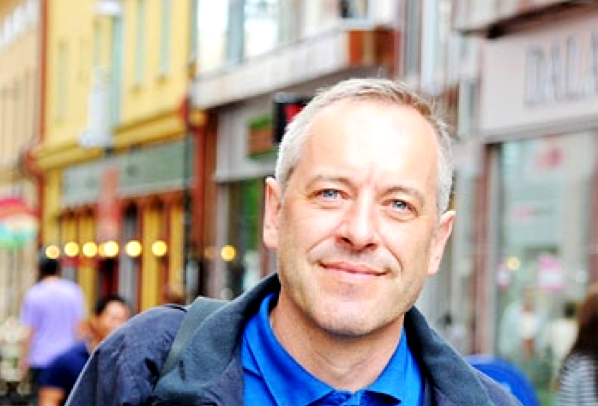
Bruno Kaufmann

Bruno, who is forty-five, has dedicated his entire working life to being something of a Johnny Appleseed for collaborative democracy. He has written about it as a journalist, and from Sweden runs the Initiative and Referendum Institute Europe, which is in Germany (Marburg), as its first director. His career is a model of Buddha-like patience. He told me how at eighteen, acting from deep personal conviction, he wrote Switzerland’s first-ever proposal for abolishing its army. Though he and his fellow-campaigners lost the referendum on the question held in 1989, the 36 per cent of the population who voted ‘yes’ licensed criticism of the Swiss tradition of compulsory military service – strictly taboo, before. That eventually led to the army being shrunk from 600,000 to 100,000 troops.

Next spring, he will have to take a bow when a new European Citizens’ Initiative is handed to 500 million EU citizens – giving them the means to formally propose new laws, and the same right to do so as their parliament. He was the coordinator of the network that mobilised support for the idea. When I asked him how long it took him and his fellow campaigners to realise this particular dream, he said simply, ‘Twenty years.’

So what is the secret of the Swiss success with direct democracy?

Two things, he said:

  • A deeply ingrained preference for consensual and consultative over confrontational decision-making, and a commitment to making it work – even though it can be infuriatingly slow.
  • A willingness to lose cheerfully, when you are out-voted and do not get what you want. (Nothing bars you from trying again, later, and succeeding.)

One paradox about this culture of outstandingly collaborative behaviour is, of course, that the Swiss — collectively — are not joiners. Switzerland is a tiny, go-it-alone country. It obstinately resisted pressure to join the EU. It did not even join the United Nations until 2002 – becoming the world’ first country to do so as a result of a referendum, in which the winning side won by only a small margin.

I was thinking about this as I stared out of the meeting room’s glass walls. A brisk wind was frothing up waves in an undulating mosaic of blue, grey, and jade. There was something gloriously bizarre about being part of a group discussing schemes for cooperation and democracy with part of my mind hypnotised by the most thrilling figures in my field of vision – solitary windsurfers, battered by the elements pushing and tearing at them, … forcing them to bend and tilt … down, down, down … nearly capsizing, then thankfully upright again … all by themselves, helped by no one, and too consumed by the struggle to keep their balance to help anyone else.

Will the calls for press reform during Britain’s Hackgate lead to action — or business as usual?

[D]iversity of ownership is an indelible liberal principle because a corporate media monopoly threatens a free press almost as much as a state monopoly does.

Nick Clegg, Deputy Prime Minister, 14 July 2011

[W]hat could emerge from this [is] not a sensible attempt to redefine journalistic ethics but a cack-handed attempt to restructure an industry. 

Simon Jenkins, The Guardian, 19 July 2011

Should we let novelists govern us? I am thinking, specifically, of thriller-writers of genius with a well-developed social conscience. Not entirely laughable, if you consider that at least one writer of fiction – Benjamin Disraeli (1804-81) – was a great British prime minister.

John le Carré was splashed all over the Guardian’s home page at the weekend in connection with the new film adaptation of his Tinker, Tailor, Soldier, Spy.  The explanation for the adoring treatment he gets everywhere is not just his literary gifts but his bottomless suspicion of authority, and of unfettered capitalism. This part of his appeal overlaps with Stieg Larsson’s.

How sad that the outrage these writers tap and focus in us is so hard to convert into desperately needed social reform – if not a revolution.

Last Thursday, commenters on Dan Gillmor’s Guardian piece on the conflicts of interest in the media’s move online dismissed it with loud yawns. ‘Most of the sentient world attaches about 1% of the importance to what’s going on in the media as the media do,’ sniffed someone dressed up as @SoundMoney.

Irritation is an understandable reaction to 4th Estate preening. But the complaint by @SoundMoney – which echoed the protests of thousands of readers bored by Hackgate – missed Dan Gillmor’s point. He was arguing for the alternative to traditional media sources for news and information that the 5th Estate represents.

Unfortunately, there is no one engaging the public the way a Le Carré or Larsson story can to explain why press regulation in Britain needs to be altered. Ideally, the ownership of the media will be diversified, as Nick Clegg says it ought to be – and it would be interesting to know if he and his fellow Lib Dems would support a diversification that went as far as the partially reader-owned structure for online publishing that this site is advocating as an experiment.

A public too bored by the talk of media reform to get to grips with how much less puffed-up and untrustworthy the media could be if the changes go far and deep enough is making it easy for powerful columnists like Simon Jenkins — anxious for the 4th Estate to retain command of mass communication — to get what they want:

Has anyone been murdered? Has anyone been ruined?

[…]

That everyone knew journalists and the police were engaged in petty barter does not make it acceptable, let alone legal. Nor is it edifying to know how far politicians and editors are in and out of each other’s houses. But it is not the fall of the Berlin Wall or the Nuremberg trials.

… [T]oday’s stormcloud of hysteria is a poor prelude to what could emerge from this, not a sensible attempt to redefine journalistic ethics but a cack-handed attempt to restructure an industry. Perhaps instead the vast political and media resources currently on display might be redirected at the dire state of the nation, Europe and the world. They need it.

True enough. But doing anything about that ‘dire state’ means starting with the facts about it – from disseminators of facts we can trust.

If this sharp reader’s reaction is unjustified, Simon Jenkins has some explaining to do – not just to Britain but to the whole world, watching:

OpiumEater
19 July 2011 8:48PM

A truly pathetic analysis.

It’s not just the phone hacking; it’s the fact that the very fundamentals of our society have been undermined by undemocratic and authoritarian machinations, that we live – de facto – in a kind of hidden dictatorship in which the establishment of the police, media, and politicians have colluded and keep on colluding, beyond party lines.

Jenkins has missed the boat, or is defending something that is in his interest. Either way, he’s part of the problem.

Britain needs a period of proper ‘epuration’.