Of an orange pig, a wolf, and using literary clips to rescue literature from hyperinflated praise

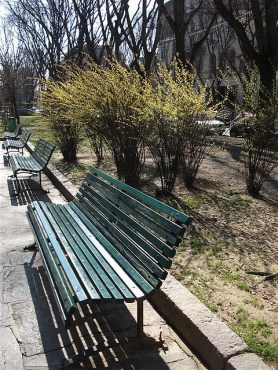
'Ritorna il sole, ritornano i colori' photograph by MIL22

‘Ritorna il sole, ritornano i colori’
photograph by MIL22

When the currency of literary praise has been so debased as to be all but worthless, returning to a form of barter is long overdue.

What are we saying?

Before some wily genius invented money – which too often earns its reputation as the root of all evil — people traded in actual things other people wanted, not in symbolic representations of the value of those things. So many of us are fed up of being misled by book jacket hyperbole and dishonest reviews dressing up mediocre or shoddy work as ‘brilliant,’ ‘masterly,’ ‘luminous,’ and ‘stunning’ that it is time to melt down the defunct adjectival coinage, shelve it, and return to the actual substance of literature. We mean that we would love to see a trend for favouring clips of the writer’s own arrangements of words, in drawing attention to works of literature — over the encomiums of word-floggers and other tricksters.

Still making our slow – savouring — way through Storm DamageJohn A. A. Logan’s collection of short stories mentioned on this blog in January — we came across one accorded the rare distinction, in our reading over the years, of being read more than twice by us.

Like our photograph in honour of early spring – a gift of the eyes of generous MIL22 – this story, ‘The Orange Pig,’ is the work of an artist interested in satisfying nothing but exacting, deeply interior aesthetic standards. And if that sounds too serious – well, this is a tale that had us shaking with amusement as often as it left us rapt from the recognition of wisdom dextrously confected as a soufflé.

Without further ado we leave you, dear reader, to consider these extracts chosen to avoid giving away too much – and to let you marvel at a publishing revolution that makes it possible to acquire the thoughts that link them together on your e-reader almost instantaneously. All for no more than what it would take to put a frothing coffee into your hands.

‘I only want to walk to the top of the hill,’ said the orange pig.

‘No-one is stopping you,’ said the wolf. ‘But surely you can see that we can’t let incidents like these go unexamined or unreported. I assume you are from the farm.’

‘Where I am from is my own business.’

‘I understand,’ said the wolf, ‘but …’

The wolf waved a paw in the direction of the dead bird.

‘In circumstances like this,’ said the wolf, ‘we all must account for ourselves, our actions, our motives. It may be in the next world we will all be free to move where we wish like phantoms in the mist, but you are from a farm. You know the meaning of a fence, or a gate, a sty or a barn, a wall or a door. Do not pretend to be naïve. I find you here, and then I find this. What am I to think?’

‘The only time is now,’ said the wolf.

‘It is very late.’

‘Not so very,’ said the wolf.

They walked past the dogs like ghosted whispers and soon they were beyond the limits of the farm, their legs working hard against the steep hill’s power.

‘Under the moon there is no market day,’ said a deep, bass voice from further to the orange pig’s left than his thick neck could twist to let him see. ‘No lorry to take us away, no slaughterhouse, no scheduled death.’

‘For scheduled death is dishonour,’ said the black wolf.

‘Amen,’ said all the wolves in a clear chorus.

Somehow, though, the orange pig’s personality had not attracted fame, only a non-profitable cache of oddity. Good enough to bring a few of the farmer’s friends around the orange pig’s sty to stare at him awhile, but nothing solid to build a business on. The newspapers had come once, and taken photographs, but interest had not been ignited in the public.

‘To hell with farms and farmers,’ said a bitter voice the pig had not heard before.

Amen,’ said the wolves.

‘It is here in the moonlight things are shown truly,’ said a quiet voice from among the sea of silver heads. ‘With the sun in the morning comes all the illusions and divisions. Here in the silver shining, we are our truest selves, is it not so my brothers?’

‘Amen,’ said a strong chorus.

‘No farm could ever be thought of or established in the moonlight. It is an idea of the day, born of heat and dazzle.’

‘I told this pig I would take him another night to wash in the salt of the sea,’ said the long wolf.

‘The waters of the sea are great, its waves caress and cool us,’ said the quiet voice.

‘That pig’s legs are too short to run with you to the sea,’ said a voice.

‘We will all go,’ said the black wolf. ‘We will go to the sea another night and we will go at his pace. There are thoughts that come when we stand in the sea and feel the waves lap at our legs that can come in no other way. It is time we did go to the sea again.’

[ … continues …]

How Swiss audience inclusion and a certain sort of nudity might be the key to success for post-Gutenberg media

Diccon Bewes, a member of Swissinfo.ch's five-man Public Council

Diccon Bewes, a member of Swissinfo.ch’s five-man Public Council

Swiss Watching NEW ED

Naked hiking is alarmingly popular, even in winter … Public nudity is not a trauma in Switzerland. Many Swiss bathing areas have FKK (Freikörper-kultur or free body culture; that is, nudist) sections … It’s still not on the German scale, where you never know when the next naked person might appear. Have a picnic in the wrong section of Munich’s English Garden and you’ll never eat another Scotch egg.

Swiss Watching: Inside the Land of Milk and MoneyDiccon Bewes, (2010)

The dispenser of advice on hazardous unclothing, Diccon Bewes, has written the wittiest, most elegantly informative and indispensable manual on today’s Switzerland for English-speaking foreigners. His whirling outline of Swiss history at the start of his book is spliced into an account of a winding walk chosen for historical associations, which gives a reader mnemonic imagery for its highlights. Bewes knows better than to frighten the Swiss, restraining what the glowing review in the Zurich paper Tages-Anzeiger called ‘typically black English humour.’

Yet encoded in his skipping prose is the style of such unforgettable thought-capsules, in 1066 and All That — the unsurpassed (1930) parody of history text-books – as, ‘[King] Alfred noticed that the Danes had very long ships, so he built a great many more much longer ones, thus cleverly founding the British Navy.’ This is specially admirable in a practical guide so astute at gauging what outsiders need to know to survive in a place where English is missing even from multilingual train announcements and museum placards, that every new visitor touching down on a Swiss tarmac could use a Bewes-on-CH (Confoederatio Helvetica) mobile app spun off from Swiss Watching.

Our overview of the visible talents of Diccon Bewes is not offered from any interest in boosting Swiss tourism, or encouraging expatriation to the Alps. He has caught our attention for an entirely unrelated reason. What we outside CH most need from him is a detailed, step-by-step education by an insider in how the Swiss make extreme democracy work, or what Beppe Grillo and the Occupy movements must do to realise their dreams. Specifically, it is media of the Gutenberg era baffled by — and resisting the transition to — post-Gutenberg inclusiveness who most need his assistance. As we have said before –

Techno-optimists are sure that our egalitarian internet that brought you to this blog will flatten power structures in organisations, both online and offline, and usher in an age of extreme democracy. Cynics say that they are wrong. Whisper to them tentatively about, for instance, reorganising the media to make readers and viewers part-owners and managers, and they will roar at you, “Ridiculous! Disastrous! It could never work!’

You must then reply in calming tones, ‘True, if you do it like California, but not if you copy Switzerland.’

So, how exactly do you copy CH? Few English-speakers have either Bewes’s hands-on experience of working with Swiss colleagues inside Switzerland – his home for the last eight years – or gift for cross-cultural explanation, backed by a degree in International Relations from the London School of Economics.

What would make his counsel particularly valuable to future-focused media people is his experience as the English-language specialist on the five-man Publikumsrat or Public Council of Swissinfo.ch – the internet adjunct of the Swiss Broadcasting Corporation (SBC) founded in 1999 that specialises in news about, and of special interest to the Swiss, and crisply-written features that illuminate foreigners. All this, every day, is translated into ten languages.

The style of government that makes Switzerland the world’s most democratic democracy is replicated in organisations of every size and kind in CH – including its many businesses run as cooperatives, two of which make the list of the world’s top twenty-five in sales.

The Publikumsrat gives Swissinfo’s editors and journalists detailed feedback on their choice of subjects as well as on the way these are tackled. It makes suggestions for new topics. It also defends Swissinfo from its detractors.  More than once, in the last ten years, it has led  campaigns to protect it from accountants wielding budget-slashing axes – inspiring ‘Save Swissinfo!’ petitions from as far away as New South Wales, in Australia.

Post-Gutenberg has been browsing on the Swissinfo site for three years. The experience of reading there has been hugely surprising – nothing like the teasing love-letter to CH that Swiss Watching’s tone suggests, but equipping Swiss-bashers with ammunition. Its coverage of the most embarrassing, even humiliating, topics for the Swiss is frank enough to suggest that, more than a mere pastime, nude hiking in glacial cold could be a metaphor for … well, the naked honesty in the conversational style of the Schweizerdeutsch, the German-speaking Swiss who dominate the population. In our experience, they express themselves freely and with graphic precision on almost any subject, even chatting to strangers (unless these are identified as journalists, a reviled profession in CH), as long as they respect basic standards for civility and friendliness.

Part of the reason why Swissinfo’s coverage of topics is startlingly direct is that there is no room for subtle and idiomatic expression in any text that has to scan as well, in the language of its composition, as in its Portuguese, Chinese and Russian versions. Of course, this is also true of the work of the BBC World Service – but the unflinching Schweizer style does seem to make for extra-bluntness.

Readers of this blog can wander over to Swissinfo.ch and see for themselves. We have been stunned by some reports there on the Nazi Gold scandal – in part of which Swiss banks were accused of conspiring to deny descendants of Holocaust victims access to their families’ Swiss bank accounts, or about academic studies blaming lax gun control policies for Switzerland ranking, with America, at the top of the statistics for gun-related suicides. Far from any cover-up, there is a relentless succession of articles quoting critics of gun ownership. This is especially brave in a country in which every referendum on the subject shows the Swiss refusing to be weaned off weapons ownership. (We cannot conceive of a cowardly Swissinfo blackout of news about press reform, if this had the attention of Swiss government leaders.)

Forthrightness – and audience involvement, through the Publikumusrat — could make Swissinfo a model for news coverage in the UK and US, where, as one poll after another shows, public trust in the media has never been lower.

Until recently, the point of having Swissinfo was to help Swiss nationals living abroad stay sufficiently well-informed to make the best possible decisions when they vote remotely in referendums and elections. This part of its charter is no longer as important as demystifying Switzerland for foreigners, because free online editions of so many Swiss newspapers give Swiss expatriates the facts they need.

But doing a good job of serving Swiss voters abroad meant that the information the site supplied had to be politically neutral, or carefully balanced across the spectrum of political opinions. That this approach has not changed, even after Swissinfo’s staff and budget were each cut back last year by roughly a third, only adds to the attractions of the site – since, as this blog has underlined in the past, the reading public prefers to be served news undistorted by politics.

The British press ignores this preference. Both during and since the Leveson hearings on press ethics, one editor after another insisted – invoking  time-hallowed tradition as frantically as the Catholic Church fighting for respect, in recent weeks —  that political slanting has always been part of its lifeblood.

Though mockers of the Occupy movements keep insisting that extreme democracy could never be either practical or realistic, Switzerland, the über-democracy, is proof to the contrary. With its tiny population of not quite 8 million, CH can boast of being not just one of the world’s richest countries but the one at the very top of economists’ table for individual wealth – per (adult) capita.

Here is some food for meditation from Swiss Watching’s chapter titled ‘Ask the audience’:

Walking through the centre of Bern means running the gauntlet of clipboard-thrusting pen holders wanting your name. These aren’t charity muggers desperate for your cash … And the papers are not futile petitions that will be delivered to the government without any prospect of anyone taking notice. This is not Britain. This is Switzerland, where the people have power, and they use it. Collecting signatures is the first step towards a referendum, the basic tool of the direct democracy system. Don’t like a government decision? Then collect names to change it. Want to create a new law? Then collect names to initiate it. Hate minarets? Then collect signatures to ban them [ … ]

For outsiders, it’s hard to imagine how a country can function if every law and government action is subject to a government vote. For the Swiss, it’s hard to understand how any country can be run without just that. […] The Swiss people can initiate legislation or destroy it; they can force the government into new policies or reject decisions it’s already made. No one person or party ever has complete control – the people do. Forget China and North Korea; if any country deserves to be called a People’s Republic, it is Switzerland.

Swisscellany 300 dpi for web

Note at a publishing crossroads: is it time for Ian Rankin to move over and let younger Scots writers take his place?

postgutenberg@gmail.com

They’d said it would take me 105 days to get to Mars in Unicorn One. I’d only been going for eight days. The window was facing away from the sun but a glint of refracted light must have found its way through the thick quartz glass. I saw my image reflected amongst the stars. My hair looked terrible.

Now, who on earth could that be?

Ah, … the main character in a delectable short story, ‘Unicorn One’, in a collection titled Storm Damage. Any reader who tests works of fiction by sampling random paragraphs is immediately compelled by this e-work to scroll back a few pages to learn that

 … within ten years of standing on that hill with Tommy, I would be selected as Scotland’s first astronaut. Not the first Scot to go into space, of course, but the first one to be chosen for Scotland’s Independent Space Program. The world’s media had regarded our endeavour as a joke. Too long had we been seen as England’s or America’s poodle. The German press had shown photographs of our most dilapidated, forsaken housing estate ghettoes and asked what kind of people would begin a Space Program with this kind of poverty rampant in their back yard.

[…]

Even within the Space Program, I had not been a popular choice for first astronaut. They had turned down pilots and scientists, Marines and arctic explorers, mountaineers and deep sea divers, only to choose me, a hairdresser from a remote Scottish town.

‘It’s necessary nowadays,’ they had told me, ‘to find people the public can relate to …

When we reached that sentence, at post-Gutenberg, we were not simply shaken out of a mood best described as chiaroscuro-verging-on-dark. Soon, we were reading all the way back from the beginning – an opening that we would have found just as irresistible, had we started where most people do:

There was a beautiful bird on the branch, singing. It was small with brown wings and perfect white chest feathers. Its tone was too shrill and its eyes darted. Its whole manner was erratic. The sunlight was salmon-pink among the trees and I knew something was wrong, something was going to happen. I didn’t hear a sound, except the bird singing, until the shot went off and chips of wood sprang towards my cheek from the tree I was standing near …

To think that in the old days of traditional print publishing, we might never have had the luck of reading John A. A. Logan — a marvellous writer happily undaunted by chronic cold-shouldering by literary gatekeepers. His success in e-publishing turned him into a lodestar for anyone publishing unmediated e-books as independently as Virginia Woolf once released her own experimental novels in print.

When we wrote about him and other young literary Lochinvars a few weeks ago, we did not mention that we had been thinking of how wonderful it would be if Ian Rankin could only award John his latest monster advance from his publisher in recognition of the e-book writer’s infinitely fresher perspective and fizzing imagination. The once-unique Rankin creation, the boozy, crusty and jaded police detective, John Rebus, has suffered, in recent years, from his inventor’s all too-obvious irritation and boredom with being forced to spin yet another tired yarn about him.

In November, this trend earned poor Ian Rankin the gimlet-eyed attention of a contributor to Private Eye’s books section (issue no: 1328) reviewing his latest novel – described as

full of reliable Scots wisecracking and people saying ‘Back in the day’, and … clearly written at one hell of a lick. Like many a previous Rebus outing, its final effect is to call the whole basis of Ian Rankin’s career into serious question.

Ouch. The Eye did not mince its words, fingering the culprit for this apparently lazy and self-indulgent offering by a writer who has by now grown accustomed to having an overstuffed piggy bank:

Brought to a waiting world amid a flourish of publishers’ trumpets, attended by wall-to-wall publicity … Standing in Another Man’s Grave can be marked down as a triumph for the old-style trade-book model …

Of course old-fashioned publishers are still capable of surprising and thrilling us with new discoveries, but at today’s publishing crossroads, you would have to be a fool to look only in their direction for the best new work.

Book publishing’s future: a distinguished Spanglish record of a catastrophe foretold

 Giorgio De Chirico, the founder of the Metaphysical school of painting -- a forerunner of Surrealism -- created this sculptural work, 'The Mysterious Baths,' in 1973 -- when he was eighty-five. Photograph by MIL22


Giorgio De Chirico, the founder of the Metaphysical school of painting — a forerunner of Surrealism — created this sculptural work, ‘Fontana dei Bagni Misteriosi’ (‘The Mysterious Baths,’) in 1973 (aged 85).
Photograph by MIL22

A dig through papers stored in cardboard boxes on a freezing day in silver January light yielded a forgotten scrap of treasure. Who would deny that there is a touch of divine Borgesian surrealism about the circular below, from July, 1994?

Two years ago, we found ourselves arguing with a handsome Swiss nineteen year-old, the son of a novelist, who haughtily condemned the efforts of Google Translate — and was impervious to any suggestion that the translator-robot might be better than nothing, and improving steadily. What, we wonder, would that Adonis make of our vintage circular from the Spanish publisher of the likes of Octavio Paz, Gabriel Garcia Marquez, Mario Vargas Llosa, Milan Kundera and Italo Calvino? This relic, though unsigned, was clearly the work of one of those gentlemanly, perfectionist luminaries of the old print-book publishing world who could — at the drop of a sombrero — have summoned any number of helpers capable of a more straightforward rendering of Spanish thoughts into English.

It is astonishing to read this author complaining about excessive haste — the hurried new tempo being born, for people in his trade — even though no literary proletarian of the time was obliged to answer email around the clock, or multi-task, or check thought-streams in social media.

Still, we are delighted with our discovery. No text we have read, for days, has lifted our spirits to quite the same degree. This is not so much because it reminded us of the high comedy of our own inept attempts to communicate in, say, rusty French. It is the writer’s gung-ho, embrace-the-future-or-perish sentiments about the future of publishing — and eagerness to join forces across cultural borders, for the transition — that we find both moving and endearing.

TUSQUETS EDITORES

PUBLISHERS MEETING ON THE 25TH ANNIVERSARY OF TUSQUETS EDITORES

the 5th July from 10.00 to 13.30 hours
at the Museum of Science (Museu de la Ciència de la Fundaciò de ‘la Caixa’)

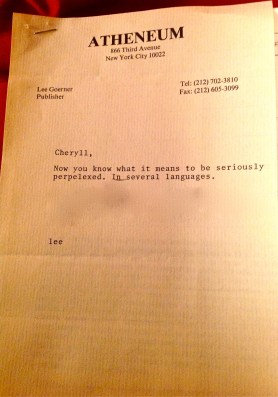
The perplexity of the publisher at the end of the century
Proposal for a debate

Our starting point is the fact that we have been living, on last years, great, swift changes which depthly affects the habits in publishing within the field in which we usually work, which is essentially the literary one, under whichever its forms. I think that all of us, now and then and in one way or another, have plunged into perplexity when faced to some of these changes, sometimes rude. From a special way of working, in which time was that of reading and the mechanisms of making contracts, of production, distribution, advertising and selling were relatively clear and simple, we have gone over to a new way of working, mastered by a hurried tempo and increasingly more complex mechanisms. This has often been generating into us doubts and hesitations concerning the future of our very activity as literary publishers and editors, whose activity, fundamentally based on risk, is to discover and experiment, both of them functions which need most of all, at first sight, different manners and time from those of an uniformised and accelerated production, distribution, advertising and selling. I suppose that this approach is valid, although very different nuances, whatever might be the kind of company in which usually works a literary publisher or editor, either an independent one, or a national or multinational group.

Therefore I suggest to divide our contributions into two interacted blocks:

1. Considerations on the present situation and analysis — avoiding as far as possible useless nostalgias — of those aspects from the past which we consider indispensable to safeguard, and even to fight for and maintain, and which complement or come into conflict with the steps each of us has been taking to grapple with the changes of these last years.

2. Reflections on how and what could be done in forthcoming years for the survival of this vocationally cultural activity, intact in its original purpose and spirit, but integrated into the new habits of both publishing and new reading communities, which already became unavoidable and are a part, like it or not, of our everyday task.

The contributions and the debate will be held either in English, French or Spanish, and we’ll have at our disposal, whenever needed, a simultaneous translation service to and from the three languages.

photo

lee to cb